The psychological and economic breach of $100 per barrel for crude oil operates as a binary trigger for global markets and political rhetoric. When oil prices cross this three-digit threshold, the conversation shifts from marginal supply-demand fluctuations to a macro-level assessment of national security and consumer endurance. Donald Trump’s recent characterization of these prices as a "small price to pay" represents a strategic pivot in political communication, attempting to decouple the immediate pain of inflationary pressure from a broader geopolitical objective. To understand the mechanics of this shift, one must analyze the interplay between domestic energy production, the elasticity of consumer demand, and the strategic positioning of the U.S. within the global energy hierarchy.
The Triad of Oil Price Drivers: Scarcity, Risk, and Policy
Crude oil prices do not move in a vacuum; they are the output of a complex cost function involving three primary variables.
- Structural Scarcity: This involves the physical reality of spare capacity within OPEC+ and the capital expenditure (CapEx) cycles of Western supermajors. A price surge above $100 often indicates that the "buffer" of global production has eroded, leaving the market vulnerable to even minor disruptions.
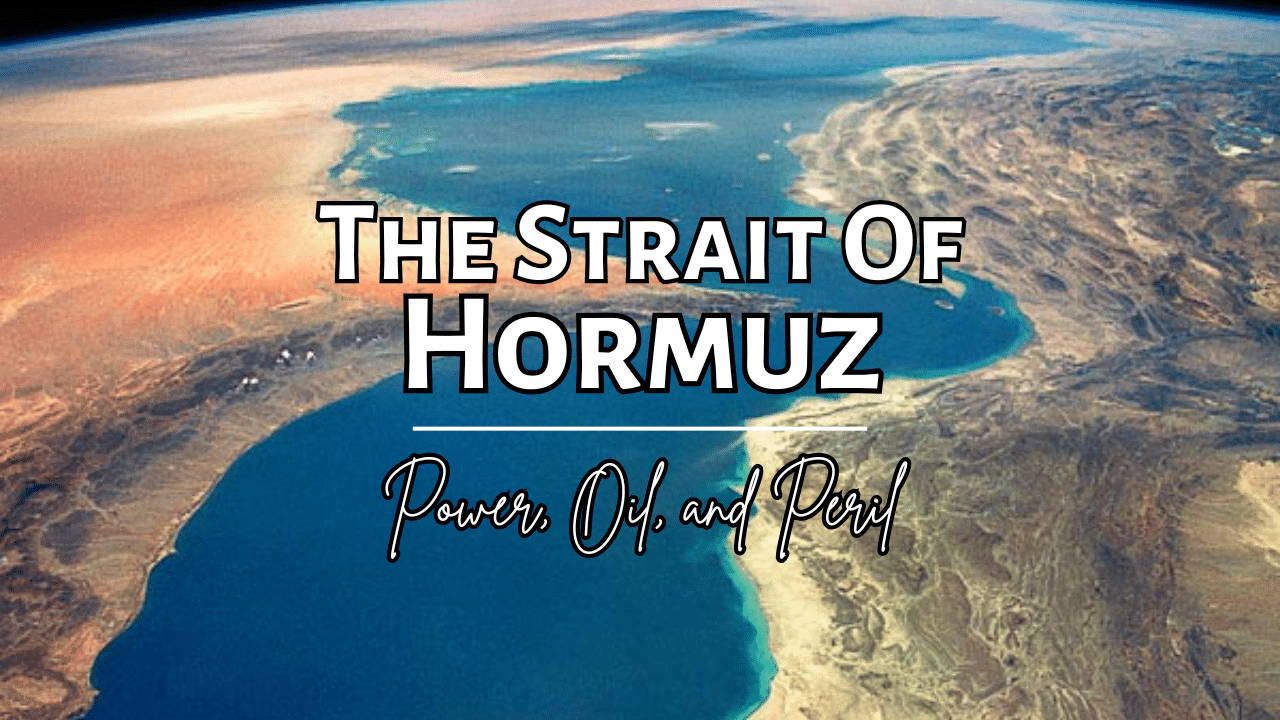
- The Geopolitical Risk Premium: This is an intangible but quantifiable addition to the price of a barrel. When conflict or sanctions threaten transit chokepoints—such as the Strait of Hormuz or the Bab el-Mandeb—traders price in the probability of a supply total-loss.
- Monetary and Regulatory Friction: The strength of the U.S. Dollar (USD) and domestic environmental policies act as a multiplier or a dampener. Since oil is priced in USD, a strong dollar makes $100 oil even more expensive for emerging markets, potentially triggering a global demand destruction event.
Deconstructing the "Small Price to Pay" Framework
The assertion that triple-digit oil prices are an acceptable trade-off suggests a hierarchy of priorities where energy independence or geopolitical positioning outweighs short-term inflationary discomfort. This logic rests on several aggressive economic assumptions.
The Theory of Targeted Inflationary Absorption
The "Small Price to Pay" argument assumes that the U.S. economy can absorb $100 oil without entering a recessionary spiral. This is a gamble on Energy Intensity of GDP. Historically, the U.S. required more energy to produce one dollar of GDP than it does today. Due to technological efficiencies and the growth of the service and software sectors, the "pain threshold" for oil prices has technically risen. However, this ignores the regressive nature of energy costs, which disproportionately impact lower-income brackets and the logistical supply chains of physical goods.
Geopolitical Leverage vs. Domestic Cost
The second pillar of this logic is the belief that high prices incentivized domestic production. When oil sustains a price above its Breakeven Cost of Production—which for many U.S. shale plays sits between $40 and $60—it triggers a surge in drilling activity. The "price to pay" is therefore framed as a temporary investment in achieving "Energy Dominance," a state where the U.S. becomes a net exporter capable of influencing global benchmarks rather than merely reacting to them.
The Mechanics of Supply Elasticity and Shale Response
To validate the claim that high prices are a manageable burden, one must examine the responsiveness of the U.S. energy sector. Unlike traditional vertical wells in Saudi Arabia, U.S. shale is characterized by high decline rates and rapid deployment cycles.
- The DUC Inventory: Drilled but Uncompleted wells represent a latent supply of oil that can be brought online quickly if prices remain high.
- Capital Discipline: A significant friction point missed by political rhetoric is the shift in corporate strategy. Many exploration and production (E&P) companies are no longer chasing volume at any cost. Instead, they are prioritizing shareholder returns and debt reduction. This means that $100 oil does not automatically trigger a flood of new supply as it did in 2014.
- Labor and Material Constraints: Even if the political will exists to "drill, baby, drill," the physical constraints of the oil patch—shortages of fracking sand, specialized labor, and steel casing—create a lag between price signals and actual production increases.
The Strategic Petroleum Reserve (SPR) as a Buffer or a Liability
The use of the SPR is a critical variable in the $100-per-barrel equation. When prices surge, the executive branch often utilizes the reserve to add liquidity to the market.
The Inventory Paradox: Releasing oil from the SPR lowers the immediate price but creates a future demand floor. The market knows the reserve must eventually be refilled. If the refilling occurs when prices are already high, the government inadvertently supports the high-price environment it sought to mitigate. The "Small Price to Pay" rhetoric avoids the technical reality that the SPR is currently at decade-low levels, reducing the government's ability to intervene in future price spikes.
Consumer Sentiment and the Transitory Nature of Price Tolerance
The political risk of $100 oil is tied to the Visibility of the Commodity. Unlike the price of semiconductors or medical equipment, the price of oil is broadcast on every street corner via gas station signs. This creates a psychological feedback loop. High fuel prices act as a daily tax on the consumer, leading to a contraction in discretionary spending.
The "Small Price to Pay" narrative attempts to rebrand this "tax" as a "contribution" to a larger cause—national security or the punishment of adversarial regimes. However, the efficacy of this rebranding has a shelf life. Economic data suggests that sustained prices above $4.00 per gallon (the typical retail correlate of $100 crude) lead to measurable shifts in consumer behavior, including reduced travel and a pivot toward more fuel-efficient or electric vehicles.
The Global Arbitrage: Who Wins at $100?
While the U.S. debates the domestic impact, the global distribution of wealth shifts radically at these price points.
- Petrostates: Nations like Russia, Saudi Arabia, and the UAE see massive inflows of hard currency, which they use to fund sovereign wealth funds or military expansions.
- Net Importers: Countries like India and Japan face severe current account deficits. For these nations, $100 oil is never a "small price"; it is a systemic threat to their currency stability.
- The Refining Sector: High crude prices do not always equate to high refining margins. If the cost of the input (crude) rises faster than the market's ability to pay for the output (gasoline/diesel), refiners face a "margin squeeze," which can lead to reduced throughput and further supply shortages.
Structural Bottlenecks in Energy Transition
A high-oil-price environment accelerates the cost-parity of renewable energy. This creates a strategic conflict for traditional energy advocates. If oil remains at $100, the ROI for solar, wind, and EV infrastructure becomes significantly more attractive.
- Capex Diversion: Institutional investors may move capital away from long-term oil projects (which take 7-10 years to bear fruit) and into faster-scaling renewable projects.
- The Utility Death Spiral: As high fuel costs drive consumers toward EVs, the demand for gasoline enters a permanent decline. This "Demand Destruction" is often irreversible; once a consumer switches to an EV, they do not return to internal combustion engines even if oil prices drop back to $60.
Strategic Realignment and the Long-Term Play
The geopolitical landscape is currently undergoing a "Great Reordering." The reliance on globalized supply chains is being replaced by "friend-shoring" and regional energy blocs. In this context, $100 oil is a catalyst for decoupling.
The "Small Price to Pay" statement serves as a signaling mechanism to energy producers that the U.S. political apparatus—or at least a specific faction of it—is willing to tolerate high prices if they result in the erosion of a competitor's market share or the fortification of domestic energy sectors. This is a move toward Mercantilist Energy Policy, where the price is secondary to the source and the security of the supply chain.
Quantifying the Threshold of Economic Fracture
The critical question for any strategist is where the "Small Price" becomes a "Catastrophic Cost." Econometric modeling suggests that if energy costs as a percentage of global GDP exceed 5%, a global recession is almost inevitable. At $100 per barrel, we approach this frontier.
To navigate this, stakeholders must monitor the Refining Spread (the "Crack Spread") rather than the spot price of crude. If the price of refined products remains high while crude fluctuates, the problem is not a lack of oil, but a lack of infrastructure. This distinction is vital for policy response: you cannot "drill" your way out of a refinery shortage.
The current trajectory indicates that $100 oil is not a temporary anomaly but a reflection of a decade of underinvestment in traditional energy coupled with an accelerated but still incomplete transition to new energy. The "Small Price to Pay" is therefore an admission of a new reality: the era of cheap, abundant energy is being replaced by an era of expensive, contested energy.
The strategic play for industrial and sovereign entities is to move beyond price-taking. This involves the aggressive hedging of fuel costs, the diversification of energy inputs to include hydrogen and modular nuclear where feasible, and the localization of supply chains to minimize the "transportation tax" inherent in $100 crude. Organizations must treat energy not as a utility to be managed, but as a volatile geopolitical asset to be optimized. Sustained $100 oil demands a shift from a "just-in-time" energy strategy to a "just-in-case" resilience model, prioritizing the security of the molecules over the volatility of the cents.