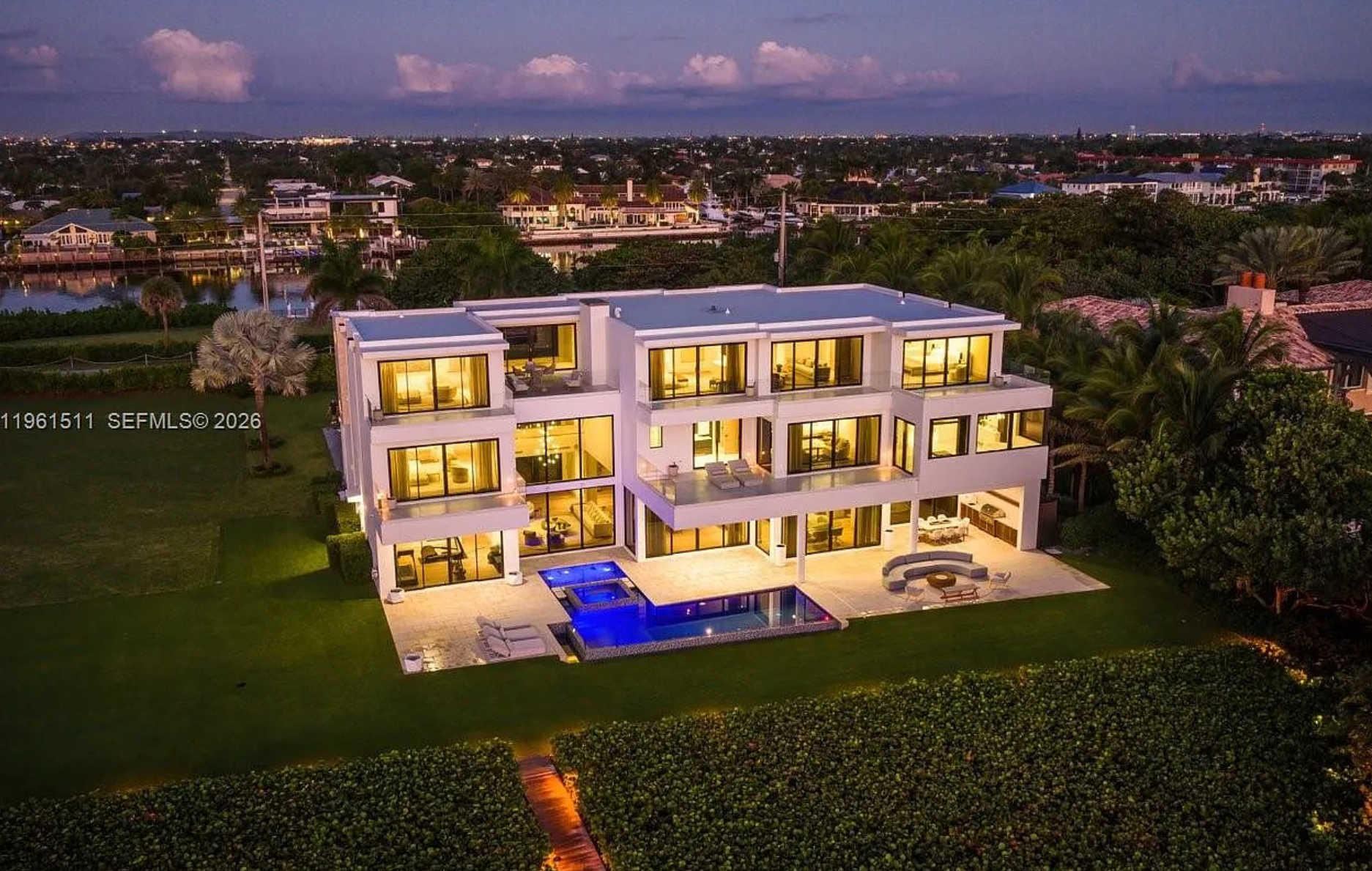
The acquisition of a $60 million residential asset is frequently marketed as a pinnacle of wealth accumulation, yet from a structural capital perspective, it represents one of the most inefficient allocations of equity available to the Ultra-High-Net-Worth (UHNW) individual. While the headline price captures public attention, the true economic profile of such an asset is defined by its "carrying cost friction"—a relentless $54,000 monthly overhead that functions as a tax on liquidity. This monthly obligation, totaling $648,000 annually, exists independently of market appreciation or utility. It represents a mandatory yield that the property must generate through phantom rent or capital gains just to achieve a break-even state in real terms.
To understand the mechanics of this "catch," one must deconstruct the three primary pillars of mega-mansion maintenance: fixed regulatory costs, specialized labor overhead, and the opportunity cost of non-productive capital.
The Triple-Constraint Framework of Mega Mansion Ownership
The $54,000 monthly burn rate is not a variable luxury; it is a structural requirement to prevent the rapid depreciation of a highly complex physical plant. A $60 million estate is less a "house" and more a boutique hospitality operation or a small-scale infrastructure project.
1. The Fixed Regulatory and Tax Burden
Property taxes on an asset of this valuation are the primary driver of the monthly catch. In high-value jurisdictions, effective tax rates often hover between 0.8% and 1.2% of assessed value. At a $60 million valuation, a 1% property tax rate results in a $600,000 annual liability, or $50,000 per month. This single line item accounts for nearly 93% of the cited monthly overhead. This is a non-negotiable, senior lien on the owner’s cash flow. Unlike a mortgage, which eventually amortizes, the tax burden is perpetual and typically scales with inflation or market appreciation, creating a "success trap" where the more the property is worth, the more expensive it becomes to simply exist within it.
2. The Specialized Labor and Systems Maintenance Function
The remaining $4,000 to $10,000 of the monthly overhead (assuming the $54,000 figure is a baseline) covers the mechanical, electrical, and plumbing (MEP) systems and the essential skeleton crew required to manage them. A $60 million home typically features:
- Commercial-grade HVAC systems with multi-zone climate control.
- Industrial-scale filtration and water treatment plants.
- Sophisticated home automation and cybersecurity grids.
- Extensive landscaping that requires specialized arborists rather than general contractors.
The failure to fund this "catch" results in "Deferred Maintenance Decay." In the ultra-luxury tier, a six-month lapse in specialized HVAC servicing or pool chemistry management can trigger a cascading failure that devalues the asset by millions. The $54,000 monthly spend is, in effect, a defensive insurance premium against catastrophic depreciation.
3. The Hidden Cost of Capital
Standard analysis of the $54,000 catch focuses on cash outflows, but a rigorous strategy must account for the opportunity cost of the $60 million principal. In a high-interest-rate environment or a bullish equity market, $60 million deployed in a diversified portfolio yielding a conservative 5% would generate $3 million in annual income. By locking that capital into a residential asset, the owner isn't just "spending" $648,000 a year on taxes and upkeep; they are forfeiting $3 million in potential gains. The total "economic carry" of the property is therefore closer to $3.6 million per year.
The Liquidity Mismatch and Exit Velocity
The fundamental risk of the $60 million mansion lies in the mismatch between its high-velocity carrying costs and its low-velocity liquidity. Unlike a stock or a liquid bond, a mega-mansion has a "Days on Market" (DOM) metric that often stretches into years.
The Holding Period Trap
During the 18 to 36 months it typically takes to find a qualified buyer for a $60 million asset, the $54,000 monthly catch remains active. A three-year sale window results in $1.94 million in sunk costs just to keep the lights on and the taxes paid. If the market dips by 5% during that window, the owner loses $3 million in equity plus the $1.94 million in carry, totaling a nearly $5 million hit. This creates a psychological "sunk cost" barrier that often prevents sellers from pricing the home realistically, leading to even longer holding periods and higher cumulative losses.
Buyer Pool Constraints
The "catch" also serves as a barrier to entry that limits the secondary market. A buyer may be able to afford the $60 million entry price through a liquidity event, but if their recurring cash flow cannot comfortably absorb a $650,000 annual "subscription fee" for their own home, the asset becomes a liability. This shrinks the pool of potential buyers to a global elite of perhaps a few thousand individuals, further depressing the "exit velocity" of the investment.
Structural Optimization of High-Carry Assets
For the UHNW individual, the strategy must shift from "home ownership" to "asset management." To mitigate the $54,000 monthly catch, owners must employ specific financial and operational frameworks.
Corporate Shell and Tax Shielding
Holding the property within a specialized Limited Liability Company (LLC) or a trust can sometimes allow for the deduction of certain maintenance costs if the property is occasionally utilized for business functions or as a rental asset. However, the "catch" remains largely impervious to these maneuvers due to the nature of property tax assessments.
Fractionalization and Revenue Generation
Some owners attempt to offset the $54,000 burn by entering the "ultra-premium rental" market. In markets like Aspen, the Hamptons, or the French Riviera, a $60 million home can command $100,000 to $250,000 per month during peak seasons. Two months of high-season rental can cover the entire year’s carrying cost. This shifts the asset from a "lifestyle drain" to a "neutralized holding," though it introduces operational risks and wear-and-tear depreciation.
The Terminal Value Projection
The $60 million mansion with the $54,000 monthly catch is a bet on extreme appreciation. For the investment to be rational from a purely data-driven perspective, the property must appreciate at a rate that exceeds the sum of:
- The 1% property tax/maintenance carry.
- The 4-5% risk-free rate of return (opportunity cost).
- The 2-3% annual inflation rate.
This implies that the property must grow in value by roughly 7% to 9% annually just to maintain the owner’s purchasing power. In a stagnant or cooling luxury real estate market, the "catch" isn't just an expense—it is a wealth-destroying engine.
The strategic play for any individual considering such an acquisition is to treat the $54,000 not as an incidental cost of living, but as a mandatory dividend payment to the state and the service economy. If the asset’s "lifestyle yield"—the subjective value the owner derives from living there—does not exceed the $3.6 million annual economic carry, the capital should be redeployed into liquid, income-producing instruments, and the lifestyle should be "leased" through high-end hospitality services. This preserves capital agility and eliminates the structural friction of a $60 million anchor.
Calculate the "Imputed Rent" of the property. If you cannot rent a comparable property for significantly less than the $300,000 monthly total of carry plus opportunity cost, only then does the purchase move from a vanity acquisition to a defensible financial position. Absent that math, the $54,000 monthly catch is a signal of a failing asset strategy.