The bell doesn't just signal the end of a period. In a high school, it is the heartbeat of a machine, a rhythmic pulse that moves thousands of souls from one cinderblock box to another. It is loud. It is insistent. But on a Tuesday morning in a quiet Texas town, that rhythm broke.
The silence that follows a gunshot is not actually silent. It is a vacuum. It is the sound of a thousand breaths holding themselves at once, the collective realization that the world has shifted on its axis. When a student in Arlington pulled a weapon, aiming it first at a teacher and then at himself, he didn't just break the law. He shattered the unspoken contract of the classroom.
We talk about these events in the language of police blotters. We use words like "incident," "suspect," and "fatality." These are cold words. They are sterile. They act as a surgical mask, protecting us from the raw, jagged reality of what it feels like to stand in a hallway where the air suddenly tastes like copper and ozone.
The Geography of a Desk
Consider the teacher’s desk. It is usually a cluttered island of coffee mugs, ungraded essays, and perhaps a photograph of a golden retriever or a smiling spouse. It is a place of authority, yes, but also one of profound vulnerability. A teacher stands with their back to the board, facing a sea of potential, and in an instant, that potential curdled.
The facts tell us the teacher survived the initial wound. The facts tell us the student did not survive his own. But facts are the skeleton; the story is the skin. To understand this, you have to imagine the specific weight of a backpack. For a teenager, that bag usually holds the heavy burden of geometry textbooks, half-eaten granola bars, and the crushing, invisible weight of social expectation. Somewhere between the spiral notebooks, a piece of cold steel was tucked away.
Why?
The "why" is the ghost that haunts every school board meeting and every evening news segment. We look for a singular villain—a violent video game, a broken home, a chemical imbalance. We want a monster we can name so we can build a cage for it. But reality is rarely that kind. Usually, it is a slow erosion. It is the sound of a thousand small rejections piling up until the floor gives way.
The Physics of a Lockdown
When the "Code Red" crackles over the intercom, the transformation of a school is instantaneous. A place of learning becomes a fortress.
Thirteen-year-olds who were just worrying about a Spanish quiz are suddenly instructed to hide under desks, to stay away from windows, to be as still as statues. There is a specific kind of terror in the eyes of a child who is trying to remember if their shoes are bright enough to be seen under a door crack. They text their parents. The messages are almost always the same: I love you. I'm scared.
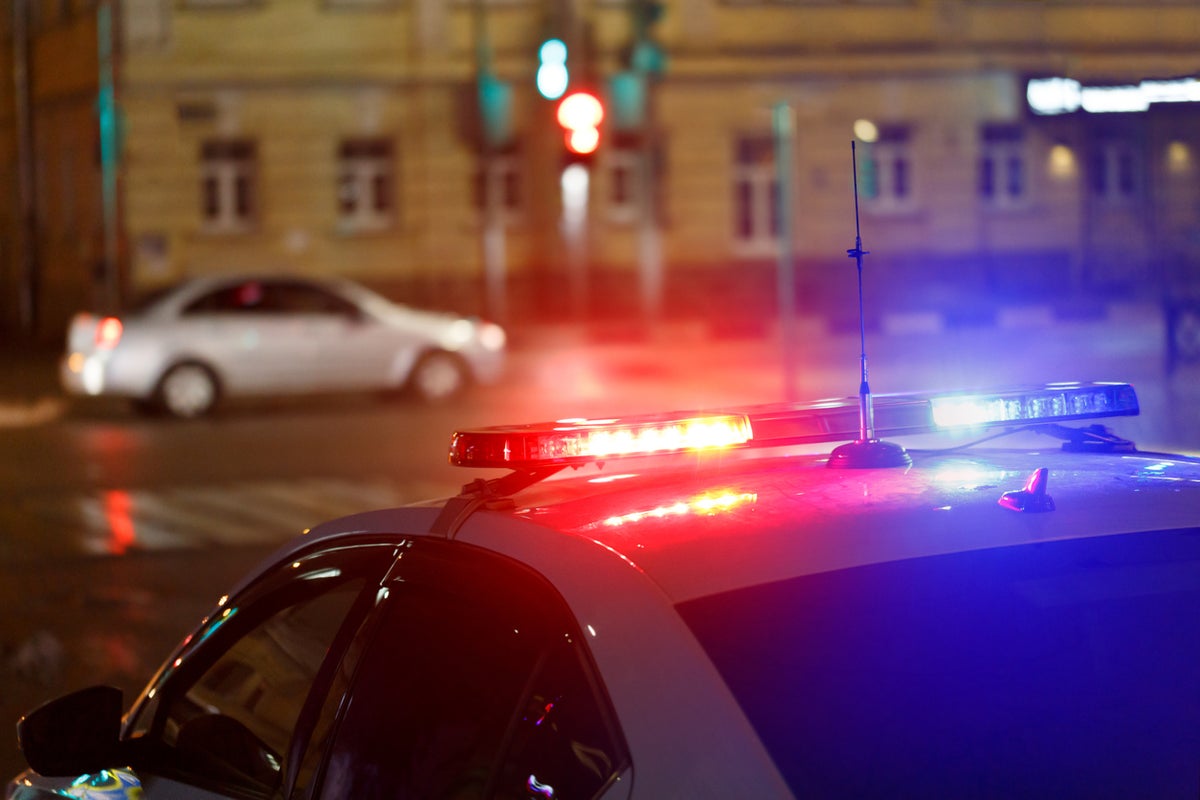
Outside, the parents gather. They stand behind yellow tape, their faces illuminated by the strobing red and blue of emergency lights. This is the modern American vigil. They aren't looking for "data points." They are looking for a specific hooded sweatshirt in a sea of evacuating children. They are looking for proof that their entire world hasn't been extinguished by a single 9mm round.
The Texas sun is usually relentless, baking the asphalt of the parking lot. On days like this, it feels mocking. The brightness of the sky stands in direct opposition to the darkness inside the building.
The Invisible Stakes
We often focus on the physical recovery. We track the teacher’s vitals. We count the stitches. But what about the chemistry teacher three doors down who didn't get hit but can no longer close their eyes without hearing the pop? What about the sophomore who saw the blood on the linoleum and now views every doorway as a threat?
The stakes are the loss of the "Ordinary."
Once a school has been the site of a shooting, it ceases to be just a school. It becomes a landmark of grief. The lockers are no longer just metal bins for coats; they are reminders of what was carried inside. The cafeteria is no longer just a place for loud laughter and mystery meat; it is a room with too many exits and not enough cover.
We are living through a period of profound disconnection. We are more "plugged in" than any generation in human history, yet the isolation is a rising tide. When a student decides that the only way to be heard is through the roar of gunfire, we have failed to listen to the whispers that preceded it. This isn't a political argument about the Second Amendment. It is a human argument about the soul of a community.
The Teacher’s Burden
Teaching was once a profession of pedagogy. Now, it is a profession of tactical awareness.
Every educator in America now walks into their room and subconsciously notes the heaviest piece of furniture they could slide in front of the door. They look at their students and wonder which one is struggling, which one is drowning, and which one might be dangerous. It is an impossible mental load. They are expected to be mentors, surrogate parents, mental health first-responders, and, eventually, shields.
The teacher in this story, wounded and bleeding, represents more than a victim. They represent the front line of a crisis we aren't equipped to handle. They were there to explain a curriculum, but they ended up witnessing the ultimate expression of a young man’s despair.
The Finality of the Choice
The student is gone.
There will be no trial. There will be no long-form confession explaining the nuances of his rage or his sadness. There is only a void where a life used to be. For his family, the grief is a complex, jagged thing. They lose a son, but they also lose the right to grieve publicly without the shadow of his actions looming over their sorrow. They are left with the "What ifs" that will ring in their ears for the rest of their lives.
Did he feel powerful in that final moment? Or did he feel, for the first time, that the world was finally paying attention?
We tend to move on quickly. The news cycle demands a fresh tragedy, a new outrage, a different headline. We offer "thoughts and prayers" like they are currency we can spend to buy our way out of the discomfort. But for the people in that Texas town, the clock didn't start ticking again when the police left.
The blood is cleaned from the floors. The bullet holes are patched with spackle and a fresh coat of eggshell paint. The desks are straightened. But the air in the room is different. It is heavier. It carries the weight of a story that ended too soon and far too violently.
In the quiet moments before the first bell rings tomorrow, some teacher will stand at the front of a classroom. They will look at the empty chairs. They will feel the phantom ache of a wound that hasn't quite closed. And they will wait for the sound of the bell, hoping that this time, the rhythm holds.