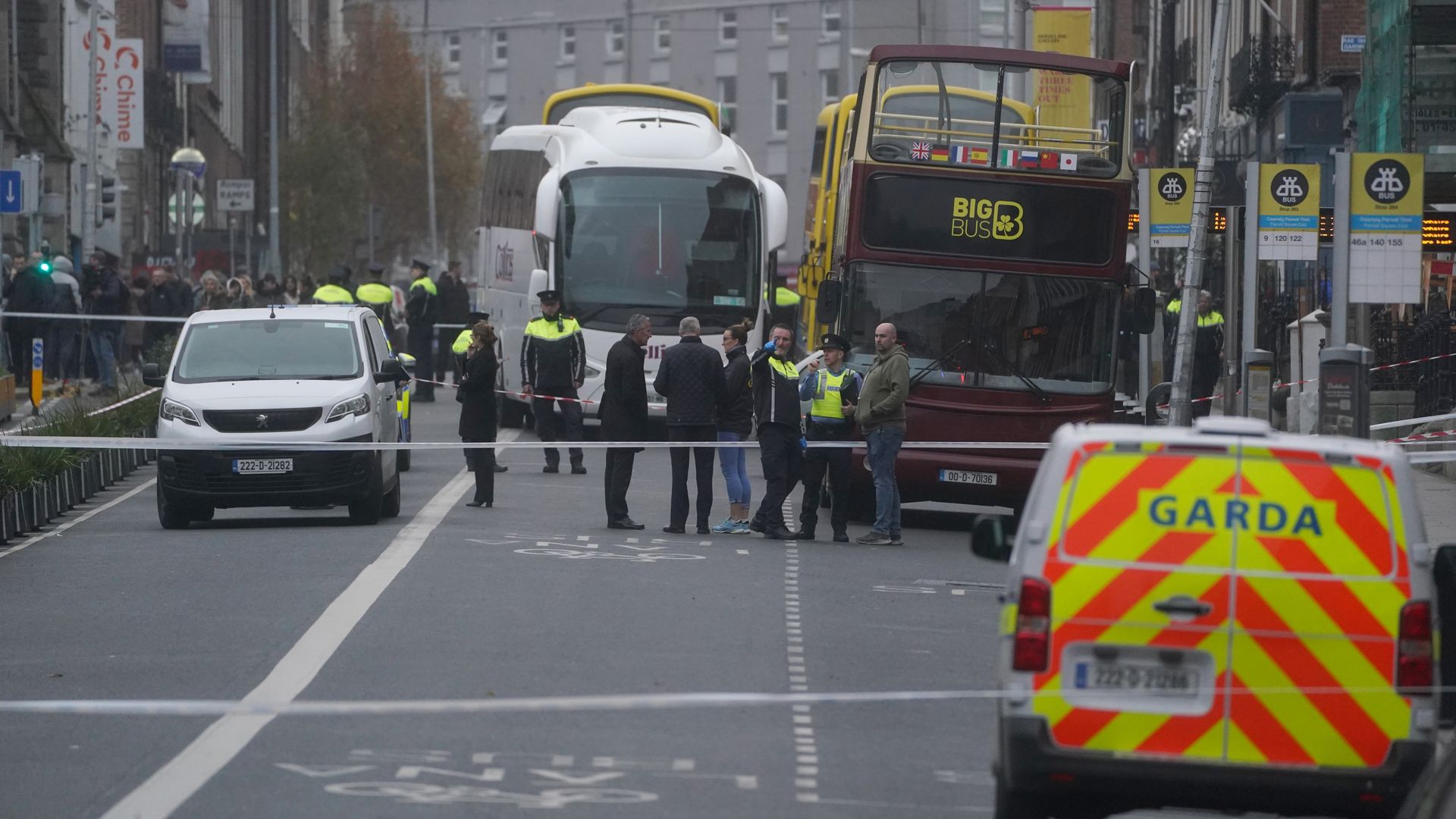
The legal machinery in Dublin has finally ground into gear following a psychiatric assessment that shifted the trajectory of one of Ireland’s most harrowing criminal cases. Riad Bouchaker, the man accused of the attempted murder of three young children and a creche worker outside Gaelscoil Choláiste Mhuire in November 2023, has been declared fit to stand trial. While the headlines focus on the procedural green light, the decision peels back the skin on a much larger, more uncomfortable reality regarding how the Irish state balances public safety, the rights of the accused, and a mental health infrastructure that is frequently described as being in a state of permanent cardiac arrest.
This fitness ruling is not a declaration of sanity at the time of the event. It is a narrow, functional determination that the defendant understands the charges and can participate in his own defense. Yet, for a city still reeling from the riots that followed the Parnell Square stabbings, the transition from a psychiatric ward to a courtroom represents a high-stakes test for the Central Criminal Court. The case moves forward at a time when the intersection of criminal law and forensic psychiatry is under unprecedented scrutiny, with the public demanding accountability while the legal system struggles with the nuances of criminal responsibility. Meanwhile, you can read related developments here: The Calculated Silence Behind the June Strikes on Iran.
The High Bar of Fitness to Stand Trial
Fitness to stand trial is often misunderstood by the public as a verdict on a person's mental health. It is not. In the Irish legal system, as in many common law jurisdictions, the criteria are strictly pragmatic. Can the accused instruct a solicitor? Do they understand the difference between a plea of "guilty" and "not guilty"? Can they follow the evidence presented in court?
A person can be profoundly mentally ill and still be deemed fit to stand trial. The psychiatric reports presented to the court in the Bouchaker case were the result of months of observation at the Central Mental Hospital. This facility, the only one of its kind in the Republic of Ireland, acts as a bottleneck for the entire judicial system. When a defendant is sent there for assessment, the clock stops on the trial, often leaving victims and their families in a state of agonizing limbo. The determination that the trial can now proceed suggests that the acute symptoms which might have hindered legal comprehension have been managed to a degree that satisfies the court, yet it does nothing to address the underlying volatility of the situation. To understand the bigger picture, check out the detailed report by The Guardian.
The delay in reaching this point highlights a systemic weakness. Ireland’s forensic psychiatric services operate at near-total capacity. When a high-profile case involving multiple counts of attempted murder enters the system, it exerts a massive gravitational pull on resources, often sidelining dozens of other cases that lack the same media profile.
The Shadow of the Parnell Square Riots
To understand the weight of this trial, one must look back at the evening of November 23, 2023. The attack on the children and their caregiver sparked the worst civil unrest Dublin had seen in decades. Large sections of the city center were set ablaze, fueled by a mixture of genuine shock and opportunistic far-right agitation. The defendant’s background and status became a lightning rod for broader societal anxieties about immigration and state security.
Because the case was tied so closely to public disorder, the judicial process is now being watched through a magnifying glass that most criminal trials avoid. Any perceived leniency or further delay is viewed by certain segments of the population not as a byproduct of due process, but as a failure of the state to protect its citizens. This puts immense pressure on the Director of Public Prosecutions (DPP) and the presiding judges. They must ensure a fair trial in an environment that has been poisoned by misinformation and external political pressure.
The investigative reality is that the "why" behind the attack remains shrouded. While the fitness ruling allows the "how" to be examined in court—the movements of the attacker, the recovery of the weapon, the intervention of brave bystanders—the deeper motivations often remain locked away if a defendant chooses not to testify or if the defense centers on the Not Guilty by Reason of Insanity (NGRI) plea.
The Reality of the Insanity Defense
Declaring a man fit to stand trial is merely the first gate. The next, and far more complex, hurdle is the trial itself, where the defense is likely to raise the issue of criminal responsibility. Under the Criminal Law (Insanity) Act 2006, a jury must decide if the accused was suffering from a mental disorder so severe that they did not know what they were doing was wrong or were unable to stop themselves.
This is where the expertise of forensic psychiatrists becomes the central pillar of the case. Unlike physical evidence, mental state is subjective and retrospective. Experts will be asked to look back months, or even years, to reconstruct the defendant’s mind at the precise moment the knife was drawn. It is a process fraught with disagreement. It is common for the prosecution and the defense to present conflicting expert testimony, leaving twelve laypeople to decide on the clinical nuances of psychosis versus malice.
If a jury returns a verdict of NGRI, the defendant is not "let off." Instead, they are committed to the Central Mental Hospital indefinitely. This outcome often satisfies neither the victims, who want a punitive sentence, nor the advocates of mental health reform, who argue that the prison system is becoming a dumping ground for the mentally ill.
Resource Scarcity and the Forensic Bottleneck
While the Bouchaker case is the most visible, it is a symptom of a broader crisis in Irish forensic psychiatry. The move of the Central Mental Hospital from its Victorian-era site in Dundrum to a new facility in Portrane was supposed to alleviate the waiting lists. Instead, the lists have persisted. The "bed-blocking" phenomenon is real. Patients who are well enough to be moved to lower-security settings have nowhere to go because community mental health services are underfunded and overstretched.
This lack of flow through the system means that defendants waiting for fitness assessments often languish in regular prisons like Mountjoy or Cloverhill. These environments are notoriously poorly equipped to handle severe psychiatric distress. When a person's mental health deteriorates in prison, their fitness to stand trial evaporates, creating a cycle of remand, hospitalization, and further remand that can last for years.
In the Dublin case, the speed—relative as it may be—with which the fitness determination was reached suggests a prioritization that is not afforded to everyone. It raises a difficult question for the Department of Justice: Is the system only "robust" when the eyes of the world are watching?
The Burden on the Victims
Lost in the discussion of legal fitness and psychiatric beds are the victims of the Parnell Square attack. A young girl, just five years old at the time, suffered injuries that changed her life and the lives of her family forever. The creche worker who intervened showed a level of courage that the state can barely repay with a trial.
For these victims, the legal process is a second trauma. Every time a hearing is adjourned for another psychiatric report, the wound is reopened. The declaration of fitness to stand trial brings a sense of momentum, but it also signals the start of a grueling public examination of the facts. They will have to hear the details of the attack recounted in a cold, clinical setting. They will have to face the possibility that the man who changed their lives might be found not responsible for his actions.
The Irish courts have a duty to ensure the defendant's rights are protected to prevent a miscarriage of justice that could later be overturned. However, the "weary confidence" of seasoned legal observers suggests that the path to a final verdict will be long, winding, and heavily contested at every turn.
A System Under Pressure
The Dublin trial will serve as a definitive case study in how a modern European city handles a mass-casualty event involving a mentally disturbed perpetrator. It is a test of the gardaí (police) who secured the evidence, the psychiatrists who conducted the assessments, and the legal professionals who must now navigate a highly emotive courtroom.
There are no easy answers when the state’s duty to punish intersects with its duty to treat. The fitness ruling is a necessary step, but it is not a resolution. It simply moves the crisis from the hospital ward to the courtroom floor. As the evidence begins to be heard, the focus will shift from the defendant’s current state of mind to the systemic failures that allowed such an event to occur in the first place.
Check the court listings for the next procedural hearing to see if the defense intends to challenge the psychiatric evidence or if a trial date has been finalized.