The United Arab Emirates (UAE), and Dubai specifically, operates as a high-liquidity global node embedded within a high-friction geopolitical zone. The current escalatory cycle involving Israel, Iran, and various regional proxies does not merely threaten "stability"—it stresses the specific structural dependencies that allow the UAE to function as a synthetic safe haven. To understand the impact, one must move past the surface-level fear of kinetic strikes and instead analyze the disruption of the UAE’s three primary economic engines: the Re-export Engine, the Foreign Direct Investment (FDI) Risk Premium, and the Hydrocarbon Logistics Chain.
The Mechanics of Integrated Vulnerability
Dubai’s economic model relies on the compression of distance and the minimization of friction. When regional conflict escalates, it introduces "geopolitical rent"—an invisible tax on every transaction, flight path, and shipping container.
- Airspace and Logistical Rerouting: As a global aviation hub, Emirates and FlyDubai rely on optimized flight paths. Closure of Iranian or Israeli airspace forces rerouting over Saudi Arabia or more distant corridors. This increases fuel burn, reduces payload capacity, and disrupts the precision of the "hub-and-spoke" model.
- The Straits of Hormuz Bottleneck: 30% of global seaborne oil passes through this point. For the UAE, the threat is not just a physical blockage but the exponential rise in War Risk Insurance premiums. If the cost to insure a vessel exceeds the margin on the cargo, the "Dubai-as-a-Gateway" proposition devalues in real-time.
- Capital Flight vs. Safe Haven Inflow: Historically, Dubai benefits from regional instability as capital flees more volatile neighbors. However, there is a "Threshold of Proximity." If the conflict moves from a proxy level to a direct state-on-state exchange involving the UAE’s territory or immediate maritime borders, the safe-haven narrative collapses, triggering a pivot toward Singapore or Switzerland.
The Capital Cost Function and FDI Sensitivity
The UAE's "Golden Visa" and real estate boom are predicated on the assumption of long-term regional dominance and physical security. A direct Iran-Israel war alters the internal rate of return (IRR) for international investors.
The Risk Premium Equation for a Dubai-based asset can be expressed as:
$$R_p = f(G_p, L_q, I_r)$$
Where $G_p$ is Geopolitical Risk, $L_q$ is Liquidity, and $I_r$ is the Interest Rate environment. When $G_p$ spikes, $R_p$ must rise to compensate, which inversely correlates with property valuations and the attractiveness of the Dubai International Financial Centre (DIFC) as a regional headquarters.
Large-scale institutional investors (LPs) do not fear a single missile; they fear the "Indeterminate Timeline." If the conflict becomes a multi-year war of attrition, the UAE's ability to attract the next $100 billion in FDI is hampered by the inability of insurers to underwrite long-term political risk.
Decoupling the Energy Narrative
While the UAE is a major oil producer (ADNOC), its modern economy is diversified. Ironically, a spike in oil prices caused by Iranian-Israeli tensions provides a fiscal cushion for the Abu Dhabi government while simultaneously strangling the Dubai retail and tourism sectors via global inflationary pressure.
- Abu Dhabi’s Fiscal Position: Higher oil prices ($90+) allow the sovereign wealth funds (ADIA, Mubadala) to increase counter-cyclical spending, effectively subsidizing the broader economy during a downturn.
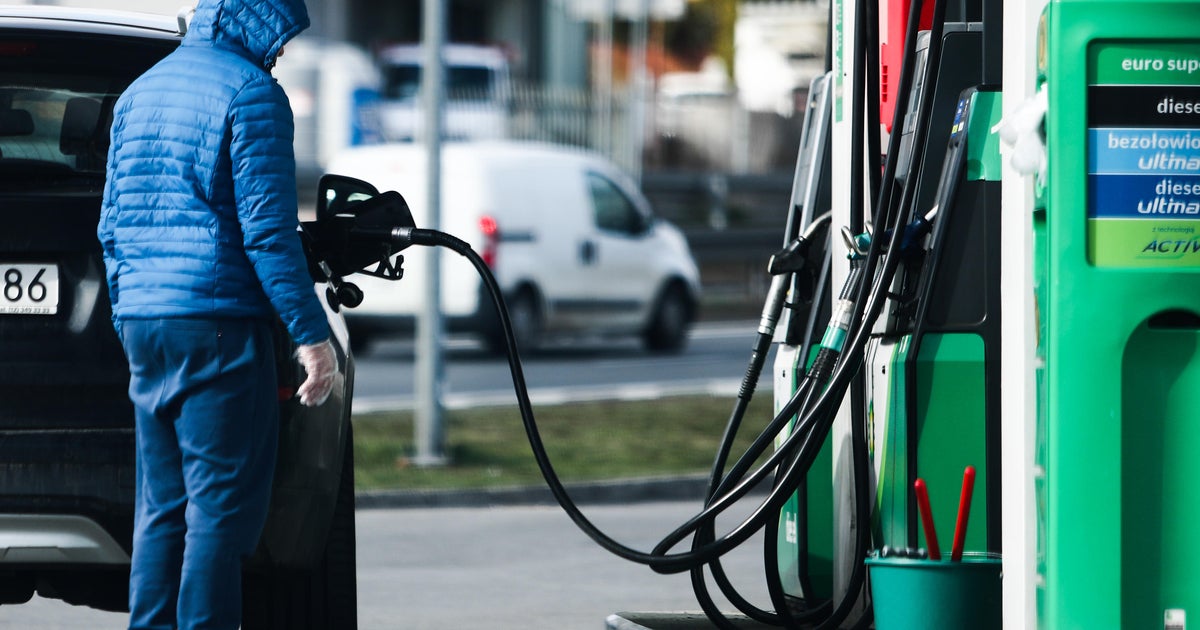
- Dubai’s Operational Reality: Dubai is a net consumer of stability. High oil prices increase the cost of living and travel, making Dubai a more expensive destination for the European and Indian middle classes, who are its primary tourism drivers.
The divergence between Abu Dhabi’s "Windfall Resilience" and Dubai’s "Operational Sensitivity" is the most critical internal dynamic to watch. If the conflict persists, expect Abu Dhabi to take a more dominant role in backstopping Dubai’s semi-government entities (GREs), similar to the 2009 financial crisis intervention, but framed through a security lens.
The Abraham Accords as a Strategic Liability and Asset
The UAE’s normalization of relations with Israel (2020) changed its position from a neutral bystander to a strategic participant. This creates a binary outcome set.
The Asset Side: Deepening tech and security cooperation with Israel provides the UAE with superior missile defense (Iron Dome components, Spyder systems) and intelligence capabilities. This hardens the "Fortress UAE" image.
The Liability Side: It makes UAE infrastructure a symbolic target for Iranian proxies. The 2022 Houthi drone attacks on Abu Dhabi served as a proof-of-concept for how non-state actors can target the UAE’s economic reputation with relatively low-cost kinetic tools.
The Logistics of Food and Water Security
A factor rarely discussed in standard news cycles is the UAE’s extreme dependency on imported calories and desalinated water.
- Desalination Plants: These are static, high-value targets located primarily on the coast.
- Food Corridors: 80-90% of food is imported.
Any disruption to the maritime supply chain doesn't just affect "business"—it affects the fundamental viability of the population centers. The UAE has invested heavily in strategic grain silos and vertical farming, but these are short-term buffers. A prolonged blockade of the Gulf would necessitate a massive, expensive airlift operation that would deplete fiscal reserves rapidly.
Tourism and the Perception of Permissiveness
Dubai’s brand is built on "The City of the Future." War is a "Past-Tense" phenomenon. The psychological impact of regional war creates a "perception lag." Even if no drone ever enters UAE airspace, the proximity of the conflict on a map prevents the "casual tourist" from booking.
The Dubai Department of Economy and Tourism (DET) faces a diminishing return on marketing spend when the global news cycle is dominated by regional ballistic exchanges. We can quantify this via the Hotel Occupancy Sensitivity Index: every 10% increase in regional "conflict mentions" in global media correlates with a measurable softening in forward bookings from Western markets, though Russian and Chinese markets have historically shown higher risk tolerance.
The Strategic Action Plan for Regional Actors
To mitigate these systemic risks, the UAE’s strategy must pivot from "Neutrality" to "Active De-escalation and Hardened Autonomy."
- Accelerate the Bypass: The Fujairah pipeline, which allows oil to bypass the Strait of Hormuz, must be expanded to include more dry-bulk and containerized logic. Moving the center of gravity to the UAE's East Coast (outside the Gulf) is a strategic necessity.
- Diversification of Defense Sovereignty: While the US remains the primary security guarantor, the UAE will likely continue its pivot toward a "Multi-Polar Defense" strategy—integrating Chinese, French, and Israeli tech to ensure no single diplomatic fallout leaves them vulnerable.
- The Digital Safe Haven Shift: As physical logistics become riskier, the UAE is pushing to become a "Data Sovereign." By housing global data centers and AI compute power (G42 initiatives), they create a new type of value that is less dependent on the Strait of Hormuz and more dependent on undersea cables, which are easier to defend but carry their own set of hybrid-warfare risks.
The UAE is currently betting that its role as a "Neutral Meeting Ground" for global capital—including Russian, Iranian, and Western interests—makes it too valuable for any party to truly dismantle. This "Mutual Value Destruction" theory is the only thing standing between the current prosperity and a fundamental reset of the Gulf’s economic geography.