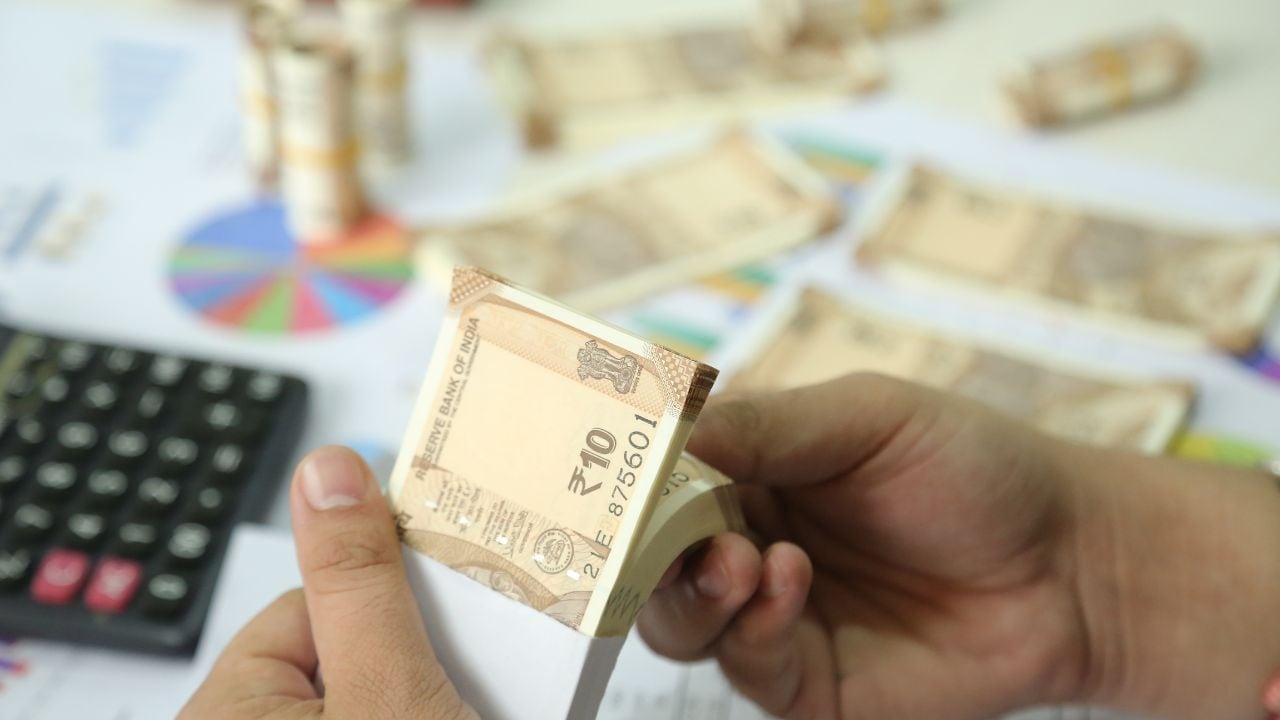
The Reserve Bank of India is currently staring at a mountain of paper that no one wants to climb. Since the escalation of the conflict in Ukraine and the subsequent removal of Russian banks from the SWIFT messaging system, the trade relationship between New Delhi and Moscow has transformed into a one-way street paved with stagnant currency. While India has successfully ramped up its intake of discounted Russian crude oil—saving billions in the process—it has created a systemic nightmare. Russia is sitting on a surplus of Indian Rupees equivalent to roughly $40 billion, a hoard that grows by billions every month and remains functionally useless for global trade.
This is not a simple accounting glitch. It is a fundamental breakdown of the "Rupee-Rouble" mechanism that was supposed to bypass Western sanctions. The math is brutal. India’s exports to Russia, primarily pharmaceuticals, machinery, and agricultural products, haven't kept pace with its energy imports. This trade imbalance has turned the Rupee into a "stranded currency" for the Kremlin. Because the Rupee is not fully convertible on the global market, Moscow cannot easily swap these billions for Euros, Dollars, or even Chinese Yuan without incurring massive exchange losses or triggering secondary sanctions.
The Mirage of De-Dollarization
For months, the narrative from both Moscow and New Delhi focused on "de-dollarization" as a strategic victory. The idea was to build a bilateral financial fortress that Washington couldn't touch. However, the reality on the ground has been a sobering lesson in liquidity. Russia does not need more Rupees. It needs hard currency to pay for electronics from East Asia or specialized equipment from the few Western-aligned partners still willing to look the other way.
The Reserve Bank of India (RBI) is now exploring desperate measures to put this capital to work. These aren't just technical tweaks; they are structural shifts in how India handles foreign investment. The primary strategy involves steering these Russian billions back into the Indian economy through government securities, infrastructure projects, and the equity markets. It is a form of forced reinvestment. Russia is essentially being told that if they cannot spend the money abroad, they must lend it back to India to build roads, bridges, and power plants.
Investing in the Hand That Feeds
The RBI's recent internal discussions suggest a softening of the rules governing Foreign Portfolio Investment (FPI) specifically for these "special" Vostro accounts. Under the current framework, Russian entities hold Vostro accounts in Indian banks where the Rupee payments for oil are deposited. To prevent this money from sitting idle and losing value to inflation, India is encouraging Russia to buy Indian Treasury bills (T-bills) and government bonds.
There is a certain irony here. By buying Indian government debt, Russia is effectively financing the very state that is profiting from its discounted oil. It creates a closed-loop system where the wealth never actually leaves the Indian borders. For India, this is a windfall. It provides a steady stream of low-cost capital for domestic development. For Russia, it is a cage. They are "wealthy" on paper in Mumbai, but those riches are invisible in Moscow.
The Problem with Fixed Assets
One proposed "solution" involves Russia investing in Indian manufacturing or infrastructure. On the surface, this sounds like a win-win. Russia gets an annual return on its investment, and India gets foreign direct investment (FDI). But the timeline for these projects doesn't align with Russia's immediate needs.
- Liquidity Mismatch: A bridge in Bihar or a highway in Karnataka takes years to generate returns. Russia needs funds for its immediate wartime economy and domestic social spending.
- Ownership Risks: If a Russian state-owned enterprise owns a significant stake in Indian infrastructure, those assets could become targets for future international legal claims or seizures by Western creditors.
- Repatriation Issues: Even if a Russian-funded project in India becomes profitable, the profits are still in Rupees. The core problem remains unsolved.
The China Factor and the Yuan Diversion
Frustrated with the Rupee pileup, Russia has attempted to settle some of its Indian oil sales in Chinese Yuan. This is a diplomatic nightmare for New Delhi. India and China are currently locked in a tense border standoff, and the last thing the Modi government wants is to help internationalize the Yuan at the expense of its own currency.
When Indian refiners started using Yuan to pay for Russian oil in 2023, the Indian government quickly discouraged the practice. Using the currency of a primary geopolitical rival to pay for the country's most vital commodity import was seen as a strategic failure. Since then, the pressure on the RBI to find a "Rupee-based" exit strategy has intensified. The goal is to keep the transactions within the "Non-Dollar, Non-Yuan" space, but that space is becoming increasingly cramped.
Infrastructure as a Debt Trap in Reverse
We often hear about "debt-trap diplomacy" where a larger power lends to a smaller one until they can seize assets. This is the opposite. India has used its massive market size to trap the capital of a major energy exporter. Because India is one of the few large economies still willing to buy Russian oil in volume, it holds the leverage.
The RBI official's admission that they are "exploring ways" to use these reserves is a polite way of saying they are trying to prevent Russia from walking away from the Rupee trade entirely. If Russia decides that the "Rupee discount" on oil isn't worth the "Rupee trap" of the payments, they might pivot more aggressively to buyers in China or seek more complex, and expensive, grey-market payment routes.
The Global Implications of the Rupee Surplus
If India succeeds in convincing Russia to reinvest the surplus into Indian stocks and bonds, it sets a precedent for other nations. It suggests that a country with enough market gravity can dictate the terms of its trade imbalance. Other BRICS nations are watching this closely. If the Rupee-Rouble experiment is seen as a success—even a forced one—it provides a blueprint for bypassing the Dollar. If it fails, it proves that "sovereign" currencies are no match for the global liquidity of the Greenback.
Why Technical Fixes are Failing
The RBI has allowed Russian banks to invest in Indian "Specialized Mutual Funds" and corporate debt. Yet, the volume of these investments is a drop in the bucket compared to the $40 billion surplus. The Indian stock market, while performing well, cannot absorb tens of billions of dollars in Russian state money without causing massive volatility or triggering concerns among Western institutional investors who might fear being "tainted" by proximity to Russian capital.
The central bank is walking a razor-thin line. If they make it too easy for Russia to convert Rupees to other currencies through "offshore" Indian banks (like those in the GIFT City special economic zone), they risk the Rupee crashing as billions are dumped on the market. If they keep the gates closed, the trade relationship with Russia eventually suffocates.
The Cold Reality of Bilateral Trade
This crisis exposes the lie at the heart of many "alternative currency" arguments. Trade is not just about having a medium of exchange; it is about having a reason to exchange. India does not manufacture the high-end goods Russia needs in sufficient quantities. Until the trade balance shifts—meaning India sells as much to Russia as it buys—the Rupee surplus will remain a lead weight on the relationship.
The next phase of this financial drama won't be played out in oil tankers, but in the backrooms of the RBI, where officials are trying to convince the Kremlin that a 10-year Indian government bond is just as good as cold, hard cash. It is a tough sell for a nation in the middle of a conflict, but with no other doors open, Moscow may have no choice but to keep buying into the Indian growth story, whether they want to or not.
The immediate next step for any analyst or investor is to monitor the upcoming RBI guidelines on "Non-Resident Special Rupee Accounts." These technical documents will reveal exactly how much control Russia is being granted over its own money—and how much India is keeping for itself.