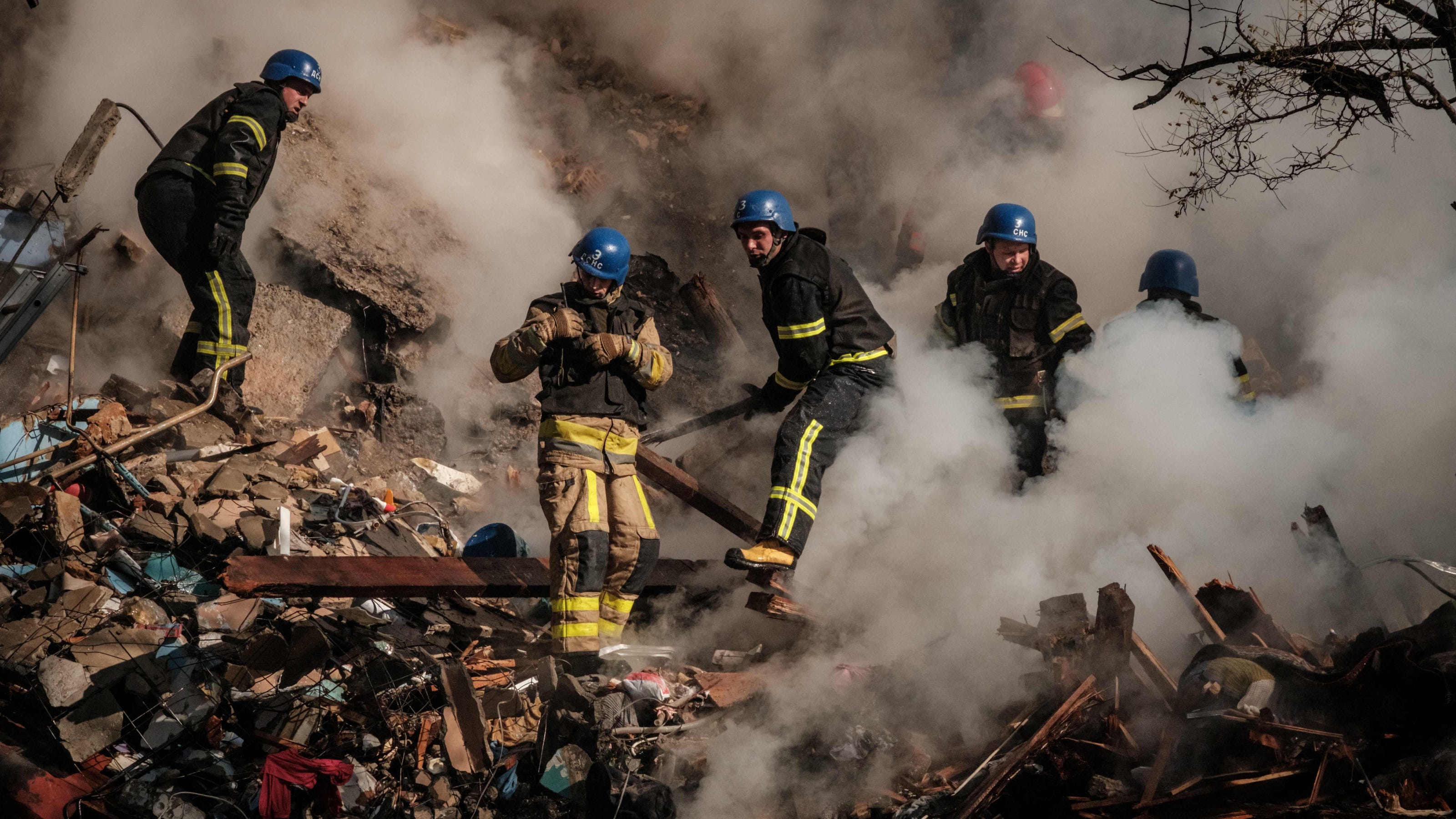
The precision strike that killed a high-ranking intelligence officer near Baghdad’s security nerve center has changed the calculus of urban warfare in Iraq. This was not a random act of insurgent desperation or a stray mortar round from the city's outskirts. It was a targeted, technologically sophisticated execution carried out within the shadows of the Iraqi National Intelligence Service (INIS) headquarters. The message sent by the perpetrators is louder than the explosion itself. They can touch the untouchables.
For years, the "Green Zone" and its surrounding high-security perimeters in the Karrada and Mansour districts were considered bubbles of relative safety. That bubble has burst. The assassination of a senior officer in broad daylight suggests a massive breach in electronic surveillance and a terrifying evolution in how non-state actors utilize off-the-shelf drone technology.
The Architecture of a Modern Assassination
The mechanics of the strike reveal a level of preparation that goes beyond typical militia capabilities. Sources close to the investigation indicate the drone used was likely a fixed-wing loitering munition, rather than a simple quadcopter. These devices, often referred to as "suicide drones," are difficult to track because they have a low radar cross-section and can be programmed to follow GPS coordinates without an active radio link that would give away the operator's position.
Security footage from the area shows the vehicle was moving at a high rate of speed before the impact. This implies the attackers had real-time intelligence on the officer’s movements. They knew which car he was in. They knew his route. They knew the exact window of time when his security detail would be most vulnerable between the fortified gates of the INIS and the main road.
This is the "intelligence gap" that Baghdad is currently scrambling to close. If the state’s own intelligence officers are being tracked and eliminated at their own front door, the entire hierarchy of Iraqi national security is at risk.
The Low Cost of High Stakes Terror
One of the most unsettling factors in this new era of conflict is the price point. A decade ago, an assassination of this precision required a team of trained snipers or a massive car bomb that would cause significant collateral damage and attract unwanted international heat. Today, the same result is achieved with a few thousand dollars' worth of carbon fiber and a programmed flight controller.
The proliferation of small-scale drone technology has leveled the playing field in a way that favors the aggressor. Iraqi security forces are currently equipped with heavy armor and conventional anti-aircraft systems designed to fight a 20th-century war. They are effectively trying to swat a fly with a sledgehammer. The radar systems currently deployed around Baghdad are often tuned to ignore small objects like birds, which is exactly the acoustic and visual signature these drones mimic.
Regional Players and the Proxy Problem
We cannot look at this strike in a vacuum. Baghdad has long been the chessboard for a cold war between regional powers, specifically the tension between Iranian-backed elements and Western-aligned factions within the Iraqi government. The INIS has often been viewed as a bridge between these worlds, making its officers prime targets for groups who want to destabilize the fragile sovereignty of the Iraqi state.
The use of drones provides "plausible deniability." When a missile is fired from a jet, the tail number and radar trail lead back to a specific military. When a drone falls from the sky, the evidence is often a pile of charred plastic and generic electronic components that could have been bought on the open market. This allows groups to exert pressure on the government without triggering a full-scale military retaliation.
However, the sophistication of the flight path in this recent strike suggests a level of training that usually comes from a state sponsor. Programming a drone to navigate the urban canyons of Baghdad while avoiding signal jamming requires more than just a hobbyist's skill. It requires electronic warfare expertise.
The Failure of the Baghdad Security Belt
The Iraqi government has spent billions on the "Baghdad Belt" security initiative, a ring of checkpoints and surveillance aimed at keeping car bombs out of the city. This strategy is now obsolete. The threat is no longer coming through the gates; it is flying over them.
The internal security atmosphere in Baghdad is one of mounting paranoia. If the headquarters of the most powerful intelligence agency in the country isn't safe, nowhere is. We are seeing a shift where high-ranking officials are beginning to limit their movements, effectively paralyzing the administrative functions of the state. This "soft siege" is exactly what the attackers intended.
There is also the question of internal complicity. For a drone to hit a specific vehicle in a congested city, the operators often need "eyes on the ground" to confirm the target. This points to a deeper rot within the security services. Someone on the inside likely leaked the officer’s schedule. This makes the drone strike the final act of a much longer chain of betrayal.
A New Doctrine for Urban Defense
What comes next for Baghdad? The traditional model of blast walls and concrete barriers is useless against a threat from the air. The city needs a total overhaul of its electronic defense grid. This means deploying localized signal jamming, acoustic sensors that can detect the specific hum of drone motors, and perhaps most importantly, a more aggressive approach to tracking the supply chains of drone components.
But technology alone won't solve the problem. The core issue is political. Until Iraq can insulate its security services from the tug-of-war between regional proxies, its officers will continue to be targets. The drone is just a tool. The hand holding the remote is the one the government needs to find.
The investigation continues, but the trail is already growing cold. In the wreckage near the INIS headquarters, investigators found only fragments of a motor and a shredded circuit board. The killers are likely miles away, already preparing the next flight plan.
The age of the untouchable official is over. In its place is a reality where the sky itself is a source of constant, silent threat. Baghdad must adapt or watch its leadership be picked off one by one by ghosts in the machine.
Go to the crash site today and you will see the scorch marks on the pavement have already been washed away, but the shadow over the intelligence community remains.
Would you like me to analyze the specific flight patterns and technical specifications of the loitering munitions currently appearing in the Middle Eastern theater?