The air in the Situation Room doesn't circulate like the air in a normal office. It feels heavy, filtered, and stripped of the scent of the outside world. When a President sits at that table, the map of the Middle East isn't just a digital projection on a wall; it is a living, breathing organism of shifting alliances and ancient grievances. Across the ocean, in the narrow alleys of Isfahan or the bustling markets of Tel Aviv, people wake up and check their phones not for the weather, but for the tone of a single man’s voice.
Donald Trump has always operated on the logic of the deal, but war is the one transaction where the currency is blood. Recent reports suggest a shift in the wind. The headlines scream about a refusal to sign a formal ceasefire with Iran, yet there is a quiet, deliberate murmur about "winding down" military operations. It sounds like a contradiction. To the families of service members stationed in the region, however, it sounds like the difference between a long-awaited homecoming and another year of checking the casualty lists.
Consider a hypothetical young officer named Elias. He is twenty-four, originally from a small town in Ohio where the biggest conflict is usually a high school football rivalry. Now, he stands in a dusty outpost near the border, squinting against a sun that feels personal in its intensity. For Elias, a "ceasefire" is a legalistic term debated by men in expensive suits. But a "winding down" of operations? That is the sound of engines idling. That is the sight of crates being packed. That is the possibility of seeing his daughter’s first steps in person rather than through a grainy, lagging video call.
The geopolitical stage is often described as a chessboard, but that is too clean an analogy. It is more like a high-stakes poker game played in a room where the floor is made of glass. One wrong move doesn't just lose you the hand; it shatters the foundation for everyone. Trump’s reluctance to embrace the word ceasefire stems from a career-long obsession with leverage. In his worldview, a formal ceasefire is a concession—a white flag folded into a diplomatic envelope. He prefers the ambiguity of a "wind down." It keeps the adversary guessing. It leaves the door cracked just enough for a strike, while signaling to a weary domestic base that the "forever wars" are finally losing their appetite.
But ambiguity has a cost.
For the Iranian shopkeeper trying to price his imported grain, the lack of a formal agreement means the shadow of a blockade or a drone strike never truly dissipates. He cannot plan for next month. He cannot invest in his children’s future. He lives in the "in-between," a state of permanent anxiety where the absence of active shelling isn't the same thing as the presence of peace. This is the human element that gets lost in the tallying of strike sorties and troop counts. Peace isn't just the silence of guns; it’s the ability to exhale.
The tension between Washington and Tehran has reached a point where both sides are exhausted by the friction but terrified of being the first to let go of the rope. Trump’s strategy appears to be a pivot toward a kinetic stalemate. By reducing active operations without the "weakness" of a signed truce, he attempts to satisfy two masters: the isolationist voters who want the troops home and the hawks who demand a posture of strength. It is a tightrope walk over a canyon of unpredictability.
History teaches us that conflicts rarely end with a neat bow. They erode. They tarnish. They eventually become too expensive or too exhausting to maintain, and they fade into the background of the evening news until they are forgotten. But for those on the ground, the fading is agonizingly slow. The "winding down" phase is perhaps the most dangerous time for a soldier. It is when the mission feels over but the danger remains. It is when complacency becomes a bigger threat than the enemy.
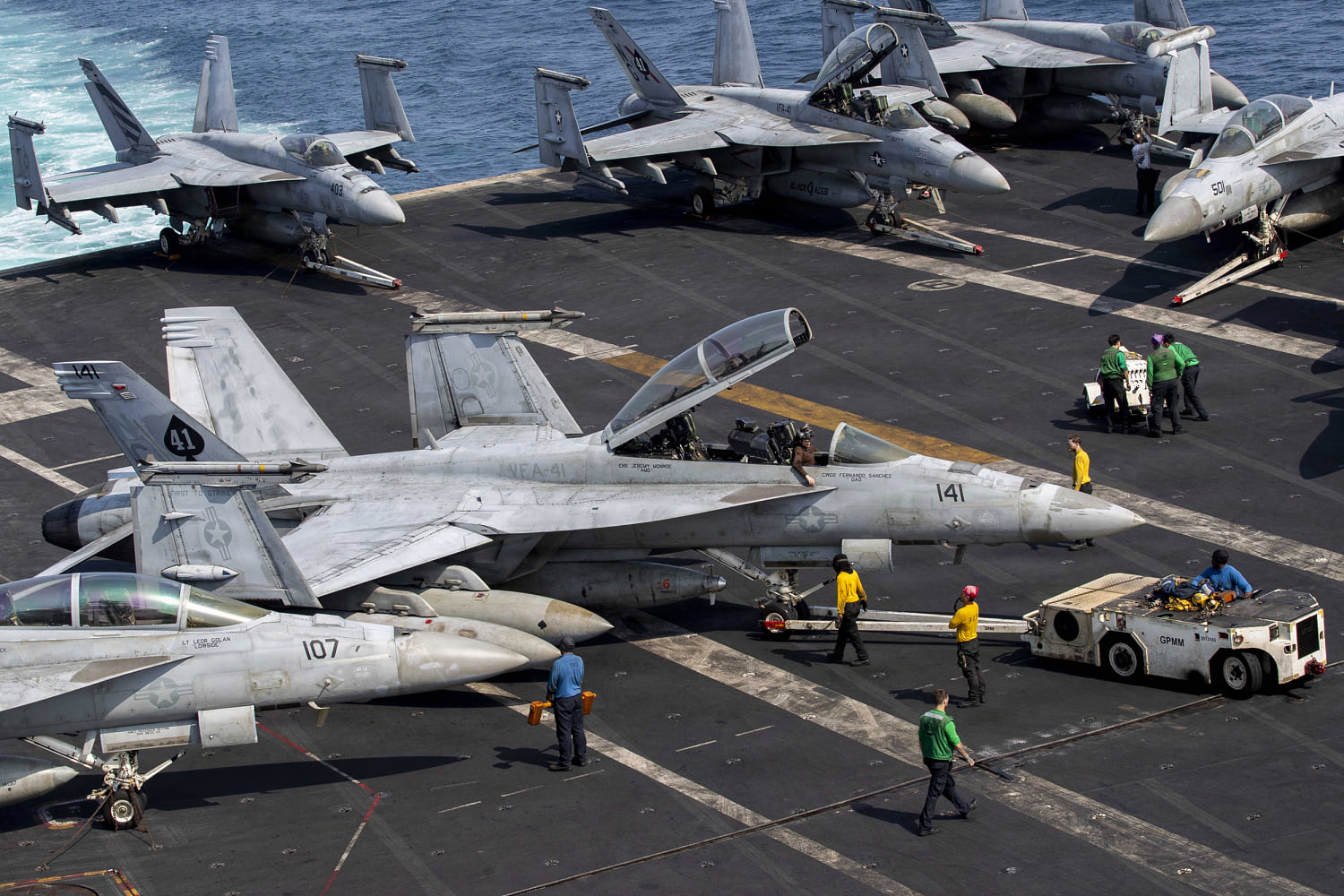
Imagine the logistics of such a shift. Moving thousands of tons of equipment, redirected intelligence assets, and the subtle repositioning of carrier groups. Each movement is a signal. When a carrier moves ten miles to the west, analysts in Tehran spend forty-eight hours deconstructing what that means for their coastal defenses. When a drone flight is canceled, it ripples through the command structure of a dozen proxy militias. It is a language of motion, spoken by machines but felt by humans.
We often talk about these events as if they are inevitable, as if the gears of history turn by themselves. They don't. They are turned by the hands of individuals who are often just as uncertain as the rest of us. The decision to wind down operations is a recognition of limits. It is an admission that while you can win a battle with superior technology, you cannot win a region through sheer persistence. The Middle East has a way of absorbing empires and spitting out only their hubris.
The skepticism surrounding this move is valid. Critics argue that without a formal ceasefire, we are simply hitting the pause button on a disaster. They fear that a "wind down" is merely a tactical reset, a way to catch our breath before the next inevitable escalation. And they might be right. In the world of international relations, trust is a ghost—everyone talks about it, but no one has actually seen it.
However, for the people living in the crosshairs, even a pause is a mercy.
Think back to Elias in the dust of the outpost. He doesn't care about the nuances of "leverage" or the optics of a signing ceremony in a rose garden. He cares about the weight of his pack and the date on his return ticket. To him, the President’s words are not a headline; they are a physical force that determines whether he sleeps in a tent or his own bed.
The strategy of winding down without a ceasefire is a gamble on human psychology. It assumes that if you stop punching long enough, the other person will eventually lower their guard, and you can both walk away without having to apologize. It is a messy, imperfect, and deeply frustrating way to conduct foreign policy. It lacks the moral clarity we crave. We want the heroes and the villains to shake hands or for the villain to be vanquished. Reality, however, usually settles for a quiet, begrudging retreat.
As the sun sets over the Potomac and the Persian Gulf simultaneously, the world waits. We wait to see if the "wind down" is a genuine exit or a temporary lull. We wait to see if the rhetoric of the deal-maker can coexist with the reality of a region that has seen a thousand deals crumble into the sand.
The ink on the page may be missing, but the movement of the men and machines is undeniable. Whether this leads to a lasting calm or just a more quiet form of chaos depends on things we cannot see: the private conversations in bunkers, the unspoken understandings between generals, and the simple, human desire to stop fighting.
The sword hasn't been beaten into a plowshare yet. It has merely been lowered. The arm is tired. The eyes are weary. And for now, in the silence between the reports, that might be the best we can hope for.
Would you like me to analyze the specific economic impacts this military "winding down" might have on global oil markets?