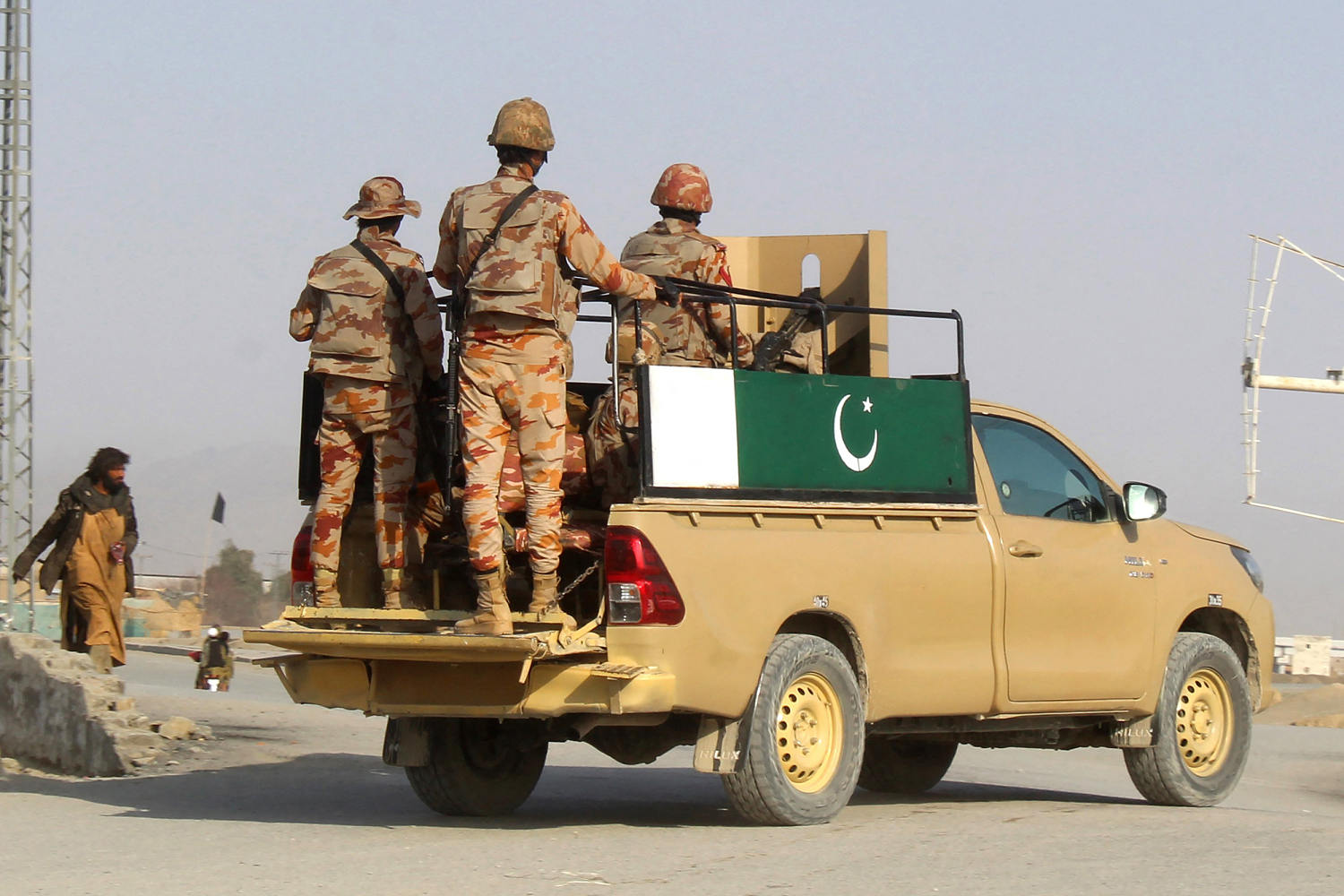
Pakistan is currently attempting a diplomatic high-wire act that few nations in history have successfully navigated. On one front, Islamabad is positioning itself as a vital mediator in the intensifying friction between Middle Eastern powers and the West. On the other, it is locked in a brutal, domestic counter-terrorism campaign that threatens to destabilize its own borders. This is not a simple case of a nation wearing two hats. It is a desperate effort to secure foreign investment and diplomatic legitimacy abroad while the internal security framework shows visible cracks.
The premise is straightforward but the execution is messy. By acting as a bridge in regional conflicts—most notably between Tehran and Riyadh, or as a back-channel for Western interests in Afghanistan—Pakistan hopes to prove its indispensable status to the global community. However, this "peacemaker" persona is being built on a foundation of shifting sand. The resurgence of the Tehrik-i-Taliban Pakistan (TTP) and separatist violence in Balochistan are no longer manageable "low-level" threats. They are systemic challenges that drain the national exchequer and scare off the very investors the diplomatic charm offensive is meant to attract. Building on this topic, you can find more in: Why the Green Party Victory in Manchester is a Disaster for Keir Starmer.
The Mirage of Regional Mediation
Diplomacy is often the art of making yourself necessary. For Pakistan’s military and civilian leadership, the logic is clear. If they can facilitate stability in the Persian Gulf or maintain a working relationship with the Taliban in Kabul, the International Monetary Fund (IMF) and Washington are more likely to overlook the country’s perennial debt crises.
This strategy worked during the Cold War and the War on Terror. It is less effective in 2026. The world has moved toward a more transactional model of foreign policy. While Pakistan’s diplomats speak of "regional connectivity" and "economic corridors," the reality is that their mediation efforts are often viewed with skepticism. Major powers are increasingly bypassing traditional intermediaries, preferring direct, albeit tense, engagement. Experts at TIME have provided expertise on this trend.
Islamabad’s attempts to play the middle ground between China and the United States also create friction. You cannot be a neutral arbiter when your economy is heavily leveraged by one side of the table. Every time Pakistan attempts to host a peace summit or facilitate a ceasefire elsewhere, the question remains: Can a house on fire really teach the neighbors about fire safety?
The Home Front is Bleeding
While the Foreign Office issues polished statements about international harmony, the Ministry of Interior is facing a nightmare. The surge in militant activity over the last 24 months has been staggering. This is not the same war Pakistan fought a decade ago.
The current insurgency is better equipped and more tactically diverse. The fall of Kabul in 2021 was supposed to give Pakistan "strategic depth." Instead, it provided its enemies with a sanctuary. The TTP has moved from being a fragmented group of tribal militants to a coherent force using sophisticated weaponry left behind by departing Western forces.
The Balochistan Complication
The violence in Balochistan represents a different, perhaps more existential, threat to the state’s ambitions. This is the heart of the China-Pakistan Economic Corridor (CPEC). When separatist groups target Chinese engineers or infrastructure, they aren't just attacking people. They are attacking Pakistan’s primary hope for economic survival.
The state’s response has historically been heavy-handed, focusing on kinetic military action while ignoring the underlying socio-economic grievances. This has created a cycle of radicalization that no amount of diplomatic posturing can mask. You cannot sell a "stable investment destination" to the world when your most resource-rich province is a no-go zone for foreigners.
The Economic Cost of Contradiction
War is expensive. Peacekeeping is also expensive. Pakistan is trying to fund both with an empty wallet.
The military budget remains a massive portion of the national spending, justified by the "war at home." Simultaneously, the government is pouring money into grand international forums and diplomatic missions to maintain its global standing. This creates a fiscal strangulation that prevents investment in education, infrastructure, or industry.
Foreign Direct Investment (FDI) thrives on predictability. Investors do not look at a country’s ability to mediate a ceasefire in a neighboring region as a primary metric. They look at the rule of law, the safety of their personnel, and the stability of the currency. Pakistan’s dual-track policy creates an environment of perpetual "gray zone" instability.
The IMF Shadow
Every move Islamabad makes is scrutinized by the IMF. The lender of last resort is no longer satisfied with vague promises of reform. They want to see a reduction in the "non-productive" spending that often fuels these dual roles. If Pakistan continues to prioritize its role as a regional power-broker over its responsibilities as a stable domestic sovereign, the next bailout may come with conditions that the political elite find impossible to swallow.
Why the Peacemaker Strategy is Faltering
The primary reason this strategy is hitting a wall is the lack of internal cohesion. In a functional state, foreign policy is an extension of domestic strength. In Pakistan, foreign policy is often used as a distraction from domestic weakness.
International partners are starting to see through the veneer. They recognize that a nation that cannot secure its own police stations in Khyber Pakhtunkhwa is unlikely to be the guarantor of security for a multi-billion dollar regional pipeline. The "broker" role only works if the broker has enough capital—political, military, or economic—to back up the deal. Pakistan is currently running on credit in all three categories.
The obsession with being a "pivotal" state has led to a neglect of the basics. Roads, power grids, and a functional judiciary are the real tools of statecraft. Without them, the most eloquent speech at the United Nations is just noise.
The Myth of Strategic Depth
For decades, the Pakistani establishment chased the idea of "strategic depth" in Afghanistan—a friendly government in Kabul that would ensure a secure western border. That dream has turned into a strategic liability.
The border is more volatile than ever. The Taliban government in Kabul has proven unwilling or unable to restrain the militants attacking Pakistan. This has forced Islamabad into a humiliating position: begging a regime it helped install to stop its allies from killing Pakistani soldiers. This failure at the doorstep undermines any claim Pakistan has to being a master of regional diplomacy.
The "peacemaker" narrative is further eroded by the internal political chaos. High-profile arrests, suppressed protests, and a fractured parliament mean that the government’s focus is divided. A state that is at war with its own political opposition rarely has the bandwidth to mediate between global superpowers effectively.
The Tactical Shift Needed
If Pakistan wants to survive this decade, it must invert its priorities. The pursuit of "indispensability" on the world stage should be a secondary goal. The primary goal must be the radical stabilization of the domestic security and economic environment.
This requires more than just military operations. It requires a fundamental shift in how the state treats its peripheries. If the people of Balochistan and the tribal districts do not feel they have a stake in the federation, they will continue to provide the oxygen that militancy needs to survive.
The hard truth is that the world is no longer afraid of a "failed" Pakistan in the way it once was. The "too big to fail" argument has lost its teeth as the global community becomes more insulated from regional blowback. If Pakistan wants to be taken seriously as a regional leader, it must first prove it can govern itself without the constant threat of collapse.
The current path is a circle. High-level diplomacy brings in just enough aid to keep the lights on, while the internal war burns through that aid before it can reach the people. Breaking this cycle requires the courage to step back from the world stage and focus on the quiet, unglamorous work of nation-building.
The time for being a "strategic asset" is over. The era of being a "functional state" must begin, or the wars Pakistan is fighting—both the one it wants and the one it doesn't—will consume the country's future.
Stop looking for a seat at the big table and start fixing the floor in your own house.