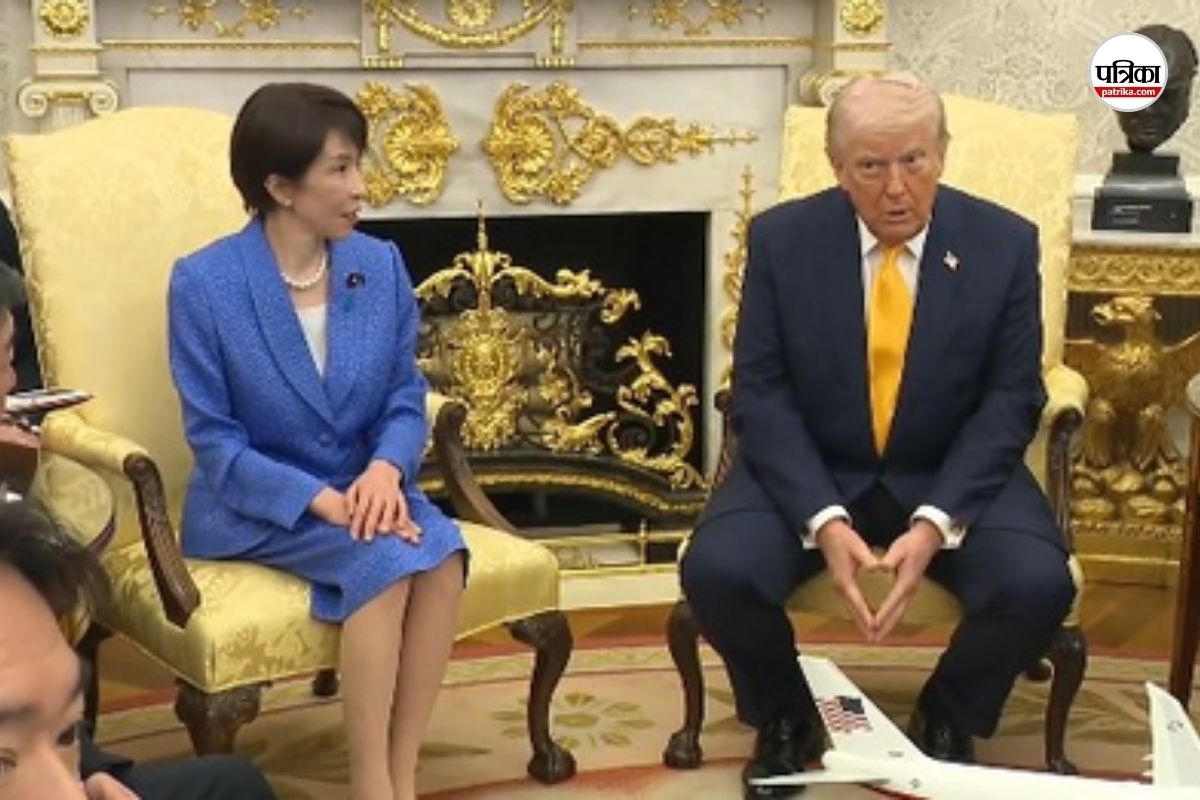
The room went cold. That's the only way to describe the moment Donald Trump turned to Japanese Prime Minister Sanae Takaichi and dropped a historical bombshell that nobody saw coming. During a high-stakes diplomatic meeting, Trump reportedly looked at Takaichi and asked why she hadn't told him more about Pearl Harbor. It wasn't just a casual question. It was a verbal hand grenade that left the Japanese delegation stunned and the Prime Minister visibly uncomfortable.
When you're dealing with the US-Japan alliance, you don't usually bring up the 1941 sneak attack. It’s the ultimate "don't go there" topic. But Trump isn't a "don't go there" kind of guy. He thrives on the awkward. He uses history like a blunt instrument to keep his counterparts off balance. This wasn't a history lesson; it was a power play.
The awkward silence heard across Tokyo
Diplomacy is usually a dance of carefully scripted talking points and polite nods. Then Trump walks in. According to reports from those close to the meeting, the mention of Pearl Harbor wasn't just a brief aside. It was framed in a way that suggested the past still dictates the terms of the present.
Imagine being Sanae Takaichi. You're the first female Prime Minister of Japan, navigating a delicate balancing act between national pride and a vital military alliance. Then, the leader of your most important ally brings up the single most traumatic event in the history of that relationship. You can't ignore it. You can't laugh it off. You just have to sit there while the air leaves the room.
Takaichi is known for her conservative stance and her visits to the Yasukuni Shrine, which already makes her a lightning rod for historical controversy in East Asia. To have Trump throw Pearl Harbor in her face is a unique kind of irony. It forced her into a corner where any response could be seen as either a betrayal of Japanese dignity or a slight against American memory.
Why Trump keeps using the past as a weapon
Trump’s obsession with Pearl Harbor isn't new. He’s mentioned it before, often linking it to trade deficits or military spending. In his mind, history is a ledger of who owes what to whom. If Japan "surprised" the US in 1941, he seems to think that gives the US permanent leverage in 2026.
It’s a bizarre way to run a foreign policy, but it’s effective. By bringing up Pearl Harbor, Trump reminded Takaichi that the US is the senior partner. He reminded her that the current world order was built on a Japanese defeat. It’s a move designed to make the other person feel small.
Most leaders want to move forward. They talk about "shared values" and "future cooperation." Trump looks backward because that’s where the grievances are. He doesn't want a partnership of equals; he wants a deal where he has the upper hand. Pearl Harbor is his ultimate "I win" card.
The Takaichi dilemma and the future of the alliance
Sanae Takaichi isn't a pushover. She has built her career on being tough. But the "Pearl Harbor moment" tested her in a way that domestic politics never could. Japan is currently trying to increase its defense budget and take a more active role in regional security, largely to counter China. They need the US. Trump knows they need the US.
The discomfort in that room reflects a deeper anxiety in Tokyo. If the US president is willing to weaponize 80-year-old history during a standard diplomatic meeting, how reliable is the alliance?
- Japan is worried about being abandoned if they don't pay more for US troops.
- Takaichi has to manage a public that is increasingly skeptical of American volatility.
- The ghost of World War II continues to haunt every trade deal and security pact.
It’s not just about one comment. It’s about the fact that for Trump, the alliance is a transaction, not a friendship. Takaichi’s "unease" wasn't just about the awkwardness of the question. It was the realization that the old rules of diplomacy are dead.
Moving beyond the shock factor
If you're watching this from the outside, it’s easy to dismiss it as just another Trump outburst. That would be a mistake. This interaction sets the tone for every negotiation moving forward. Takaichi now knows that she can't rely on standard protocol. She has to be ready for anything, including a lecture on 20th-century warfare in the middle of a discussion about semiconductors.
To handle this, Japan has to stop reacting and start anticipating. They need to find a way to frame the alliance that appeals to Trump’s transactional nature without sacrificing their own national pride.
You should keep a close eye on the upcoming G7 meetings. Watch how Takaichi interacts with other leaders. If she can build a coalition that buffers against these "history hits," she might survive the Trump era with her reputation intact. If she remains on the defensive, she'll keep getting blindsided.
The next time you see a headline about a "tense" meeting between these two, remember the Pearl Harbor comment. It wasn't a slip of the tongue. It was a warning shot. Japan needs to decide if they're going to keep apologizing for the past or start demanding a future that doesn't involve being reminded of 1941 every time they want to talk about trade.
Keep an eye on the official Japanese diplomatic cables over the next month. They'll tell you more about the real damage than any press release ever will. Look for shifts in how Japan discusses its "Self-Defense Forces" roles—that’s where the real pushback will happen.