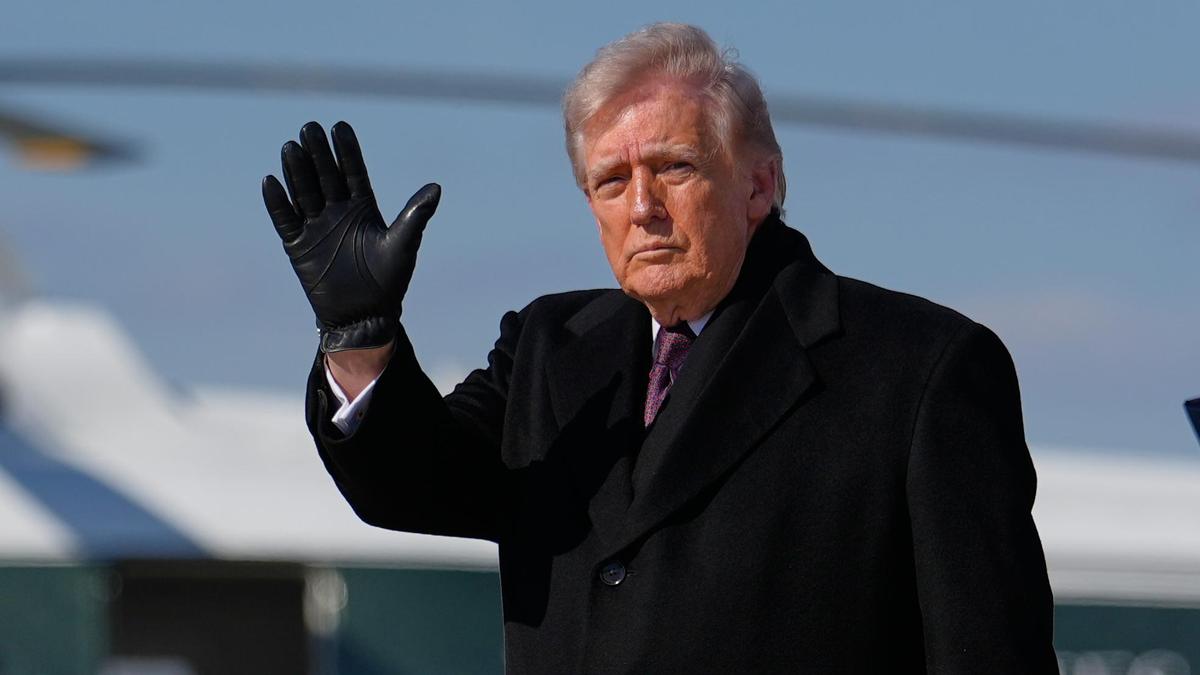
The fragile equilibrium of Middle Eastern energy markets just took a blunt-force hit from the former and potentially future President of the United States. In a series of statements that have sent shockwaves through the diplomatic corridors of Doha and the trading floors of London, Donald Trump has explicitly decoupled American involvement from recent kinetic actions against Iranian gas infrastructure. By asserting that Israel acted alone in targeting Iranian gas fields, Trump is not just clarifying a historical or tactical point. He is drawing a line in the sand that redefines the risks of regional escalation, particularly concerning Qatar’s role as a global energy linchpin.
This isn't merely about who pulled the trigger on a pipeline or a processing plant. It is a calculated signal to Tehran that while the U.S. may not have provided the green light for specific strikes on energy assets, the shield over other regional players—specifically Qatar—remains impenetrable. For an industry that relies on the predictable flow of Liquefied Natural Gas (LNG) through the Strait of Hormuz, this shift from "coordinated allied pressure" to "strategic isolation of Israeli actions" creates a volatile new environment for risk assessment.
The Calculated Distance from Israeli Kinetic Operations
The standard operating procedure for Washington has long been one of strategic ambiguity or "ironclad" unity with Israeli security operations. Trump’s decision to publicly attribute the targeting of Iranian gas fields solely to Israel breaks that mold. This isn't a leak; it's a policy pivot. By labeling these actions as unilateral Israeli moves, the intent is to strip away Iran’s primary excuse for retaliating against American assets or global energy chokepoints.
If the United States is seen as a co-conspirator in the destruction of Iranian domestic energy production, Iran’s doctrine of "reciprocal pain" dictates that Western-aligned energy infrastructure becomes a legitimate target. Trump is effectively trying to take that card off the table. He is telling the Iranian leadership that their grievances lie with Jerusalem, not Washington. This creates a vacuum of accountability that Israel is seemingly comfortable filling, provided it maintains its tactical edge, but it leaves global markets wondering if the U.S. is losing its grip on its most restive ally.
The timing of this distancing is critical. Iran’s gas fields, particularly the massive South Pars complex which it shares with Qatar, are the lifeblood of its struggling economy. To hit these fields is to strike at the heart of the regime’s ability to provide electricity and heat to its own population. By making it clear that this was an Israeli play, the U.S. attempts to dodge the blowback of a humanitarian or economic collapse within Iran, while still reaping the benefits of a weakened adversary.
The Qatari Shield and the LNG Red Line
Perhaps more significant than the finger-pointing at Israel is the explicit warning issued to Iran regarding Qatar. Qatar is not just another Gulf state; it is the world’s most vital swing producer of LNG. The North Field, which Qatar operates, is geologically the same reservoir as Iran’s South Pars. They are literally sipping from the same straw.
Trump’s warning against Iran targeting Qatar is a recognition of a simple, brutal reality. If Qatar’s gas infrastructure is compromised, the global energy transition grinds to a halt. Europe, still reeling from the loss of Russian pipeline gas, would face an existential winter. Asia’s industrial hubs would go dark.
The defense of Qatar is not rooted in a sudden burst of diplomatic affection. It is cold, hard math. Qatar has spent decades positioning itself as the indispensable intermediary, hosting the largest U.S. airbase in the region at Al-Udeid while maintaining a functional, if tense, working relationship with Tehran. Trump is signaling that this "middle-man" status is protected by American fire-power. If Iran strikes at Qatari rigs or tankers in a fit of rage over Israeli actions, they are no longer fighting a regional shadow war. They are fighting the U.S. Navy.
Reassessing the Vulnerability of South Pars
The Iranian side of the world's largest gas field, South Pars, represents roughly 40% of Iran’s total gas reserves. It is a sprawling complex of offshore platforms, undersea pipelines, and onshore refineries. For years, it was considered "too big to hit" because of the potential for environmental catastrophe and the risk of collateral damage to Qatari interests.
That taboo has been shattered.
The "Israel acted alone" narrative suggests that the tactical threshold for attacking energy infrastructure has lowered. If Israel is willing to take the reputational and security risks of hitting these sites without direct U.S. participation, the entire security architecture of the Persian Gulf is in flux.
The Infrastructure Risk Profile
- Cyber Warfare: While physical strikes make headlines, the more persistent threat to these gas fields is digital. Iranian infrastructure is notoriously porous, relying on aging industrial control systems that are susceptible to sophisticated malware.
- Asymmetric Retaliation: Iran’s Revolutionary Guard (IRGC) doesn't need to sink a carrier to win. They only need to make insurance rates for LNG tankers so high that the trade becomes uneconomical.
- The Shared Reservoir Trap: Any physical damage to the South Pars seabed could theoretically impact the pressure levels in the Qatari North Field. This geological reality makes any strike on the field a high-stakes gamble with the world's energy supply.
The Economic Consequences of Geopolitical Finger Pointing
Markets hate uncertainty, but they loathe a lack of accountability even more. When the U.S. asserts that Israel acted alone, it introduces a "wildcard" variable into energy pricing. Traders can no longer assume that Washington has the leash on Israeli operations. This "de-coupling" means that an escalation could happen at any hour, without the usual diplomatic cooling-off periods that involve U.S. mediation.
We are seeing the emergence of a "conflict premium" that isn't just about supply and demand. It's about the reliability of the security umbrella. If the U.S. is only selective about what it defends, then every piece of energy infrastructure in the Middle East—from the refineries in Abadan to the export terminals in Ras Laffan—needs a new risk assessment.
The Iranian response to this has been predictably defiant, but there is an undercurrent of genuine concern. The Iranian economy is already operating on a knife’s edge. The loss of gas revenues or the destruction of domestic heating capabilities during peak demand months could trigger the kind of internal unrest that the regime fears more than foreign bombs. Trump knows this. By narrowing the scope of the conflict to an Israel-Iran grudge match, he is forcing Tehran to decide if they are willing to risk everything on a counter-strike that might finally bring the U.S. into the fray.
Security Guarantees in a Multi-Polar Gulf
The assertion that the U.S. will protect Qatar even as it distances itself from Israeli strikes on Iran creates a fragmented security map. For the UAE and Saudi Arabia, this is a confusing signal. They have spent years trying to figure out if the U.S. is truly pivotting away from the region. Trump’s rhetoric suggests a more transactional approach: we will protect the assets that keep the global economy from collapsing, but we won't necessarily stop our allies from breaking your neighbor's toys.
This creates a dangerous incentive structure. If Israel feels it has a window to act unilaterally without losing U.S. support for its broader defense, it will continue to push the boundaries of what is "acceptable" sabotage. Conversely, if Iran feels that Qatar is the only "protected" entity, they may look for softer targets in the region—Bahrain, Kuwait, or even shipping in the Red Sea—to signal their displeasure without triggering the "Qatari Red Line."
The Strategic Shift in Detail
The move away from a unified front on energy sabotage marks the end of the "Global Energy Security" era and the beginning of "Fractionalized Protectionism."
- Selective Deterrence: The U.S. is no longer claiming to keep the peace in the entire Gulf. It is claiming to keep the gas flowing from specific ports.
- Plausible Deniability as a Weapon: By blaming Israel, the U.S. maintains its ability to act as a mediator later, even if the "unilateral" action achieved exactly what Washington wanted.
- The Qatari Paradox: Qatar is being told it is safe from Iran, but its "partner" in the North Field (Iran) is being told its side of the field is a legitimate target for someone else.
The Operational Reality of Protecting Qatar
Protecting Qatar against Iranian targeting is a massive military undertaking. It requires constant Combat Air Patrols (CAP), an immense Aegis-equipped naval presence, and a sophisticated integrated air defense system (IADS) that can track and intercept everything from ballistic missiles to low-flying "suicide" drones.
When Trump warns Iran against targeting Qatar, he is committing the U.S. Central Command (CENTCOM) to a high-alert posture that is difficult to maintain indefinitely. The Iranians are masters of the "long game." They don't need to attack today. They can wait for a moment of perceived weakness, a change in administration, or a distraction in another theater like Ukraine or the South China Sea.
The threat to Qatar isn't just a direct missile strike. It's the "accidental" mine in the shipping lane. It's the "unidentified" drone hitting a cooling tower. It's the "rogue" cyber attack that shuts down the loading gates. Trump’s rhetoric assumes that a clear warning is enough to deter a regime that has spent forty years perfecting the art of the indirect hit.
The Intelligence Gap and Public Perception
There is a significant question of whether the U.S. intelligence community agrees with Trump’s assessment that Israel "acted alone." Often, these operations are "coordinated-light," where the U.S. provides the intelligence and the "target package," while the ally provides the platform and the pilot. By publicly stripping away that coordination, Trump is either exposing a genuine rift in the alliance or, more likely, engaging in a high-level psychological operation to isolate Iran.
For the veteran analyst, the "why" is clear: the U.S. wants the degradation of Iranian capabilities without the bill for the war. If Israel is willing to do the heavy lifting, the U.S. is happy to provide the rhetorical cover of "we didn't do it," while simultaneously holding the shield over the world's gas pump in Doha. It is a masterful, if incredibly risky, piece of geopolitical theater.
The Iranians are now in a position where any strike on Qatar would be viewed as an unprovoked escalation against the U.S., regardless of what Israel did to them. It’s a box. A very tight, very dangerous box. The walls of that box are made of Qatari gas and American warships.
Energy companies operating in the region must now account for a world where the U.S. flag doesn't protect every pipeline, but it will go to war for a specific few. This hierarchy of protection will inevitably lead to a reallocation of capital. Investment will flow toward the "protected" zones like Qatar’s North Field, while the "gray zones"—areas where the U.S. might claim an ally "acted alone"—will see a flight of international expertise and funding.
The Breakdown of Regional Cooperation
This unilateral-distancing approach effectively kills any hope for a regional "Energy Security Framework" that includes Iran. For years, there were whispers of a "Gas OPEC" or a joint security pact for the Gulf. Those ideas are now dead. You cannot have a security pact when the dominant superpower in the region identifies half of the major infrastructure as a "free-fire zone" for its allies.
What remains is a series of bilateral "protection rackets" and "strike authorizations." Israel has its authorization to strike Iranian energy to prevent nuclear breakout or fund proxy wars. Qatar has its protection racket to keep the global economy afloat. Iran has nothing but its ability to cause chaos in the cracks between these two certainties.
The danger is that Iran, feeling cornered and seeing its primary economic engine dismantled by an actor the U.S. refuses to restrain, will decide that the "Qatari Red Line" is a bluff. They may calculate that the U.S. is too war-weary to actually engage in a full-scale defense of a small Gulf peninsula if the provocation is sufficiently "deniable."
The strategy of decoupling Israeli actions from U.S. responsibility is a gamble on Iranian rationality. It assumes that the leadership in Tehran will distinguish between the hand that holds the knife and the hand that holds the shield. In the heat of a regional conflagration, that is a distinction that often disappears in the smoke of a burning refinery.
Review the insurance premiums for Suez and Hormuz transits over the next quarter. If they continue to climb despite these "warnings," it means the market doesn't believe the shield is as thick as the rhetoric suggests.