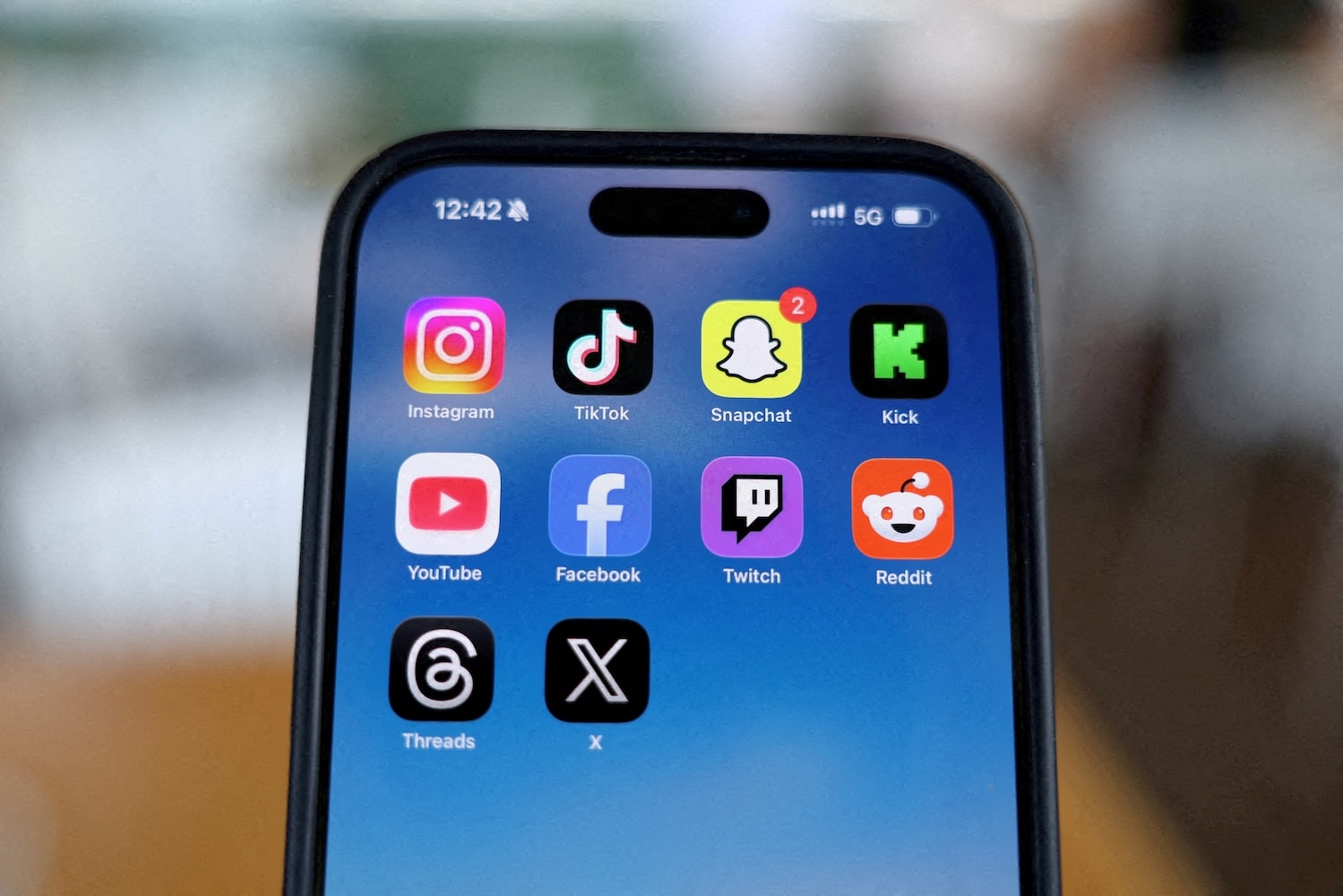
In a quiet suburb of Melbourne, fifteen-year-old Leo sits at his desk, his face bathed in the familiar, flickering blue light of a screen. To his parents in the next room, he is doing his homework. To the Australian government, he doesn't exist—at least not in the digital spaces they’ve declared off-limits. But Leo is currently watching a short-form video of a cat playing a synthesizer, sent to him via a platform he is legally barred from accessing. He is part of the 20 percent.
The Australian government’s landmark social media ban for under-16s was designed to be a digital iron curtain. It was a move born of genuine concern, fueled by rising rates of teen anxiety and the predatory nature of algorithms that thrive on dopamine loops. The intent was noble: to give childhood back to the children. Yet, months after the legislation took hold, the "Great Disconnect" has proven to be less of a hard stop and more of a shift into the shadows.
One-fifth of Australian teenagers are still scrolling through TikTok and snapping photos on Snapchat. They aren't doing it because they are rebels without a cause. They are doing it because, for a generation born with a smartphone in their cradle, the internet isn't a "service" they use. It is the air they breathe.
The Mechanics of a Virtual Secret
How does a fourteen-year-old outsmart a multi-billion dollar legislative framework? With a few taps and a bit of inherited digital literacy.
The ban relied heavily on age-verification technology—a complex suite of tools ranging from facial estimation to third-party ID checks. But these systems are only as strong as the perimeter they guard. Many teens simply kept their existing accounts, logged in before the ban, or used Virtual Private Networks (VPNs) to make it appear as though they were browsing from a bedroom in Tokyo or a cafe in London.
Consider the hypothetical case of Sarah, a year 9 student in Sydney. When the ban was announced, her parents were relieved. They deleted the apps from her phone. Two days later, Sarah found an old iPad in the kitchen drawer that was still signed into her iCloud. Within ten minutes, she had downloaded a free VPN and was back in her group chats. To the regulators, Sarah is a success story—a child "saved" from the platform. In reality, she is just browsing through a digital peephole, her activity now entirely invisible to the safety filters her parents once monitored.
This is the unintended consequence of the hard-line approach. By pushing usage underground, we haven't eliminated the risks; we’ve simply removed the oversight.
The Social Currency of the Disenfranchised
To understand why a teenager would risk parental wrath or legal friction to stay on Snapchat, you have to understand the nature of modern social currency.
For an adult, a missed notification is a minor annoyance. For a sixteen-year-old, it is social extinction. When the "Streaks" on Snapchat break or the viral jokes from TikTok aren't understood in the school hallway, the resulting isolation isn't just "fear of missing out." It is a literal removal from the town square.
The 20 percent who remain online are often the ones who feel they have the most to lose. They are the artists sharing their work, the LGBTQ+ youth finding community in rural towns, and the neurodivergent kids who find text-based interaction far less draining than the chaotic sensory environment of a physical classroom. When the law moved to protect them, it inadvertently threatened their lifelines.
The statistics tell us that one in five are staying behind. But statistics are cold. They don't capture the frantic energy of a Discord server where teens trade tips on which "mirror" sites still host TikTok content. They don't show the resentment brewing toward a government that many teens feel doesn't understand the difference between an "app" and a "friendship group."
The Transparency Gap
There is a certain irony in the way the ban has manifested. The legislation was meant to hold tech giants accountable, forcing them to implement "robust" measures—a word regulators love and engineers find hilariously vague.
Instead of a safer internet, we have created a fragmented one. The teens who comply are often those with the most supportive home lives and alternative hobbies. The 20 percent who circumvent the ban are frequently the most vulnerable—those who crave the escape or the connection so deeply that they are willing to navigate the darker corners of the web to find it.
When a child uses a platform legally, there are at least some guardrails. Algorithms, however flawed, have safety filters for known self-harm content or predatory keywords. But when a teen uses a third-party "wrapper" or a modified version of an app to bypass a ban, those safety nets vanish. They are playing in a playground where the lights have been turned off and the fences have been torn down.
The "one-fifth" figure isn't just a failure of enforcement. It is a symptom of a deeper misunderstanding of how technology integrates with identity.
The Ghost in the Machine
We are currently witnessing a massive, nationwide experiment in behavioral psychology. The Australian government bet that by removing the stimulus, they could change the behavior. But humans are not that simple. We are resourceful, especially when we feel something essential has been taken from us.
The 20 percent represent the "Ghost in the Machine." They are the proof that you cannot legislate away a cultural shift. You can turn off the towers, but people will still find a way to signal to one another across the dark.
This isn't to say the ban has been a total failure. For many families, it provided the "out" they needed to reset their relationship with screens. There are stories of teens rediscovering books, joining sports teams, and actually looking their friends in the eye during lunch. Those wins are real. But they are also the easy wins.
The real challenge lies with that stubborn one-fifth. These are the children who are now learning that the law is something to be bypassed, that privacy is a game of cat and mouse, and that their digital lives are something they must hide from the adults who are supposed to protect them.
The Flickering Light
Back in Melbourne, Leo finishes his "homework." He closes his laptop, but his phone vibrates in his pocket. It’s a notification from a friend who found a new way to stream a live gaming event through a loophole in an educational app.
Leo knows it’s risky. He knows his parents would be disappointed. But as he taps the link, he feels a rush of relief. He isn't alone. He is still connected.
The ban was meant to clear the fog of the digital age, to give our children a vista of the real world. But as we look out across the Australian landscape, we see thousands of tiny, flickering lights in the darkness. They are the screens of the 20 percent, shining defiantly, reminding us that you can't build a wall high enough to keep out the future.
The question is no longer how we stop them, but what we do when they eventually come back out of the shadows, having learned that the only way to stay connected was to disappear.
Imagine a dinner table where the silence isn't a sign of peace, but a sign of a secret being kept in a pocket. That is the new reality of the Australian home. We haven't solved the problem of the digital age; we've just moved the conversation to a room where we aren't invited.