The survival of the United Arab Emirates as a global financial and logistics hub depends entirely on its ability to maintain a "zero-kinetic impact" environment. Unlike traditional theaters of war where attrition is acceptable, the UAE’s urban centers—Dubai and Abu Dhabi—operate on a model of extreme sensitivity to risk. A single successful missile strike on a skyscraper or a desalination plant does not just cause localized damage; it triggers an immediate flight of capital, a spike in insurance premiums, and the potential collapse of the tourism sector. This necessity has driven the development of the most dense, multi-layered Integrated Air Defense System (IADS) in the Middle East, transforming the federation from a vulnerable coastal state into a high-technology fortress.
The Architecture of Stratified Interception
The UAE’s defense strategy is not built on a single weapon system but on a tiered architecture designed to achieve a 99% interception rate across multiple altitudes and velocities. This stratification is a mathematical necessity to counter the diverse threat profile posed by Iranian-manufactured assets, ranging from low-and-slow loitering munitions to high-velocity ballistic missiles.
High-Altitude Kinetic Interception: THAAD
At the apex of the pyramid sits the Terminal High Altitude Area Defense (THAAD). The UAE was the first international customer for this US-built system, which is designed to intercept short-, medium-, and intermediate-range ballistic missiles during their terminal phase. THAAD uses "hit-to-kill" technology, where kinetic energy alone destroys the incoming warhead outside or just inside the atmosphere. This is critical for Abu Dhabi’s strategic depth, as it prevents the detonation of conventional or non-conventional payloads over populated areas.
Mid-Tier Coverage: Patriot PAC-3
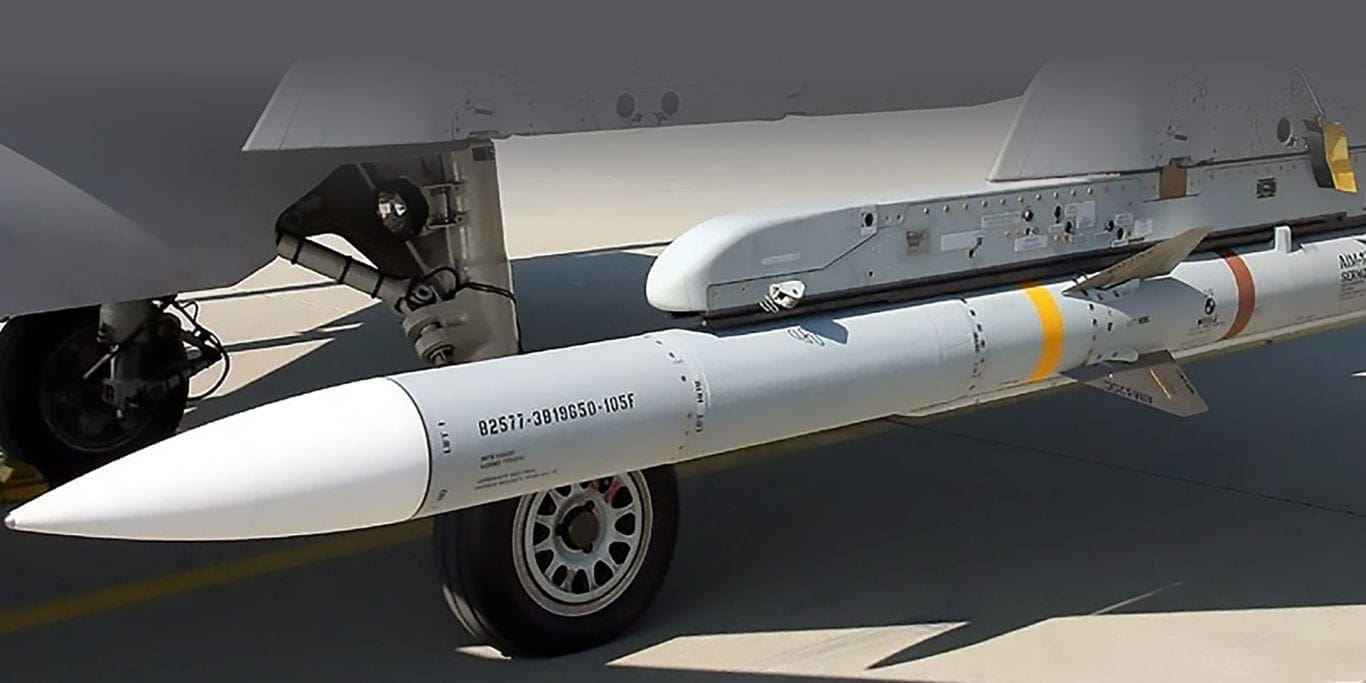
The Workhorse of the UAE’s defense is the MIM-104 Patriot, specifically the PAC-3 variant. While THAAD handles high-altitude threats, the PAC-3 manages the mid-tier. The system utilizes an active seeker to track targets, allowing it to engage faster and more maneuverable cruise missiles that fly lower than ballistic trajectories. The PAC-3 MSE (Missile Segment Enhancement) provides the increased agility required to counter the evolving guidance systems seen in recent regional conflicts.
Low-Altitude and Point Defense: C-RAM and Pantsir
The most significant shift in the last five years has been the pivot toward countering "asymmetric" threats—drones and loitering munitions. The UAE employs a mix of Western and Eastern technologies here. The Russian-made Pantsir-S1 provides a mobile, short-range solution combining surface-to-air missiles and dual 30mm anti-aircraft guns. This is supplemented by "Counter-Rocket, Artillery, and Mortar" (C-RAM) systems and electronic warfare suites designed to jam the GPS and radio frequency links of incoming UAVs.
The Sensor-to-Shooter Bottleneck
Data fusion is the invisible infrastructure that makes these physical launchers effective. An air defense system is only as good as its radar horizon. The UAE utilizes the AN/TPY-2 radar, a high-resolution, X-band system capable of detecting, tracking, and discriminating ballistic missiles at long ranges.
The primary challenge in modern interception is the "discrimination" phase. Radars must distinguish between the actual warhead and debris, decoys, or civilian aircraft. The UAE’s Command and Control (C2) centers integrate data from satellite feeds, airborne early warning aircraft (like the GlobalEye), and ground-based sensors. This integration creates a "Single Integrated Air Picture" (SIAP). Without this, the risk of "friendly fire" or "saturation" (where the defense is overwhelmed by too many targets) increases exponentially.
Economic Calculus of Interception
There is a fundamental economic disparity in modern missile warfare. A Shahed-type loitering munition may cost as little as $20,000 to manufacture. In contrast, a single Patriot interceptor costs approximately $3 million to $4 million, and a THAAD interceptor can exceed $12 million.
This creates a "cost-exchange ratio" that favors the aggressor in a prolonged war of attrition. The UAE manages this risk through three specific strategic pivots:
- Probability of Kill (Pk) Optimization: Rather than firing two interceptors at every target (a standard "shoot-shoot-look" doctrine), advanced algorithms assess the predicted impact point. If a drone is calculated to land in an empty desert area, the system may choose not to engage, preserving expensive inventory.
- Domestic Production: Through the EDGE Group, the UAE is aggressively developing indigenous short-range interceptors and directed-energy weapons (lasers). Lasers, while limited by atmospheric conditions like dust and humidity, offer a "near-zero" cost per shot, which is the only long-term solution to swarming drone attacks.
- Regional Integration: The "Middle East Air Defense" (MEAD) concept involves sharing radar data with neighbors. By seeing a launch from hundreds of miles away, the UAE gains minutes of lead time, which is the difference between a successful intercept and a catastrophic impact.
The Geography of Vulnerability
Dubai and Abu Dhabi present unique topographical challenges. The concentration of glass-clad high-rise buildings creates a "canyon effect" for sensors and an extreme hazard for falling debris. Even a successful interception at a low altitude can result in heavy shrapnel raining down on high-density residential zones.
Consequently, the UAE's tactical doctrine emphasizes "Engagement at Distance." The goal is to push the interception point as far from the coastline as possible. This requires naval-based defenses and forward-deployed radar stations on islands. The deployment of the Barak-8 system, an Israeli-developed surface-to-air missile, provides an additional layer of naval and coastal protection specifically tuned to counter sea-skimming cruise missiles that might approach from the Gulf.
Limitations and Systemic Risks
No defense system is impenetrable. The primary threat to the UAE’s safety remains the "saturation attack." If an adversary launches a synchronized strike involving 100+ drones, cruise missiles, and ballistic missiles simultaneously, any IADS will face sensor saturation and interceptor depletion.
Furthermore, the "Electronic Warfare" (EW) environment in the Gulf is incredibly noisy. Distinguishing a low-RCS (Radar Cross Section) drone from a flock of birds or a commercial delivery drone in a hyper-connected city like Dubai requires a level of algorithmic precision that is still being tested in real-world conditions.
The final limitation is human. The time-to-decision in a ballistic missile event is measured in seconds. The transition to AI-assisted engagement is underway, but this introduces ethical and operational risks regarding autonomous "kill" decisions in crowded civilian airspace.
The Strategic Playbook for Sovereign Protection
The UAE must now transition from being a consumer of defense technology to a pioneer of autonomous counter-measures. The focus must shift from "interception" to "neutralization at source" and "electronic denial."
- Investment in Directed Energy: Accelerate the deployment of high-energy lasers to break the cost-curve of drone defense.
- Deep-Learning Discrimination: Enhance C2 systems with neural networks trained to identify specific Iranian missile signatures instantly, reducing the "false positive" rate and saving interceptor stock.
- Hardened Infrastructure: Beyond active defense, urban planning must incorporate "passive defense"—shatter-resistant glazing and redundant power/water systems to ensure that if a "leaker" (a missile that gets through) does hit, the systemic shock is contained.
The security of the UAE is not a static achievement but a continuous technological arms race. Success is defined not by the absence of threats, but by the invisibility of the defense to the global markets it protects.