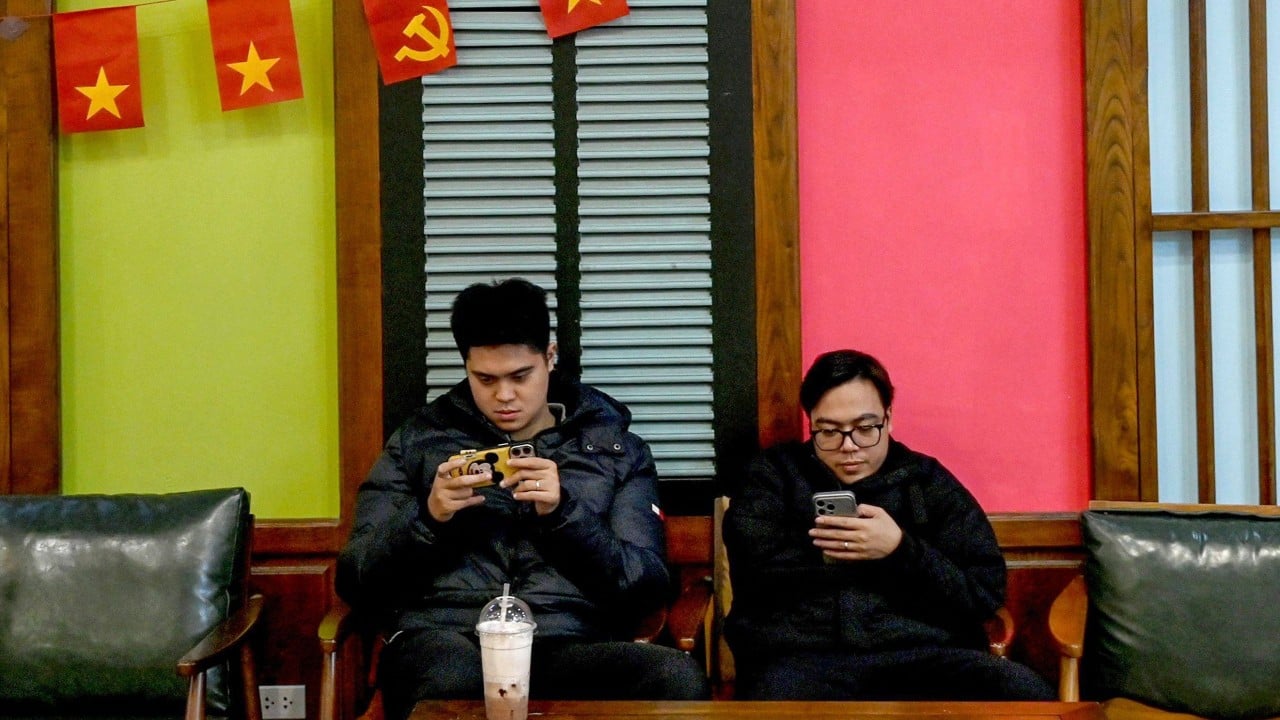
The air in the small coffee shop in Hanoi’s Old Quarter is thick with the scent of roasted beans and the humid weight of a looming storm. Across from me sits Minh. He is twenty-four, a coder who speaks in rapid-fire bursts of logic, and he is currently terrified. Not of the storm, but of a document.
Vietnam has just signaled a shift in the digital winds. While its neighbors in Southeast Asia have largely treated Artificial Intelligence like a friendly ghost—something present but intangible—Vietnam is reaching out to grab it by the throat. They are drafting rules. Strict ones. Rules that demand to see the blueprints of the algorithms, that want to know exactly what data is being fed into the machines, and that insist on a "kill switch" for anything deemed harmful to social stability.
Minh looks at his laptop. He’s building a tool that helps local farmers predict crop yields using satellite imagery and AI. "If I have to register every update with a government committee," he says, his voice dropping to a whisper, "the season will be over before the code is approved. I’m not a threat. I’m just trying to help my uncle grow better rice."
This is the friction point of a continent. Southeast Asia is currently the world’s most exciting digital laboratory, a region where millions are leaping straight from cash to crypto, from rural villages to global remote work. But a shadow is stretching across the map. As Vietnam leads the charge toward rigid regulation, the rest of the Association of Southeast Asian Nations (ASEAN) faces a choice that feels less like a policy debate and more like an economic own goal.
The Great Wall of Code
For years, the narrative around AI in the West has been a tug-of-war between Silicon Valley’s "move fast and break things" ethos and Brussels’ "regulate first, ask questions later" approach. Southeast Asia was supposed to be the middle ground. It was the place where innovation could breathe.
Then came the realization that AI isn't just a tool for writing emails or generating quirky art. It is the new electricity. It is the backbone of national security, the driver of the stock market, and the arbiter of who gets a loan and who doesn't. Vietnam, seeing the potential for chaos, decided to build a wall.
The proposed regulations in Vietnam aren't just suggestions. they are gatekeepers. They require AI developers to disclose their source code and provide detailed reports on their training data. For a global tech giant, this is a non-starter. Intellectual property is the crown jewel. If you force a company to hand over the keys to the castle, they won't just grumble. They will leave.
Imagine a high-stakes poker game where one player demands to see everyone else’s cards before the betting begins. The other players don't show their cards; they just stand up and walk to a different table. In this case, that table is in Singapore, Indonesia, or Thailand.
The Cost of a Closed Door
The danger here isn't just about losing a few big tech offices in Ho Chi Minh City. It’s about the "invisible stakes"—the things that don't happen because the environment is too hostile.
When a country tightens its grip too hard, it creates a vacuum. Investors hate uncertainty, but they loathe bureaucracy even more. If Vietnam’s rules become the blueprint for the rest of ASEAN, the region risks fracturing. Instead of a massive, unified digital market of 680 million people, you end up with ten tiny, isolated rooms, each with its own set of confusing locks.
Consider the logistics. A startup in Jakarta wants to expand to Manila. Under a unified, light-touch framework, they can scale their AI model with minimal friction. But if every country adopts the "Vietnam model," that startup now needs ten different legal teams, ten different sets of compliance officers, and ten different versions of their software.
The weight of that paperwork kills the dream before it even starts.
I watched Minh pull up a map of the region. He pointed to Singapore. "They are doing it differently," he noted. Singapore has opted for a voluntary Model AI Governance Framework. It’s a handshake, not a handcuff. It tells businesses: "We trust you to be responsible, and here is how we define responsibility. Work with us."
The results are visible in the skyline. Venture capital is pouring into the city-state because the rules are clear, predictable, and, most importantly, flexible. Meanwhile, the stricter approach elsewhere creates a chilling effect that is hard to measure until it’s too late.
The Human Algorithm
We often talk about AI as if it’s a sentient cloud hovering over our lives, but it is deeply human. It is made of our biases, our hopes, and our data. When a government tries to regulate it, they aren't just regulating math; they are regulating us.
There is a tension at the heart of the ASEAN identity. On one hand, there is a desire for "technological sovereignty"—the idea that these nations shouldn't just be digital colonies of the US or China. They want to own their future. On the other hand, the fastest way to lose that sovereignty is to stop being relevant.
If Southeast Asia becomes a patchwork of restrictive silos, it won't develop its own "Great AI." It will simply become a backwater that uses five-year-old technology because the new stuff is too legally expensive to import.
The "economic own goal" is a phrase used by analysts to describe a country hurting its own interests out of fear. It’s a perfect metaphor. You have the ball. You have an open field. But you’re so worried about the other team stealing the ball that you kick it into your own net just to keep it safe.
A Tale of Two Cities
The contrast is stark. In Bangkok, AI is being used to manage the city’s legendary traffic and optimize the power grid. There is a sense of "wait and see," a pragmatic openness. In Hanoi, the conversation is about "control" and "compliance."
Both sides have valid fears. AI can be used for deepfakes, for spreading misinformation, and for automating the loss of millions of jobs. No one is saying the "Wild West" is the answer. But there is a middle path that doesn't involve burning the map.
The real problem lies in the definition of safety. To a regulator, safety means a stack of reports and a signed confession of how an algorithm works. To a citizen, safety means having a job in an economy that hasn't been bypassed by the rest of the world.
The invisible cost of these regulations is the "lost genius." It’s the kid in a rural province who has a brilliant idea for an AI-driven healthcare app but realizes she can never afford the legal fees to clear the government’s hurdles. She doesn't build the app. The world never sees it. The "safety" the government bought cost them a revolution in local medicine.
The Ripple Effect
Vietnam’s moves are being watched closely by its neighbors. Within ASEAN, there is a tradition of consensus, but also a fierce streak of competition. If Vietnam’s economy slows down because of these hurdles, other nations might take it as a warning. But if they see it as a way to exert more state control over the digital lives of their citizens, they might follow suit.
This is the precipice. Southeast Asia is at a turning point where it can either become the global hub for ethical, innovative AI or a fragmented cautionary tale.
Minh closed his laptop as the rain finally started to lash against the cafe windows. The sound was deafening, a chaotic roar that drowned out the hum of the city.
"I think about the rice," he said, staring at the gray street. "The AI doesn't care about the rules. The weather doesn't care about the rules. Only we care. And if we spend all our time writing rules for the tools, we’ll forget how to actually use them to survive the storm."
He’s right. The machines are coming, regardless of whether the paperwork is filed. The question isn't whether we can stop them with a "kill switch," but whether we can build an environment where the people making the machines actually want to stay.
The digital fortress being built in Hanoi might keep some threats out, but it also traps the dreamers inside. And a fortress with no one to defend it is just a very expensive tomb.
The coffee was cold. The storm was here. Outside, the lights of the city flickered, caught between the old world and the one being written in lines of code that no one is allowed to see.
Would you like me to help you draft a strategy for navigating international AI compliance frameworks in Southeast Asia?