Silicon Valley’s most profitable myth—that it bears no responsibility for the compulsive behavior of its youngest users—just died in a Los Angeles courtroom.
On Wednesday, a jury found Meta Platforms Inc. and Google’s YouTube liable for the mental health collapse of a young woman who was hooked on their platforms before she hit double digits. The verdict in the case of the plaintiff, identified as K.G.M., is a structural fracture in the legal wall that has protected big tech for thirty years. By awarding $6 million in total damages—split between compensatory and punitive payouts—the jury did more than just write a check. They validated a legal theory that treats social media not as a neutral town square, but as a defective product engineered for addiction.
For decades, tech giants have retreated behind Section 230 of the Communications Decency Act, a federal law that shields platforms from being sued over what users post. If a teenager sees a dangerous stunt and tries it, the platform isn't liable for the content. But this trial bypassed that shield entirely. The plaintiff’s legal team didn't sue over the videos or the photos; they sued over the machinery of engagement.
The Engineering of the Hook
The trial turned into an autopsy of the "infinite scroll" and the "autoplay" button. These aren't just convenient features. They are deliberate design choices meant to override the human brain's natural "stopping cues."
Expert testimony from neuroscientists during the six-week trial compared these features to the mechanics of a slot machine. When a child pulls down to refresh a feed, they are engaging in a variable reward schedule—the same psychological trigger that keeps a gambler at a terminal in Las Vegas. The brain receives a hit of dopamine not when it finds something good, but in the anticipation of what might come next.
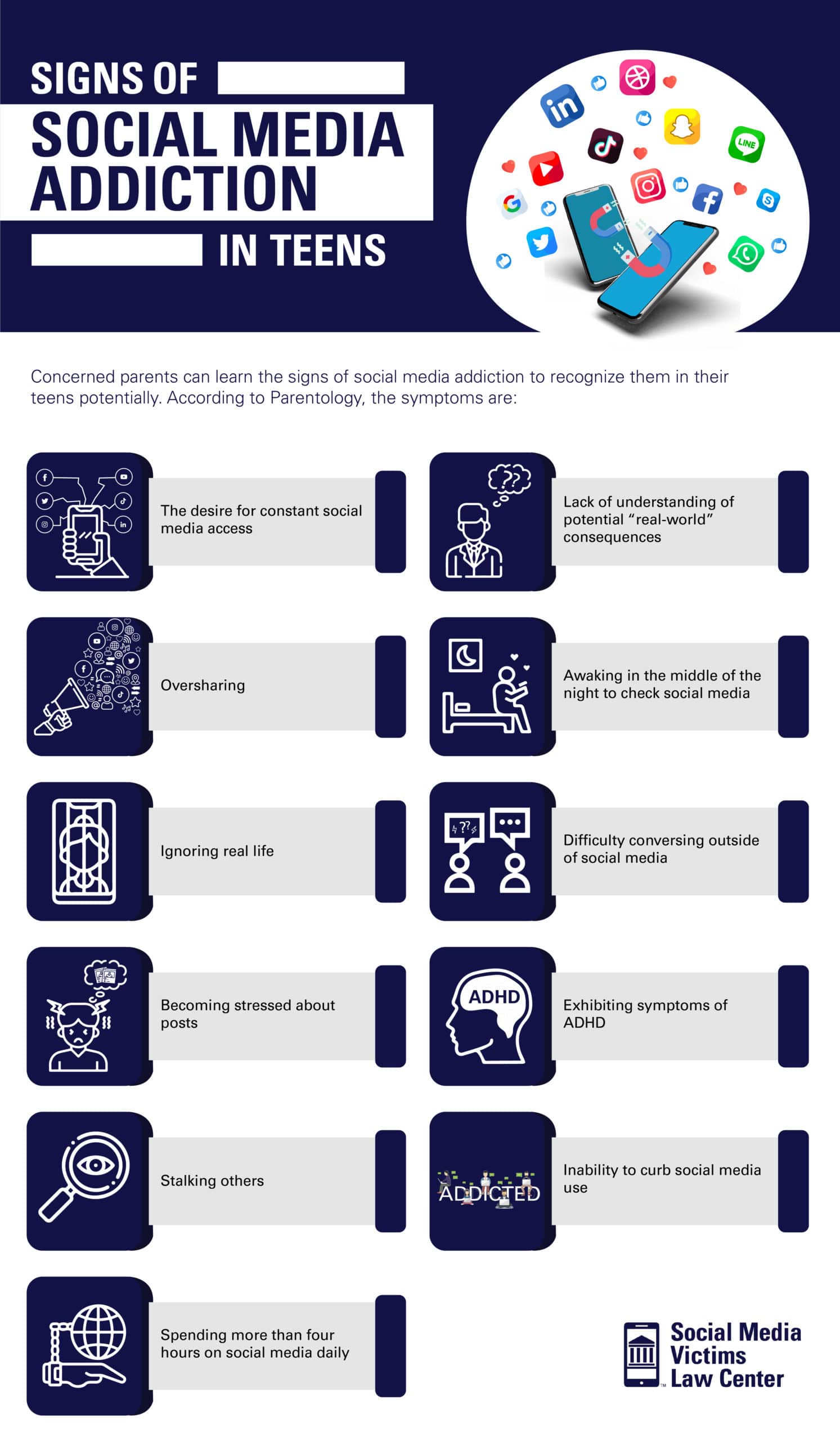
The jury heard how K.G.M. started using YouTube at age six and Instagram at age nine. By the time she was a teenager, she was spending upward of 16 hours a day on these apps, often retreating to school bathrooms just to check "likes." The defense argued that her depression and body dysmorphia were the result of a "turbulent home life," a standard tactic used to deflect blame onto parental oversight or pre-existing conditions.
The jury didn't buy it. They found that the platforms were a substantial factor in her harm. This is a critical legal distinction. The plaintiffs didn't have to prove social media was the sole cause, only that the product's design actively worsened her condition.
Internal Documents and the Profit Motive
What likely sealed the fate of the defendants was the "paper trail" of internal research. For years, whistleblowers have alleged that companies like Meta knew their products were harmful to teenage girls specifically. During the trial, jurors saw internal emails and slide decks where executives discussed how to maximize "time spent" among minors to satisfy advertisers.
Adam Mosseri, the head of Instagram, took the stand and was grilled on whether 16 hours of daily use was "addictive." He called it "problematic" but stopped short of using the A-word. That semantic dancing rang hollow against documents showing the company’s awareness of its own "hook" rate.
YouTube’s defense was equally strained. Its lawyers argued that YouTube isn't a social media site at all, but a "streaming platform" like television. This ignored the reality of YouTube Shorts, the vertical video feed designed to mimic TikTok’s endless loop. Data presented at trial showed that even as K.G.M.’s general YouTube use declined, her engagement with the high-velocity Shorts feed remained a constant pull.
The $375 Million Shadow
This verdict arrived less than 24 hours after a New Mexico jury hammered Meta with $375 million in civil penalties for failing to protect children from predators. While the Los Angeles case carries a smaller price tag, its implications are arguably more dangerous for the industry.
The New Mexico case was about criminal exploitation. The Los Angeles case was about standard operation.
If the "normal" way these apps work—the notifications, the algorithms, the filters—is deemed negligent, the entire business model is under threat. Meta is responsible for 70% of the damages in this case, a reflection of the jury's view that Instagram's visual-heavy, comparison-driven environment is uniquely toxic to developing self-esteem.
A Warning to the Industry
This is a bellwether trial. There are currently over 2,000 similar lawsuits pending across the United States, brought by families, school districts, and state attorneys general. Until now, tech companies have been able to dismiss these as fringe efforts.
TikTok and Snap chose to settle with K.G.M. before the trial began, likely fearing exactly what happened to Meta and Google: the public airing of "black box" algorithms and the testimony of a victim whose childhood was effectively consumed by a screen. By choosing to fight, Meta and Google have provided a roadmap for every other plaintiff in the country.
The defense's argument that "teen mental health is complex" is factually true but legally insufficient. Juries are starting to view big tech through the same lens they once viewed big tobacco. It isn't that the product exists; it's that the product was engineered to be impossible to put down, with full knowledge of the damage it would cause.
Both companies have vowed to appeal. They will argue that the jury’s decision violates their First Amendment rights to curate content. But that argument feels increasingly disconnected from a public—and a legal system—that is beginning to demand a "duty of care" from the architects of our digital lives.
The era of the "move fast and break things" defense is over. The things being broken are people. And for the first time, the bill has come due.
Would you like me to analyze the specific design features mentioned in the trial—like infinite scroll and autoplay—to explain how they bypass neurological stopping cues?