The shadow war is over, and the era of direct, long-range confrontation has arrived. When two Iranian ballistic missiles streaked toward the remote atoll of Diego Garcia on Friday night, they didn't just target a joint US-UK air base; they signaled the collapse of the geographical barriers that once contained Middle Eastern conflicts. This failed strike, occurring roughly 2,500 miles from Iranian soil, represents a desperate but significant expansion of Tehran’s reach, proving that the regime’s missile technology now threatens strategic assets previously thought to be untouchable.
Israeli Defense Minister Israel Katz responded on Saturday with a grim promise of a surge in operations, stating that the intensity of strikes against the Iranian theocracy will increase significantly starting next week. The timing is not accidental. As the conflict enters its fourth week, the "strategic patience" once exercised by Western powers has evaporated, replaced by a campaign of decapitation and infrastructure erasure.
The Myth of Distance
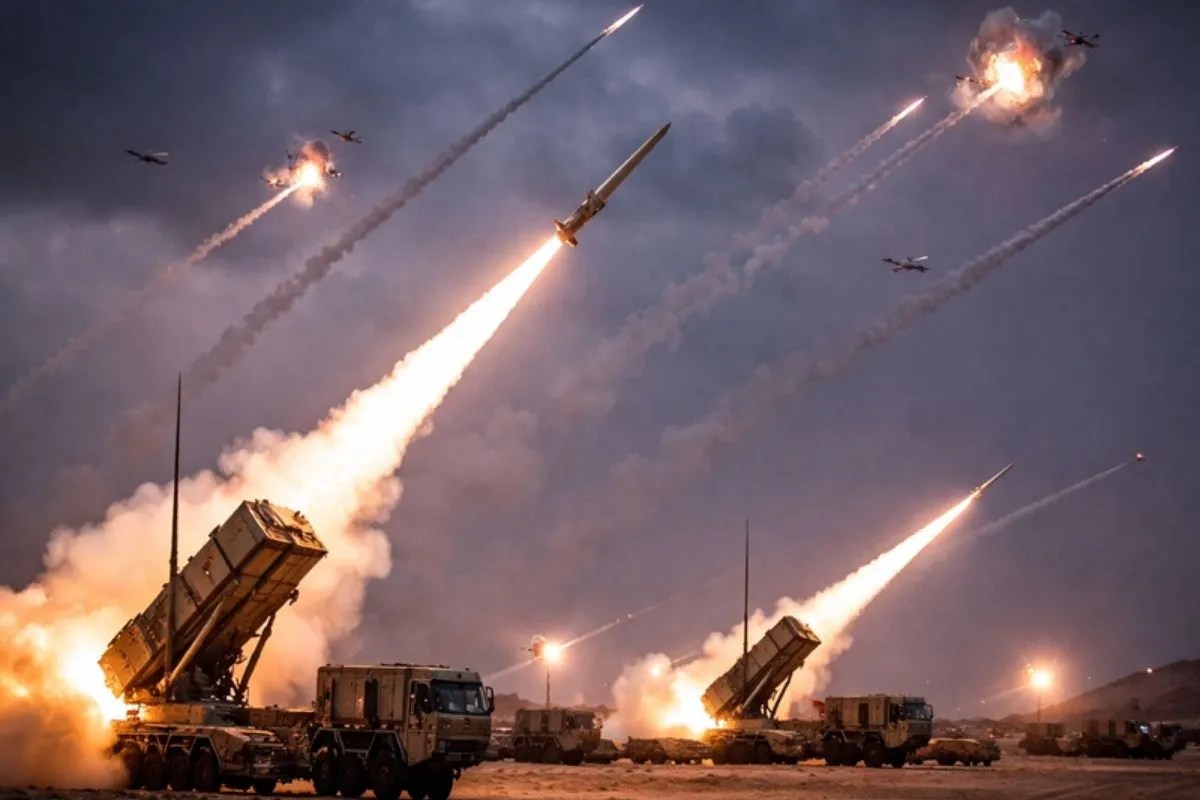
For decades, Diego Garcia was the "unsinkable aircraft carrier" of the Indian Ocean, a secluded hub for B-1 and B-52 bombers safely tucked away from regional reach. That safety is gone. While one Iranian missile failed in flight and a US warship intercepted the second with an SM-3 interceptor, the intent was a clear message to London and Washington. Tehran is no longer playing by the old rules of engagement.
This attempt followed a pivotal decision by British Prime Minister Keir Starmer to allow the United States to use Diego Garcia and other UK-controlled bases for offensive operations. Specifically, these strikes are intended to neutralize Iranian missile sites threatening the Strait of Hormuz. The British government has attempted to maintain a delicate legal position, characterizing its involvement as "defensive" and focused on restoring maritime security. However, to the new leadership in Tehran, there is no distinction between a launchpad for a defensive interceptor and an offensive bomber.
The range demonstrated by these launches—roughly 4,000 kilometers—effectively debunks previous claims by Iranian officials that their missile program was strictly limited to a 2,000-kilometer defensive radius. By reaching for the central Indian Ocean, Iran has declared that no Western asset in the Eastern Hemisphere is truly out of range.
Dismantling the Nuclear Heartland
While the skies over the Indian Ocean were lit by interceptors, the ground in central Iran was shaking. On Saturday morning, the Natanz nuclear enrichment facility was hit by a heavy airstrike. This isn't the first time Natanz has been targeted, but the scale of the current operation suggests a shift from "sabotage" to "annihilation."
Iranian state media was quick to claim that there was no radiation leakage, a move likely intended to prevent domestic panic. Yet, satellite imagery already shows extensive damage to the main enrichment buildings. This strike, a joint US-Israeli effort under the banners of Operation Epic Fury and Operation Roaring Lion, targets the very heart of the regime’s leverage.
The strategy is transparent. By hitting the nuclear infrastructure and the South Pars gas field simultaneously, the coalition is stripping the regime of its two most powerful tools: the threat of a nuclear breakout and its economic lifeline. This is not a series of warning shots. It is a systematic dismantling of the Islamic Republic’s ability to function as a modern state.
The Cost of the Hormuz Chokehold
The global economy is currently paying the price for this escalation. With the Strait of Hormuz largely impassable, oil and gas prices have spiked to levels that threaten to stall the global recovery. In a desperate bid to manage the fallout, the Trump administration has begun discussing the possibility of lifting sanctions on some Iranian oil currently at sea, provided it can be moved without benefiting the regime’s military coffers.
It is a messy, contradictory policy. On one hand, the US is raining fire on Iranian missile batteries; on the other, it is trying to keep the lights on in Tokyo and Berlin.
Key Impacts of the Current Escalation
- Energy Security: Qatar has halted helium production, and global LNG shipments are in a state of chaos after the strikes on South Pars.
- Regional Instability: Saudi Arabia reported downing 20 drones near its eastern oil installations in a single two-hour window, illustrating the "lashing out" behavior predicted by intelligence analysts.
- Supply Chain Collapse: The loss of Qatari helium is already rippling through the semiconductor industry, threatening a secondary crisis in the tech sector.
The Domestic Crackdown
Inside Iran, the regime is fighting two wars: one against the F-35s overhead and another against its own people. Reports of a wave of executions have surfaced, with at least three young men hanged this week following the January protests. These executions serve as a brutal deterrent against a population that has grown increasingly bold as the regime’s military facade cracks.
The transition of power following the death of Supreme Leader Ali Khamenei earlier in this conflict has not led to the moderation some diplomats hoped for. Instead, the move toward Mojtaba Khamenei has signaled a hardening of the IRGC’s grip. They are a cornered animal, and the attack on Diego Garcia was the act of an entity that realizes its traditional defenses—its "strategic depth" through proxies and distance—are failing.
A New Definition of Warfare
We are seeing a transition from proxy-led attrition to high-intensity state-on-state conflict. The UK’s involvement, while framed as limited, places British interests directly in the crosshairs. Iranian Foreign Minister Abbas Araghchi’s warning that Starmer is "putting British lives in danger" was not just rhetoric; it was a precursor to the missiles fired at Diego Garcia.
The Israeli promise of a "surge" next week likely points toward the final remnants of the Iranian air defense network and the deep-buried command centers in Tehran. If the intensity increases as promised, the remaining infrastructure of the Iranian state may not survive the month.
The world is watching a superpower and its closest ally attempt to forcibly reorder the Middle East by removing its most disruptive actor. It is a high-stakes gamble that assumes the regime will collapse before the global economy does.
Would you like me to analyze the specific missile types used in the Diego Garcia attack and their implications for NATO’s naval strategy in the Indian Ocean?