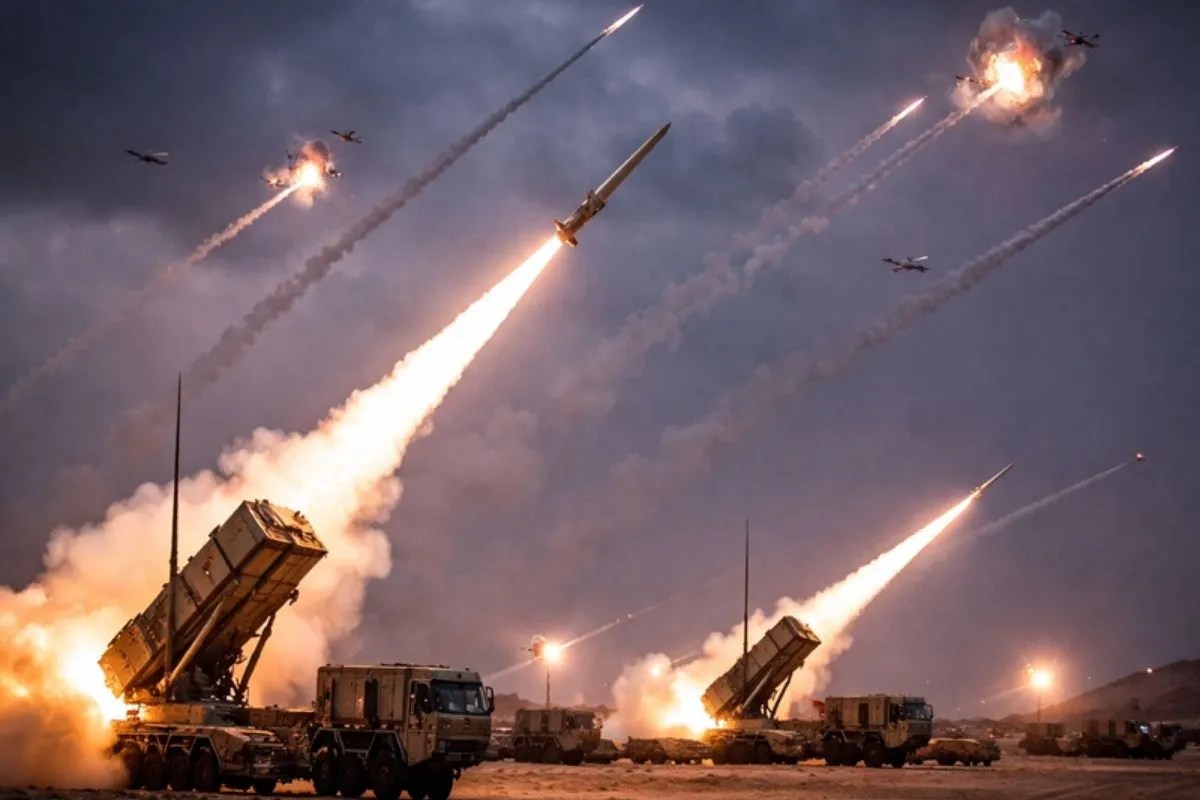
Israel is currently engaged in what military analysts call a "compellence" campaign. The theory is simple: apply enough pain to Hezbollah’s military infrastructure and civilian support base that the group eventually breaks. The headlines call it an attempt to "crush" the organization.
They are wrong.
You cannot crush a decentralized ideological franchise with JDAMs. History has shown that when you strike the "civilian wing" of a hybrid actor like Hezbollah, you aren't dismantling their power. You are subsidizing their recruitment for the next two decades. The "lazy consensus" suggests that destroying missile launchers and bank branches (Al-Qard al-Hassan) removes the group's ability to function. In reality, it merely shifts their operating model from a semi-state actor back to a lean, underground insurgency—the very environment where they are most dangerous.
The Infrastructure Fallacy
The prevailing narrative treats Hezbollah like a traditional army with a clear tail-to-tooth ratio. If you hit the tail (the money and the social services), the tooth (the Radwan Force) stops biting. This ignores the $100$ billion reality of asymmetrical warfare.
In a conventional conflict, destroying a supply depot is a win. In a hybrid war against a group embedded in the social fabric of Lebanon, "military" and "civilian" are distinctions that exist only on Western legal maps. To the people on the ground, the "civilian wing" is the hospital that birthed them and the school that taught their children. When those are targeted, the psychological result isn't a rejection of Hezbollah. It is a radicalization of the uncommitted.
Israel's strategy assumes a "breaking point" exists. But ideological movements don't have a breaking point; they have a metamorphosis point. We saw this in 2006. We saw it with the US in Afghanistan. You can liquidate the C-suite, but the mid-level management is already trained to replace them.
The Bank Run That Wasn't
Recent strikes on the Al-Qard al-Hassan association were framed as a masterstroke to bankrupt the resistance. This is a fundamental misunderstanding of how shadow banking works in a collapsed economy.
By the time the missiles hit the buildings, the ledger was already digital or moved. You don't kill a credit union by blowing up the teller window. You kill it by offering a better alternative. Lebanon’s formal banking sector is a corpse. Hezbollah’s micro-lending is the only thing keeping thousands of families from literal starvation.
If you destroy the only source of credit in a region, the population doesn't blame the lender for "drawing fire." They blame the entity that pulled the trigger. Israel is effectively performing the ultimate "marketing" campaign for Hezbollah’s social welfare narrative. I have watched military planners make this mistake for years: they mistake physical destruction for political de-platforming.
The Decapitation Trap
The assassination of Hassan Nasrallah was a tactical marvel. It was also a strategic gamble that Israel might already be losing.
Decapitation works against a cult of personality if the organization is fragile. Hezbollah is not fragile. It is a bureaucratic entity modeled after the Iranian Revolutionary Guard. It is built to survive the loss of its head.
- Fact: When Israel assassinated Abbas al-Musawi in 1992, they thought they had won.
- Result: They got Nasrallah—a far more capable, charismatic, and lethal leader.
The current vacuum isn't a sign of collapse; it’s a recruitment window. Every high-ranking martyr creates a localized legend that fuels the rank-and-file for years. Kinetic success creates a temporary "tactical pause," which politicians then mistake for a "strategic victory."
The Myth of "Crushing" the Group
Let's address the "People Also Ask" obsession: "Can Hezbollah be defeated?"
If your definition of "defeat" is the absence of rocket fire for six months, then yes. If your definition is the removal of Hezbollah as a political and social force in the Levant, the answer is a brutal "no."
To truly dismantle a group like this, you need three things that are currently absent:
- A viable political alternative in Beirut that the Shia population actually trusts.
- The complete severance of the Iranian supply line (which would require a regional war nobody wants).
- A security vacuum filled by something other than more angry young men.
Israel is currently creating the vacuum but lacks the political capital or the will to fill it with anything other than more ordnance. This is "Mowing the Grass" scaled up to an industrial level. It doesn't kill the weeds; it just makes the lawn look tidy for a season while the roots grow deeper.
The Cost of the "Civilian Wing" Strategy
International law nerds love to debate the "dual-use" nature of Hezbollah’s buildings. While the lawyers argue, the reality on the ground is that every "civilian" target hit serves as a force multiplier for the group's propaganda.
Imagine a scenario where a local shopkeeper uses a Hezbollah-linked micro-loan to buy bread. When that shop is leveled because a crate of rockets was stored in the basement, the shopkeeper doesn't curse Hezbollah for the rockets. He curses the jet for the bomb. This isn't "hearts and minds" 101; it's basic human resentment.
The "nuance" the mainstream media misses is that Hezbollah thrives on being the underdog defender. By escalating to total war against both wings, Israel plays right into the "Defender of Lebanon" script that Nasrallah spent 30 years perfecting.
Why the Current Approach Fails Long-Term
Precision strikes are a drug. They provide an immediate rush of "doing something" and produce great thermal footage for the evening news. But they are a substitute for a grand strategy.
Israel’s current path assumes that Hezbollah's supporters are rational actors who will weigh the cost of their support and decide it's too high. This is a Western projection. For a significant portion of the Lebanese population, Hezbollah is not an "option"—it is an identity. You cannot bomb an identity into submission.
The Intelligence Paradox
The pager and walkie-talkie attacks were brilliant. They compromised the group’s "immune system." However, even that level of intelligence penetration has a shelf life. Hezbollah is already pivoting to low-tech, courier-based communication. They are returning to the methods that allowed them to survive the 1990s.
The more "advanced" the offensive becomes, the more the target evolves. We are witnessing a Darwinian struggle where only the most disciplined and paranoid elements of Hezbollah will survive this onslaught. Israel isn't "crushing" the group; they are involuntarily refining it. They are killing the weak links and leaving behind a harder, more secretive, and more vengeful core.
The Brutal Reality
If you want to stop the rockets, you don't hit the bank. You hit the ideology at its source of legitimacy. That requires a level of diplomatic and social engineering that current regional players are incapable of executing.
Stop looking at the maps of destroyed bunkers. Start looking at the demographic shifts in the displacement camps. That is where the next Hezbollah is being born. Israel is winning the battle of the 21st century with 22nd-century tech, but they are losing the 13th-century war of tribal and religious loyalty.
The kinetic "success" of the current campaign is a mask. It hides the fact that there is no plan for the day after the bombing stops. When the dust settles, the "civilian wing" will be the ones rebuilding the houses with Iranian money, and the "military wing" will be there to guard the construction sites.
You aren't crushing them. You're just resetting the clock.