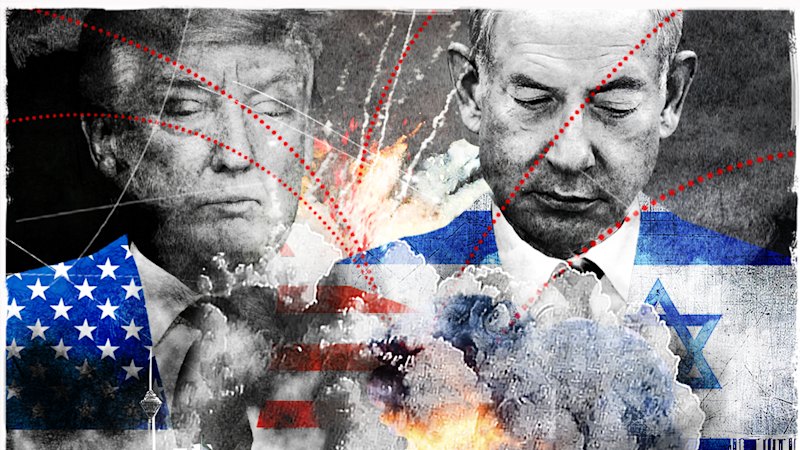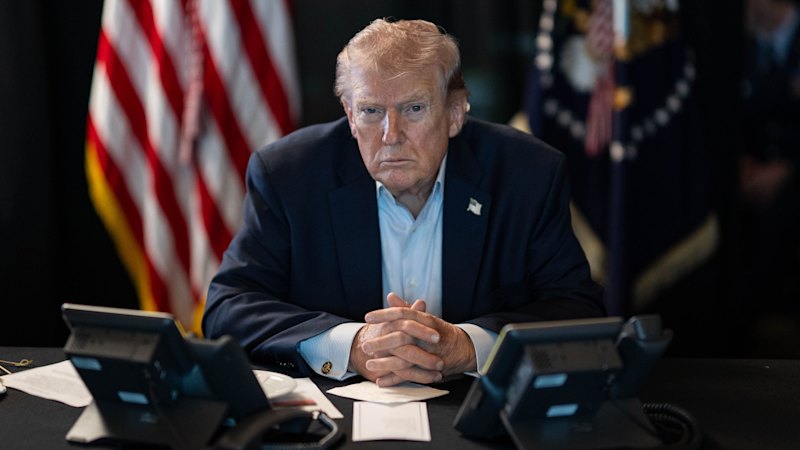
Donald Trump does not go to war by committee. He does not follow the "interagency process" that has governed Washington since the Truman era, nor does he subscribe to the incremental escalation ladders favored by the Pentagon’s career officer corps. Instead, the decision to launch a strike or pull back from the brink is an erratic, intensely personal calculation—often a visceral reaction to a perceived insult or a "disaster" deal inherited from a predecessor. To understand how Trump decides to fight, one must look past the briefing slides and into the private dynamics of a commander-in-chief who views military might as a high-stakes negotiation tool rather than a fixed strategic end.
The traditional American war machine operates on a conveyor belt of memos. Options are vetted by the National Security Council, scrubbed for legalities by the Department of Justice, and presented to the President in a "Goldilocks" format: one option too soft, one too hard, and one just right. Trump broke the belt. In the January 2020 decision to eliminate Qasem Soleimani, the Pentagon reportedly included the targeted killing of the Iranian general as the "extreme" outlier—a choice they never expected him to take. He took it. The decision was not born of a three-week deliberation; it was a response to the storming of the U.S. embassy in Baghdad and a direct challenge to his "America First" posture.
The Mar a Lago War Room
While previous presidents used the Situation Room for solemnity, Trump transformed the dining patio of Mar-a-Lago into a theater of command. The 2017 strike on Syria’s Shayrat Airbase—the first major military action of his presidency—was ordered between courses of "the most beautiful piece of chocolate cake," as he later described it to the press. This lack of formality is a feature, not a bug. It allows for a level of speed and unpredictability that terrifies the bureaucracy but, in Trump’s view, keeps adversaries off-balance.
The decision-making circle is notoriously tight. During the early years, figures like Jim Mattis and H.R. McMaster attempted to act as "bumpers" to prevent impulsive kinetic action. They relied on logic and historical precedent. However, the 2026 strikes on Iran’s nuclear facilities in Isfahan and Natanz showed a different evolution. By then, the "adults in the room" had been replaced by loyalists who understood that to get a decision, one must frame it in the context of a deal or a betrayal.
The Mechanics of the 2026 Iran Strike
The decision to launch Operation Epic Fury in February 2026 serves as the definitive case study. Unlike the 2019 drone incident where Trump called off a strike at the ten-minute mark because of potential civilian casualties—a rare moment of humanitarian hesitation—the 2026 campaign was driven by a sense of exhausted patience.
The triggers were specific:
- The 60-Day Ultimatum: Trump had set a public deadline for Iran to "come to the table" on a new nuclear pact. When the clock hit zero, the military option became the only way to avoid looking weak.
- The Intelligence Gap: Internal reports suggested Iran was within weeks of a deliverable warhead. Trump viewed this not as a security threat, but as a personal failure of the Iranians to respect his "armada" in the Persian Gulf.
- Social Media Escalation: The final green light followed a series of digital provocations. When the Supreme Leader hinted that Trump "couldn't do anything," the machinery of war began to move.
The Cost of the Invisible Briefing
Bureaucrats complain that Trump ignores the "intelligence community." The reality is more complex. He consumes intelligence like a tabloid reader—looking for the "bottom line" and the "bad guys." This creates a vacuum where the Pentagon's carefully curated "courses of action" (COAs) are ignored in favor of a single, decisive blow.
In the 2026 conflict, this led to the elimination of Ali Khamenei and other senior figures. The Pentagon had warned that such a move would decapitate the Iranian state and lead to a "historic nightmare" of asymmetrical retaliation. Trump’s counter-argument was simpler: "They want to talk, and they’ll talk now." It was a gamble that the collapse of the regime's head would paralyze the body. The resulting regional instability, including the targeting of British bases in Cyprus and the death of four U.S. troops, was dismissed as "the way it is."
Tactical Success versus Strategic Chaos
The Trump method achieves immediate results. It destroys the "physical caliphate" of ISIS. It kills high-value targets that have eluded the U.S. for decades. But it lacks a "Phase IV"—the plan for what happens the day after the bombs stop falling.
| Feature | Traditional Process | The Trump Model |
|---|---|---|
| Duration | Months of interagency review | Hours or days of inner-circle talk |
| Risk Tolerance | Low (avoiding escalation) | High (leveraging chaos) |
| Goal | Stability and containment | Dominance and negotiation leverage |
| Communication | Formal addresses, redlines | Social media posts, informal warnings |
This shift has profound implications for global business and technology. Defense contractors have had to pivot from long-term procurement cycles to "rapid response" capabilities. The reliance on drone technology and precision-guided munitions has accelerated, as these tools allow the President to strike without the political baggage of a full-scale ground invasion—at least initially.
The Redline That Isn't
The most dangerous aspect of this decision-making style is the fungibility of "redlines." Under Obama, a redline was a public promise that, if broken, forced a reluctant hand. Under Trump, a redline is a psychological state. It exists until it doesn't. In 2019, the shooting down of a $130 million Global Hawk drone was not enough to trigger war. In 2026, a month of internal Iranian protests and a refusal to negotiate triggered a "massive and ongoing" campaign.
The unpredictability is the weapon. By refusing to follow a predictable playbook, Trump forces adversaries to guess. But this also forces allies to hedge. The 2026 war was launched without a mandate from the UN Security Council and without the prior approval of the U.S. Congress, triggering a constitutional crisis that remains unresolved.
The military has been transformed into a tool of personal diplomacy. It is no longer an instrument of last resort but a first-tier bargaining chip. When Trump says "help is on its way" to a foreign protest movement, he isn't just offering moral support; he is signaling that the bombers are already fueled. The decision to go to war is no longer a question of "if" the criteria are met, but "when" the President decides the theater of the deal requires a finale of fire.
The fallout of Operation Epic Fury continues to ripple through the oil markets and the geopolitical landscape of the Middle East. It serves as a stark reminder that in the current era, the most powerful military in history is directed by a single man's intuition, unburdened by the weight of tradition or the caution of his generals.
Would you like me to analyze the specific impact of the 2026 Iran strikes on global oil prices and the resulting supply chain disruptions?