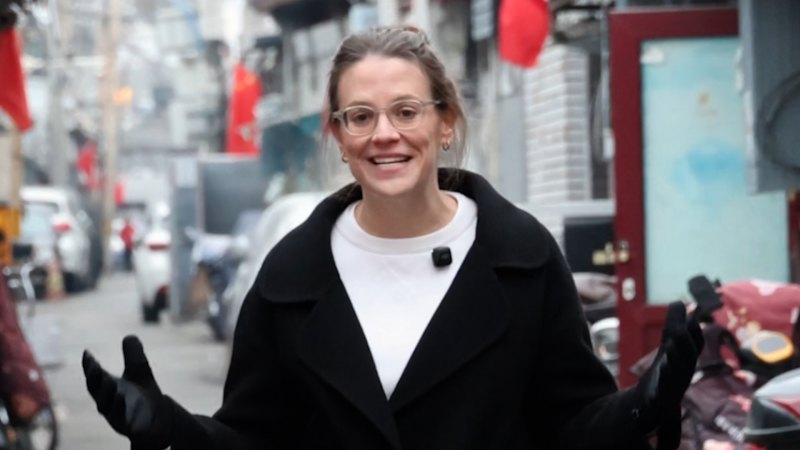
Australia’s media landscape just regained a set of eyes in the world's most scrutinized capital, but the celebration should be cautious. The return of correspondents from The Sydney Morning Herald and The Age to Beijing ends a three-year blackout that left a gaping hole in regional intelligence. While the move signals a diplomatic thaw, it does not mean a return to business as usual. The ground has shifted. The surveillance apparatus is more sophisticated, the legal barriers are higher, and the definition of "national security" has expanded to include almost anything a journalist might want to investigate.
For years, Australian readers relied on wire services and remote analysis to understand the internal mechanics of the CCP. That era of guesswork is over, but the new era of reporting will be defined by a constant, high-stakes negotiation between the need for truth and the reality of physical safety.
The Long Shadow of the 2020 Exodus
To understand why this return matters, you have to look at the wreckage left behind in 2020. The midnight departures of Bill Birtles and Mike Smith were not just a logistical hurdle. They represented a total collapse of the traditional media compact. When those journalists fled under diplomatic protection, they took with them the institutional memory of how to operate within the Chinese system.
The vacuum that followed was filled by a mix of state-sanctioned narratives and hyper-partisan speculation. Without boots on the ground, the nuances of Chinese economic policy and the genuine sentiments of its 1.4 billion citizens became abstractions. We stopped seeing China as a complex society and started seeing it as a monolithic black box.
Now, as journalists unpack their bags in Beijing, they are stepping into a city that has perfected the art of "digital fencing." The tools used to monitor and restrict movement during the pandemic have been repurposed for general governance. This isn't just about someone following you in a black sedan anymore. It is about the metadata of your existence.
The Surveillance Trap and the Death of the Source
The greatest challenge for the returning press gallery isn't getting a visa; it’s protecting the people they talk to. In the past, a brave academic or a disgruntled factory worker might risk a coffee in a quiet corner of a Sanlitun cafe. In 2026, that coffee is tracked by facial recognition, paid for via a traceable digital wallet, and logged by a network of cameras that can identify a gait from five hundred yards.
This environment has effectively killed the "unnamed source" in its traditional form. Any local who speaks to a foreign journalist now faces a level of risk that is almost impossible to mitigate. Journalists have to ask themselves if a quote is worth a source's livelihood or freedom. It creates a chilling effect that no diplomatic agreement can thaw.
We are seeing a shift toward "fortress journalism." Reporters spend more time decrypting files and analyzing satellite imagery than they do walking the streets. The physical presence in Beijing is becoming more about witnessing the official mood and less about uncovering the hidden gears of the state.
Trade and Tensions as the New Beat
The primary driver for this media return isn't just a love for foreign correspondence. It is the cold, hard reality of the Australian economy. With the stabilization of trade relations—specifically the removal of tariffs on wine, barley, and coal—the business community is desperate for granular data on Chinese consumption habits and regulatory shifts.
Canberra needs these journalists to act as a tripwire. They are the early warning system for policy shifts that could wipe billions off the ASX. However, this places the media in a precarious position. If a reporter writes a scathing piece on human rights or military expansion in the South China Sea, will the response be a diplomatic protest, or will a shipment of Australian lobster be left to rot on a dock in Shanghai?
The link between media coverage and market stability is tighter than ever. This creates an internal pressure for newsrooms to balance "hard" political reporting with "soft" economic analysis. It is a tightrope walk where one slip can have macroeconomic consequences.
The Legal Minefield of the Anti-Espionage Law
Beijing’s updated Anti-Espionage Law has fundamentally redefined the risks of the job. The law now covers "documents, data, materials, or items related to national security and interests," without explicitly defining what those interests are. To an investigative journalist, "data" is the lifeblood of a story. To a security official, that same data is a state secret.
This ambiguity is a feature, not a bug. It allows for selective enforcement. A journalist can be detained not for what they published, but for the act of gathering the information in the first place. The case of Cheng Lei, the Australian journalist who was detained for over three years, serves as a permanent reminder of how quickly the rules can change.
Navigating the New Normal
- Encryption is mandatory: Standard communication channels are compromised by default.
- Physical security is a priority: Offices are more likely to be swept for bugs than they are to have a stocked pantry.
- The "Two-Phone" Rule: One device for the official "public" life, and one strictly for secure work, never to be connected to local Wi-Fi.
The Geopolitical Chessboard
The return of Australian media is also a signal to Washington and London. By allowing the SMH and The Age back in, Beijing is demonstrating a capacity for "selective normalization." It shows they are willing to reward countries that take a more pragmatic, less ideologically driven approach to the relationship.
This puts Australia in a unique position. While American journalists remain largely sidelined or heavily restricted, Australian reporters have a window into the world’s second-largest economy. This gives the Australian public a competitive advantage in terms of information, but it also increases the scrutiny on every word they file. The world is watching to see if they will be "domesticated" by the threat of visa non-renewal or if they will maintain the fierce independence that characterizes the Australian press.
Why Remote Reporting Failed
Many argued that we didn't need journalists in Beijing because we had "Open Source Intelligence" (OSINT). While satellite photos of naval bases are useful, they cannot capture the atmosphere of a CCP party congress or the subtle shifts in rhetoric at a Ministry of Foreign Affairs briefing.
You cannot "scrape" the feeling of a city under pressure. You cannot use an algorithm to understand the frustration of a young person in Chengdu who can’t find a job despite having a master's degree. The human element of reporting—the ability to look someone in the eye and gauge their sincerity—is the only thing that provides true context.
The return of these correspondents is an admission that technology has its limits. We have realized that to compete with China, to trade with China, and to coexist with China, we must actually be in China.
The Future of the Foreign Bureau
The traditional foreign bureau is an endangered species. High costs, insurance premiums, and the constant threat of litigation have made them luxury items for most newsrooms. The fact that Nine Entertainment is reinvesting in this space is a significant bet on the value of original, on-the-ground reporting.
But the "Beijing Bureau" of 2026 looks very different from the one of 1996. It is no longer a base of operations for adventurous storytelling. It is a high-security outpost. The journalists who staff it are as much analysts and security experts as they are writers. They are operating in a gray zone where the line between news gathering and intelligence gathering is blurred by the host government.
This return is a victory for the Australian public’s right to know, but it is a fragile one. The first time a reporter asks a question that hits too close to home, we will see exactly how much "normalization" has actually occurred. The visas are in the passports, the flights have landed, and the laptops are open. Now, the real work of testing the boundaries begins.
Would you like me to analyze the specific safety protocols foreign journalists are now using to protect their digital footprints while working in high-surveillance environments?