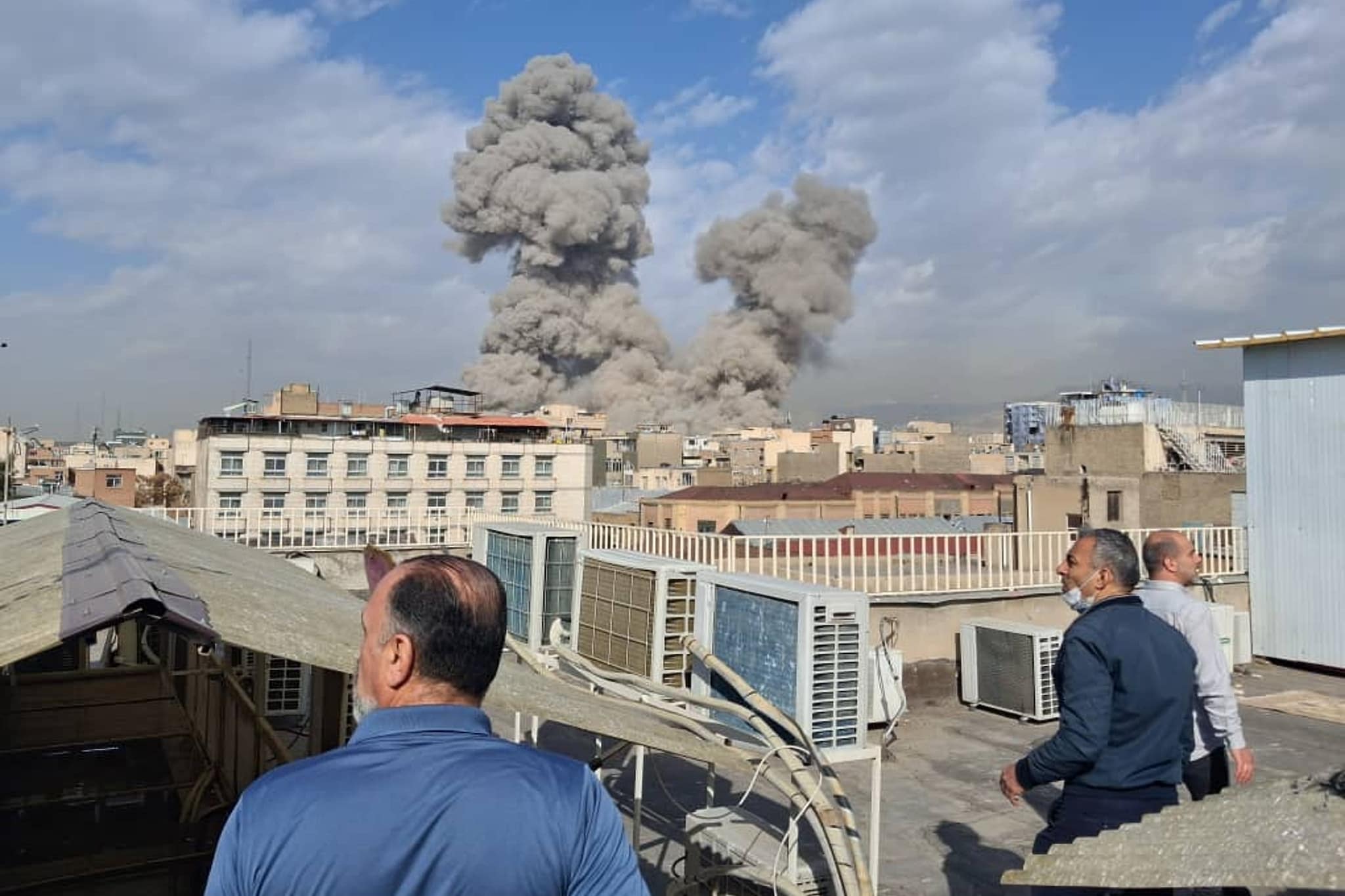
The sirens in Washington aren't just for motorcades anymore. Every time an American drone or missile hits a target linked to Tehran, a different kind of explosion happens on Capitol Hill. You've seen the headlines. One side screams about national security and immediate threats. The other side pulls out a dusty copy of the Constitution and points to Article I. It’s a mess.
The core of the issue isn't whether Iran is a "bad actor." Most people in D.C. agree on that. The real fight is about who holds the remote control. Does the President have the right to bypass the people's representatives when the bullets start flying? Or is Congress asleep at the wheel while the executive branch slowly turns into a monarchy for military affairs?
We're currently witnessing a historic breakdown in how the United States goes to war. It’s not just a legal spat. It’s a fundamental disagreement over what keeps the country safe.
The Legal Gray Zone That Lets Presidents Shoot First
If you look at the U.S. Constitution, it seems pretty clear. Congress has the power to declare war. The President is the Commander in Chief. In theory, that means the President manages the fight that Congress started. But reality hasn't worked like that since 1941.
Most of the strikes we see today against Iranian-backed groups in Iraq, Syria, or Yemen rely on two things. First, there’s Article II of the Constitution, which gives the President "inherent power" to defend the country. If a missile is screaming toward a U.S. base, the President doesn't need a committee meeting to shoot it down. Everyone gets that.
The second part is the 2001 Authorization for Use of Military Force (AUMF). This is a piece of paper that’s over twenty years old. It was meant to fight the people who planned 9/11. Instead, it’s become a legal "skeleton key." Lawyers in the Pentagon use it to justify strikes against groups that didn’t even exist in 2001.
When the Biden administration or any future administration orders a hit on an IRGC-linked facility, they usually claim it’s a "proportionate" response to prevent future attacks. Critics call this "self-defense" logic a loophole big enough to drive an aircraft carrier through. If you can call any offensive strike "preventative defense," then the power of Congress to declare war basically disappears.
Why Some Lawmakers Are Terrified of Unauthorized Action
There’s a growing group of "restrainers" in Congress. This isn't just the far left anymore. You’ve got people like Senator Mike Lee on the right and Senator Chris Murphy on the left actually agreeing on something. They’re worried that the U.S. is "sliding" into a regional war with Iran without a single vote being cast.
Their argument is simple. If we’re going to risk American lives and billions of dollars, the public should have a say through their elected officials. They argue that when the President acts alone, there's no long-term strategy. It’s just "whack-a-mole" with missiles.
- Lack of Accountability: Without a vote, no one has to go on the record. It’s easy for politicians to complain about a war they never had to authorize.
- The Escalation Ladder: One "limited" strike leads to a retaliation, which leads to a bigger strike. Suddenly, we're in a full-scale conflict that nobody actually planned for.
- Constitutional Decay: Every time a President acts without Congress, the legislative branch gets weaker. It sets a precedent for the next person in the Oval Office.
The Counter-Argument for Speed and Deterrence
On the other side of the aisle—and often within the White House itself—the view is very different. Proponents of these strikes argue that the Middle East moves too fast for a slow-moving Congress. If an Iranian-backed militia kills an American soldier, waiting for a floor debate in the Senate makes the U.S. look weak.
Deterrence is the keyword here. The logic is that if you don’t hit back hard and fast, the attacks will get worse. These lawmakers believe that the President needs the flexibility to send a message to Tehran. They see the War Powers Resolution of 1973 as a suggestion, not a strict barrier.
They also point out that these aren't "wars" in the traditional sense. They’re tactical operations. In their eyes, sending two F-15s to blow up a warehouse in eastern Syria isn't the same thing as invading a country. It’s "gray zone" warfare. It’s messy, but they think it’s necessary to prevent a bigger disaster.
The Problem With the War Powers Resolution
The 1973 War Powers Resolution was supposed to fix this. It says the President has to notify Congress within 48 hours of military action and stop within 60 days unless Congress says otherwise.
It hasn't worked.
Presidents from both parties have found ways to ignore it or redefine "hostilities." If you aren't putting boots on the ground, the lawyers argue the 60-day clock doesn't even start. This is exactly why the current split in Congress is so loud. One side wants to tighten these rules, while the other thinks the rules are a threat to national security.
What This Means for the Future of US-Iran Relations
Iran knows the U.S. is divided. They watch the debates on C-SPAN just like everyone else. When Congress fights over the legality of strikes, it sends a signal of hesitation. Some experts argue this actually makes war more likely because it encourages Iran to push the boundaries, thinking the U.S. won't be able to form a unified response.
Others say the division is our greatest strength. It forces a public conversation about the costs of intervention. If the U.S. goes to war with Iran, it would be a massive, generational event. It shouldn't be something decided by a few people in a windowless room at the Pentagon.
The current strikes are a band-aid. They might stop a specific drone launch today, but they don't change the underlying tension. As long as Congress refuses to pass a new, specific AUMF for the current threats in the Middle East, we're going to stay in this cycle of "strike, complain, repeat."
Stopping the Cycle of Forever Strikes
If you're tired of seeing the same debate every time the news breaks, you're not alone. The only way out is for Congress to actually do its job. That means taking a hard vote.
If they believe the threat from Iran justifies military force, they should authorize it. If they don't, they should use the power of the purse to cut off the funding for these operations. Sitting on the sidelines and tweeting about "unauthorized war" while the checks are still being signed is the height of political theater.
Stop waiting for the executive branch to hand back the power it took. It won't happen. The legislative branch has to take it back. You should be looking at the War Powers Reform Act, which aims to shorten that 60-day window and force a vote. If that doesn't pass, expect more of the same: more strikes, more legal gymnastics, and more uncertainty.
Check the voting records of your representatives on the next National Defense Authorization Act (NDAA). That's where the real money is hidden. If they’re voting for the budget but complaining about the strikes, they’re part of the problem. Demand a clear stance. Either the U.S. is at war or it isn't. The "kind of, maybe" approach is how people get killed for no clear reason.
Follow the money and the specific amendments being proposed by the Senate Foreign Relations Committee. That’s where the actual fight for the Constitution is happening, far away from the cameras and the talking heads. That's the only place where this split will actually get resolved.