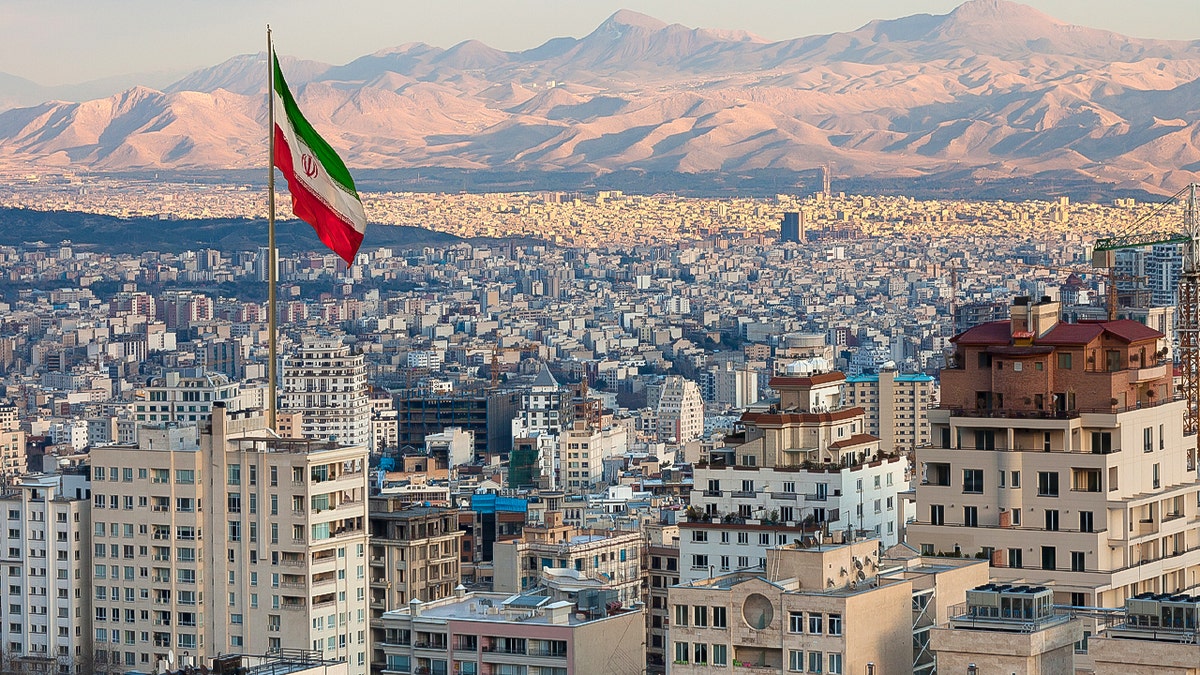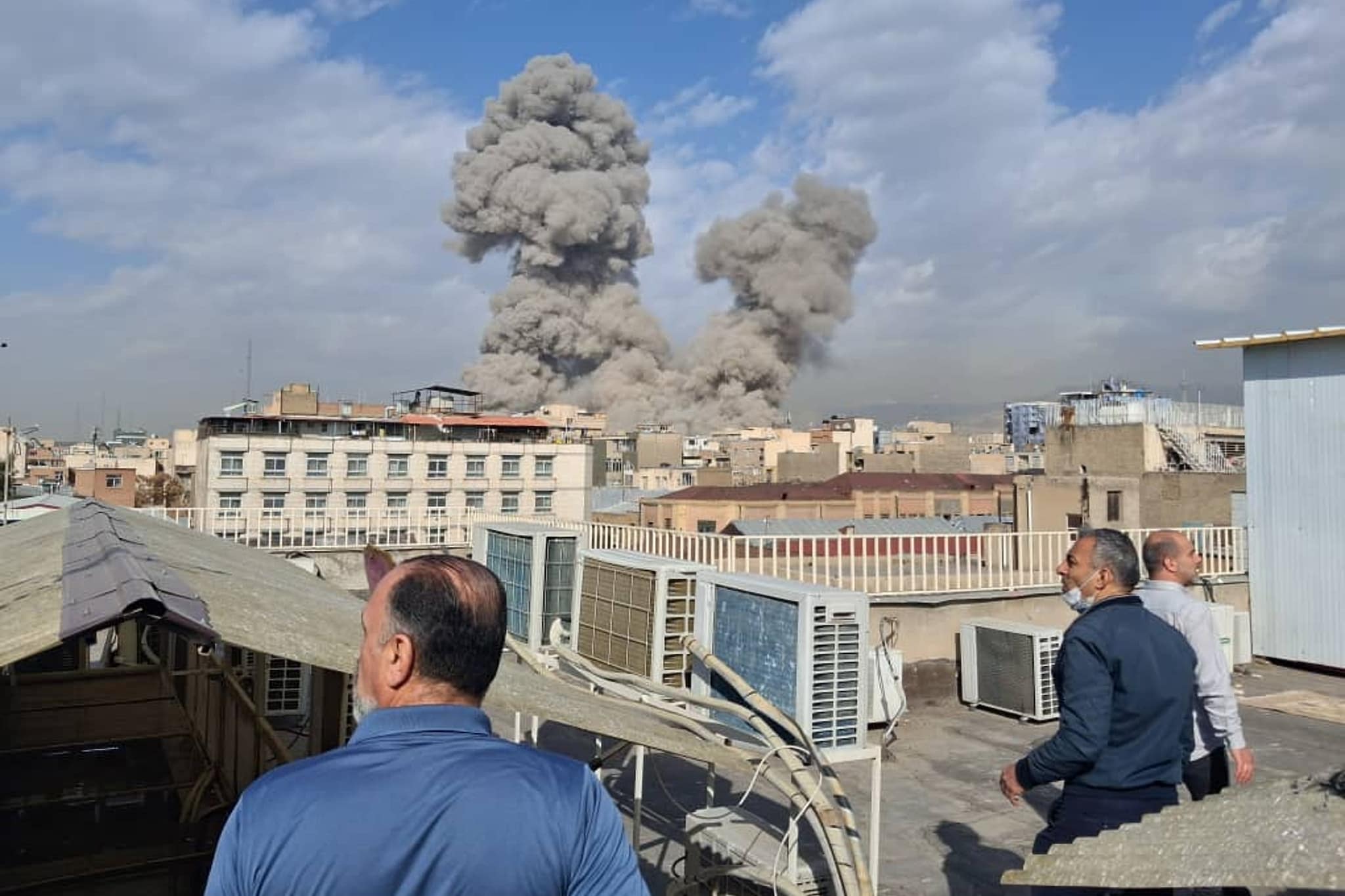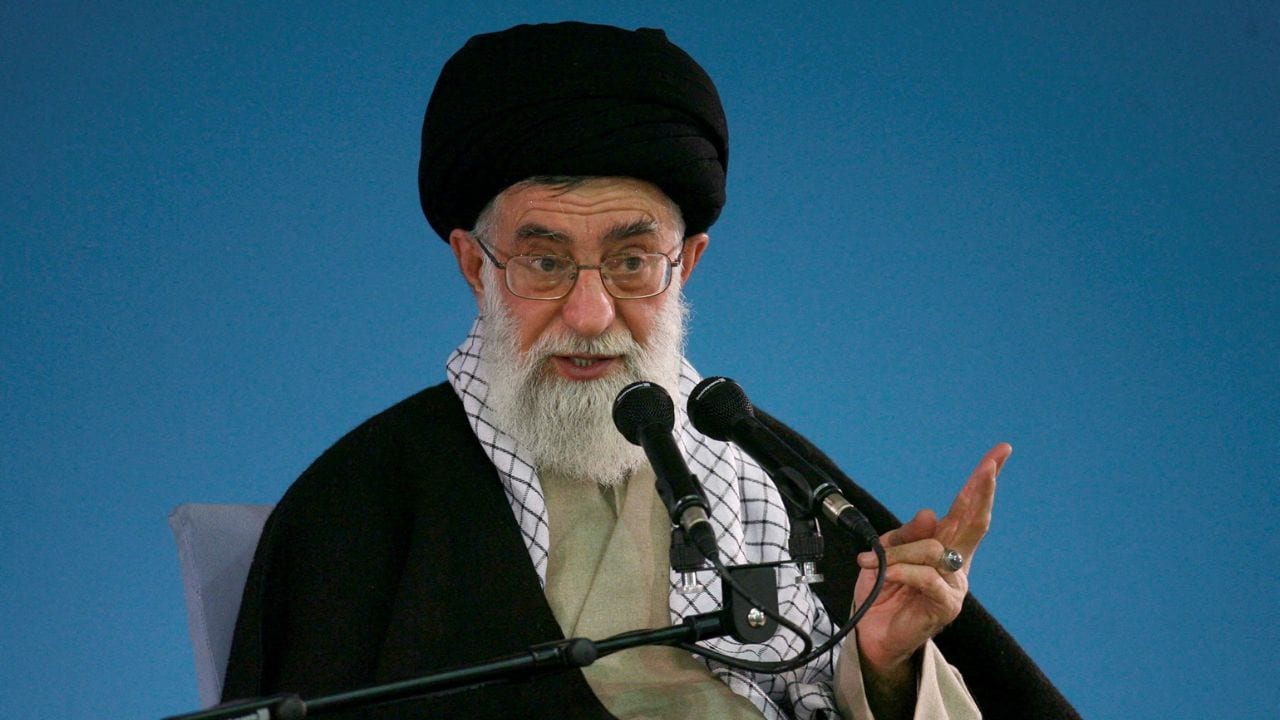
The air in Tehran does not move. It stagnates, heavy with the scent of exhaust and the weight of forty-five years of unyielding theological gravity. For decades, one name was the anchor. One face, framed by a black turban and a silver beard, was the North Star for some and a crushing ceiling for others. Now, the anchor has snapped. Ayatollah Ali Khamenei, the man who outlasted American presidents and weathered internal storms that would have leveled lesser regimes, is gone.
Silence is the first thing you notice when a titan falls. Not the silence of peace, but the held breath of eighty-five million people wondering if the floor is about to drop out from under them. In the tea houses of Tajrish and the high-tech corridors of the capital’s northern suburbs, the question isn't just about who sits in the chair next. It is about whether the chair itself can survive the weight of the person who fills it.
Power in Iran is not a straight line. It is a labyrinth of mirrors, shadows, and whispered allegiances. To understand what happens now that the Supreme Leader is dead, you have to stop looking at the official portraits and start looking at the friction between the old guard’s dreams and a generation that communicates in encrypted bursts of data.
The Heir and the Enforcer
Consider Mojtaba Khamenei. He is the son who has lived in the quiet periphery, a man whose influence was felt more than it was seen. For years, he was the gatekeeper. To reach the father, you went through the son. In the corridors of the Beit-e Rahbari—the House of the Leader—Mojtaba has been quietly weaving a safety net.
But Iran is not a monarchy. At least, it claims not to be.
The revolution of 1979 was built on the wreckage of a kingship, and the irony of a son succeeding a father is a bitter pill for the revolutionary purists to swallow. If Mojtaba ascends, he does so with the backing of the Islamic Revolutionary Guard Corps (IRGC). This is the "Deep State" in its most literal, muscular form. They aren't just soldiers; they are the billionaires of the black market, the engineers of the missile programs, and the men who hold the keys to the prisons.
The IRGC wants stability. They want a leader who understands that the survival of the regime is tied to the survival of their balance sheets. Mojtaba offers them continuity. He is a known quantity. He is a digital-age operative wrapped in a traditionalist’s robes.
The Assembly of Shadows
While the streets pulse with anxiety, eighty-eight elderly men are gathering. These are the members of the Assembly of Experts. On paper, they are the democratic soul of the clerical system. In reality, they are a vetting committee for the status quo.
Their job is to pick the next Rahbar, the Leader. They will talk of piety and "Ijtihaad," the ability to interpret divine law. But behind the heavy wooden doors, they are counting votes and measuring the strength of the IRGC’s grip. They know that if they choose wrong, they aren't just choosing a leader—they are choosing the architect of their own potential demise.
A name often whispered in these circles is Alireza A'afi. He is a cleric of significant standing, a man who represents the clerical establishment in Qom. If the Assembly wants to pivot away from the "hereditary" optics of Mojtaba, A'afi is the safe, scholarly choice. He is the bridge. But bridges are often walked over, and in the brutal theater of Middle Eastern politics, "safe" can quickly become "obsolete."
The Invisible Stakes of the Digital Border
Away from the mahogany tables of the Assembly, a different kind of war is being waged. This is where the human element hits the hardest.
In a small apartment in Isfahan, a twenty-two-year-old girl named Sarah—a hypothetical but very real representation of the Iranian youth—sits with her thumb hovering over a VPN toggle. For her, the death of Khamenei isn't a theological event. It is a technical one. She knows that when the state is in flux, the internet goes dark.
The "National Information Network," Iran’s attempt at a walled-garden internet, is the digital version of the revolutionary walls. During this transition, the regime’s biggest fear isn't a foreign invasion; it’s a hashtag. It’s a viral video of a woman removing her hijab in the middle of Azadi Square. It’s the collective realization that the person at the top is mortal.
The stakes are invisible but absolute. The next leader will inherit a country where the currency is crumbling and the environment is parched, but where the desire for connection to the outside world is an unquenchable fire. If the new leader doubles down on the "Digital Wall," he risks a slow-motion explosion. If he opens it, he risks the very foundation of his control.
The Ghost of the Presidency
We cannot talk about the successor without acknowledging the empty space left by Ebrahim Raisi. Had he not perished in a helicopter crash on a foggy mountainside just months ago, he would have been the undisputed choice. He was the "Butcher of Tehran," a man whose hands were stained by the executions of the late 80s, and he was the father’s favorite.
Raisi’s absence creates a vacuum that no one was prepared for. It forced the regime to accelerate its timeline. It’s like a play where the lead actor died during intermission, and the understudy has forgotten his lines.
This leaves the pragmatists in a strange position. Men like Mohammad Bagher Ghalibaf, the Speaker of Parliament. Ghalibaf is a technocrat with a general’s past. He sees the world in terms of infrastructure and order. He isn't a "Man of God" in the way the Supreme Leader must be, but he is a man of the machine. He represents a faction that believes Iran can survive only if it starts working like a modern state instead of a revolutionary cause.
But the machine is rusty.
The Weight of the Turban
To be the Supreme Leader of Iran is to be more than a politician. You are the "Vali-e-Faqih," the guardian of the jurist. You are the earthly placeholder for the Hidden Imam. It is a role that requires a specific kind of charisma—a mixture of terrifying authority and paternal guidance.
Khamenei had it. He spent thirty-four years perfecting the role of the humble ascetic who could command a thousand centrifuges with a flick of his wrist.
Whoever steps into those shoes inherits the "Axis of Resistance." They inherit the proxy wars in Yemen, the shattered streets of Lebanon, and the tense standoff with the West over the nuclear program. This isn't just a domestic transition; it’s a shift in the tectonic plates of the entire globe.
If the successor is a hardliner like Mojtaba, the world can expect more of the same—a slow, grinding defiance. But if the transition triggers internal fracturing, if the IRGC and the clerics cannot agree, we could see a "Green Movement" on steroids. We could see a country that decides it is tired of being a cause and wants to be a country again.
The Human Toll of Uncertainty
When a system is built entirely on the will of one man, his death is a structural failure.
The people of Iran have learned to live in the "in-between." They have one life inside their homes—where they drink wine, watch Netflix, and debate philosophy—and another life in the streets, where they bow their heads and recite the slogans. This duality is exhausting.
The death of the Leader brings that exhaustion to a head. It’s the feeling of being in an elevator when the power cuts out. You don't know if you're about to plummet or if someone is coming to rescue you. You just know you’re trapped in the dark with people you don’t entirely trust.
The successor will not just be taking over a government. He will be taking over a collective psyche that is frayed at the edges. He will be leading a nation where the median age is 32, meaning the vast majority of his subjects have never known a world without the man who just died.
The Finality of the Moment
History has a way of moving very slowly, and then all at once.
For decades, the transition in Iran was a "someday" problem. It was a theoretical exercise for think tanks in D.C. and intelligence officers in Tel Aviv. But "someday" has arrived at the gates of Tehran.
The rituals will be grand. There will be mourning on a scale that defies Western logic. There will be seas of black cloth and rhythmic chanting. But underneath the spectacle, the real work is happening in low-lit rooms where men are trading futures. They are betting on who has the most guns, who has the most gold, and who has the most "Basij" volunteers willing to crack skulls in the name of the new order.
As the sun sets over the Alborz Mountains, the city lights flicker on, one by one. Each light is a person, a family, a story. They are waiting. They are not waiting for a new Ayatollah, really. They are waiting to see if they can finally stop holding their breath.
The chair is empty. The mirrors in the labyrinth are shifting. And for the first time in a generation, the script for the future of Iran hasn't been written yet. The ink is still wet, and the pen is shaking in the hand of whoever dares to pick it up.
The shadows are long, and the night is just beginning.