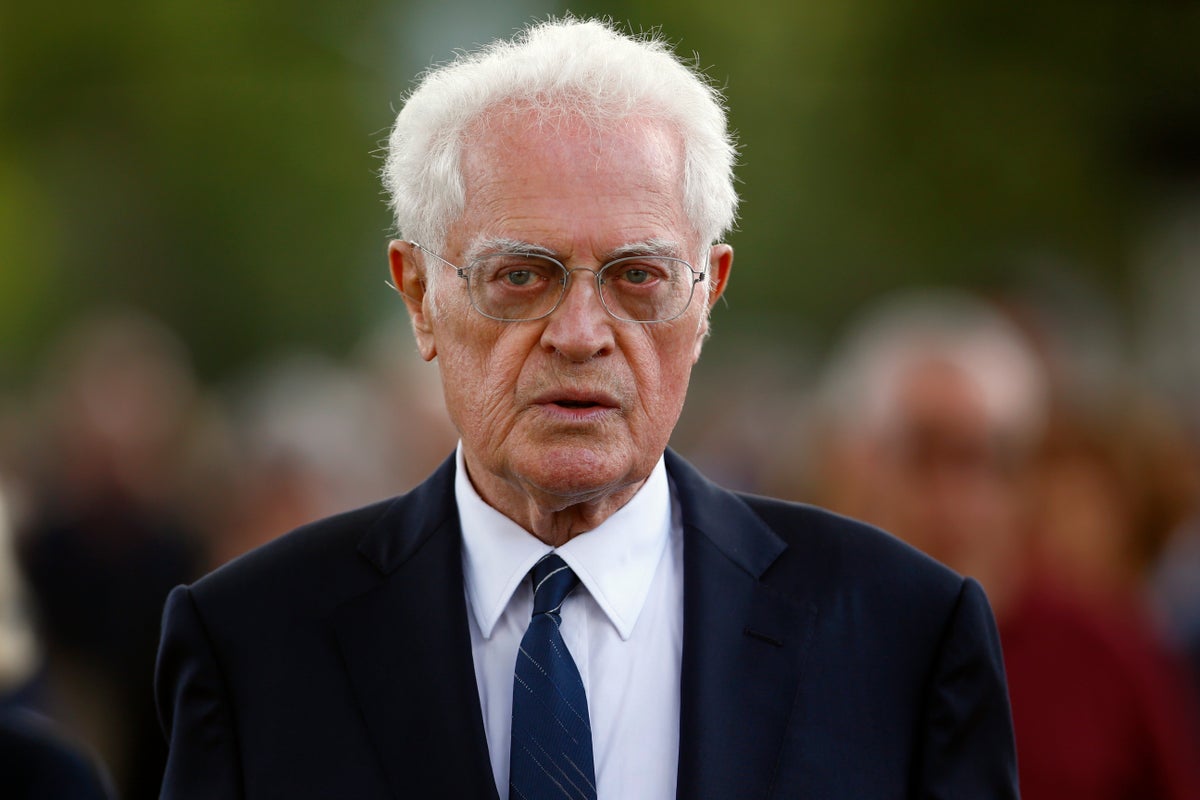
The passing of Henri Emmanuelli marks more than the loss of a former French prime minister or the principal architect of the 35-hour workweek. It represents the final shuttering of a specific, radical vision of European social democracy that once believed it could legislate its way out of the grind of industrial capitalism. Emmanuelli was the bridge between the old-guard resistance and the modern technocratic state, a man who viewed the ticking of the clock not as a measure of productivity, but as a metric of human liberty.
When the 35-hour week was codified into law in the late 1990s, it wasn't just a policy adjustment. It was a declaration of war against the idea that the market should dictate the boundaries of a life. Emmanuelli, alongside Martine Aubry, convinced a nation that by working less, they could live more, and in doing so, create a vacuum in the labor market that would pull the unemployed into the workforce. The math was elegant on paper. In the harsh light of a globalized economy, however, that elegance met the brutal reality of labor costs and international competition.
The Financial Analyst Who Hated Finance
To understand why Emmanuelli pushed for the 35-hour week, you have to look at his origins at Rothschild & Co. He wasn't a career academic; he was a banker who grew to despise the very mechanisms he managed. He saw how capital moved—fluid, cold, and entirely indifferent to the person standing at a machine in Lyon or a desk in Paris. This internal friction defined his politics. He became the "conscience" of the Socialist Party (PS), often standing to the left of François Mitterrand, even as he served in his cabinets.
His tenure as the President of the National Assembly and his time as the head of the Socialist Party were characterized by this perpetual struggle. He wasn't interested in the "Third Way" politics of Tony Blair or the market-friendly shifts of Gerhard Schröder. Emmanuelli believed the state should be a shield. He saw the reduction of work hours as the ultimate shield—a way to reclaim time, which he considered the only true currency of the working class.
The Mechanics of a Labor Revolution
The implementation of the 35-hour week was a massive administrative undertaking. It required rewriting the social contract for millions of workers. The logic was simple: if a company requires 350 hours of work per week, and the legal limit drops from 39 to 35, that company must theoretically hire one new person to fill the 35-hour gap.
In practice, the results were messy. Large industrial firms found ways to automate or intensify the pace of work during those 35 hours to maintain output. Small businesses, the backbone of the French economy, found themselves buried under new payroll complexities and the inability to afford new hires. Emmanuelli defended the policy until his last breath, arguing that the creation of roughly 350,000 jobs in the initial years proved the theory. Critics pointed to the soaring cost of labor and the long-term stagnation of French GDP as the real legacy.
The policy created a "two-speed" France. On one side were the public sector employees and workers in large corporations who suddenly enjoyed long weekends and increased leisure. On the other were the managers and professionals who worked "flat-rate" days, often putting in 50 hours while their subordinates left at 4:00 PM. This disparity created a cultural rift that persists in the French workplace today.
The Fall of the Socialist Bastion
Emmanuelli’s death coincides with the total collapse of the political house he helped build. The Socialist Party, once the titan of French politics, has been hollowed out. The rise of Emmanuel Macron—a former Rothschild banker himself, though one with a vastly different philosophy—signaled the end of the Emmanuelli era. Macron’s labor reforms, which focused on flexibility and making it easier to fire workers, are the photographic negative of everything Emmanuelli stood for.
The "Mitterrand generation" is gone. This was a group of leaders who actually remembered the era of heavy industry and the physical toll of labor. They viewed the 35-hour week as a victory for the body. The new elite views it as a "French exception" that needs to be managed or bypassed. They see the rigidities of the French labor code as a barrier to the tech-driven, gig-economy future. Emmanuelli saw those same rigidities as the only thing keeping the worker from being reduced to a line item on a spreadsheet.
A Legacy of Resistance
Beyond the 35-hour week, Emmanuelli’s career was marked by a fierce provincialism. He was the king of the Landes region in southwestern France. For decades, he governed this area with a mixture of old-school patronage and genuine devotion to local development. He understood that politics is lived locally. While Paris debated high-level European integration, Emmanuelli was worried about the pine forests and the small farmers in his department.
He was also a man who paid a heavy price for the system he inhabited. His conviction in the mid-1990s for illegal party financing—the Urba affair—was a stain he never fully scrubbed away. While he maintained that he never personally benefited and was simply funding the party machine, the scandal highlighted the murky world of political financing in the Mitterrand years. It made him a villain to the right and a martyr to the left, further cementing his role as a polarizing figure in the national imagination.
The Modern Work Crisis
The debate Emmanuelli started hasn't ended; it has simply changed shape. Today, we talk about the four-day workweek and the "right to disconnect." We discuss the mental health crisis of the "always-on" digital culture. In many ways, Emmanuelli was a prophet. He recognized that as technology increases productivity, the benefit should go to the person doing the work, not just the shareholder.
The tragedy of the 35-hour week wasn't the intent; it was the timing. It launched just as China entered the World Trade Organization and the internet began to dissolve borders. France tried to shorten the work week while the rest of the world was gearing up for a 24/7 global cycle. This created a tension that nearly broke the French economy in the early 2000s and forced successive governments—even Socialist ones—to introduce "overtime" loopholes that effectively neutralized the law for many sectors.
The Conscience of the Left
If you look at the current state of European politics, there is a vacuum where Emmanuelli’s conviction used to sit. The modern left is often caught between a vague environmentalism and a desperate attempt to look "pro-business." Emmanuelli was never confused about whose side he was on. He was a man of the state, a man of the party, and a man who believed that the economy should serve the people, not the other way around.
His death is the final chapter of a book that many in France are eager to close. But as the "burnout" epidemic spreads and the distinction between life and work continues to vanish, the ghost of Henri Emmanuelli might have the last laugh. He knew that if you don't fight for your time, someone else will find a way to sell it.
Go look at the French labor code. It is a massive, sprawling document that is frequently mocked by outsiders for its density. But within those pages, the 35-hour week still stands as a monument to a time when a government dared to tell the market that "enough is enough." Whether that monument is a lighthouse or a tombstone depends entirely on whether you value your paycheck or your Sunday.