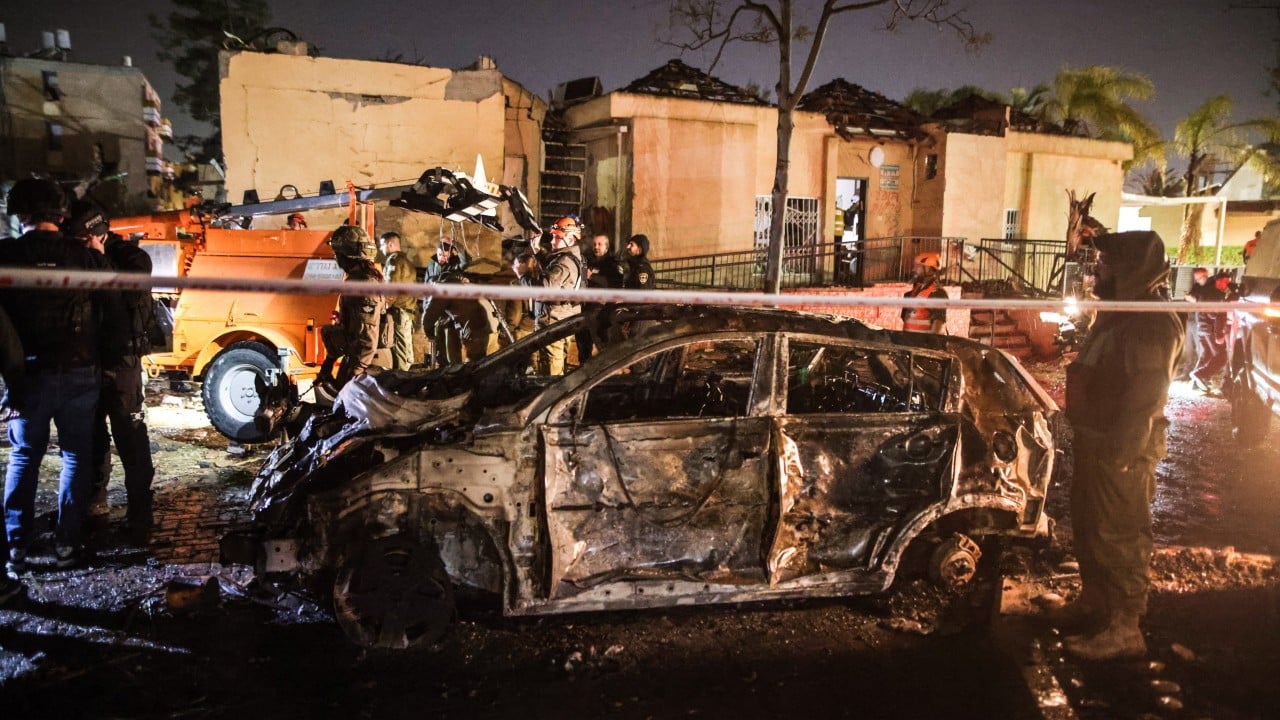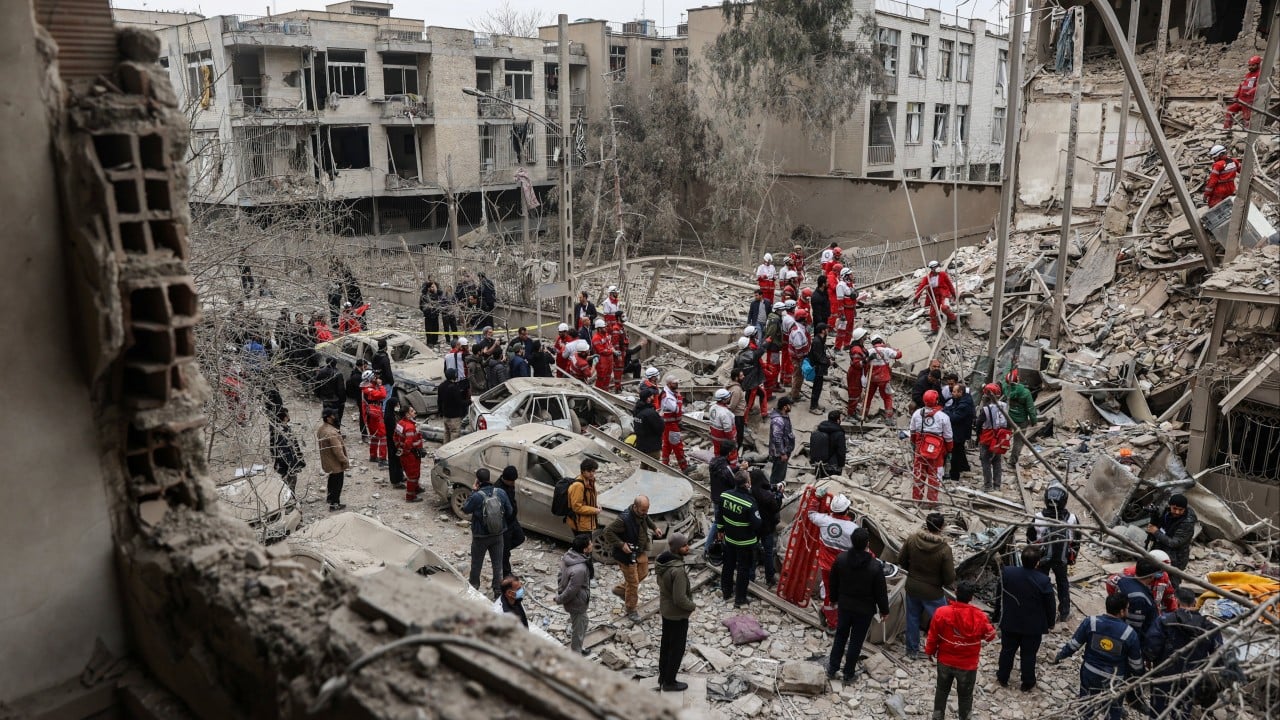
We've been here before. The maps come out, the pundits start talking about "regime change," and the carrier strike groups begin their slow, ominous crawl toward the Persian Gulf. But as the 2026 Iran War enters its fourth week, the chatter in Beijing is notably different from the bravado in Washington. While the White House talks about "Epic Fury" and surgical strikes, Chinese military experts are looking at the topographic reality of the Iranian plateau and seeing a nightmare that would make the Iraq occupation look like a weekend retreat.
If you think a ground invasion is the natural next step after the February 28 airstrikes, you're not paying attention to the math. Iran isn't a desert flatland; it's a fortress made of stone. Read more on a related subject: this related article.
The Geography is a Natural Defense
I've seen the arguments that the U.S. could just roll in from the coast. Honestly, it's not that simple. Iran is roughly the size of Alaska, but instead of frozen tundra, you're dealing with the Zagros Mountains. These aren't just hills; they're a 1,500-kilometer barrier of jagged peaks and narrow passes that funnel armored columns into perfect kill zones.
Chinese strategists, specifically those watching from the People's Liberation Army (PLA) academies, have pointed out that Iran has spent decades preparing for exactly this. They don't have a centralized "Red Line" you can just cross. Instead, they’ve organized their defense into "mosaic" layers. Each province is essentially its own semi-independent military command. If you take Tehran, the rest of the country doesn't just give up. It fragments into thirty different insurgencies, each with its own mountain hideout and stockpile of Shahed drones. Further reporting by USA Today highlights similar perspectives on this issue.
China is Watching the Resource Trap
Beijing is playing a very patient game here. From their perspective, every Tomahawk missile the U.S. fires and every Abrams tank it commits to a Persian Gulf pier is a win for China. Why? Because it’s a "resource trap."
Yue Gang, a retired PLA colonel, has been vocal about this in the South China Sea circles. He argues that the U.S. is burning through its "silver bullets"—high-end interceptors like the SM-6 and PAC-3—to swat down $20,000 Iranian drones. If the U.S. commits 200,000 ground troops to an Iranian quagmire, the Indo-Pacific becomes a ghost town.
The strategy for Beijing is basically to sit back and watch the U.S. exhaust its political will and military inventory. They're treating this conflict as a live laboratory. They're analyzing how U.S. air defenses handle saturation attacks and how American logistics hold up when the Strait of Hormuz is a "no-go" zone.
The Nuclear Material Catch-22
There's a specific detail most people miss when they talk about "securing" Iran's nuclear sites. We’re talking about highly enriched uranium buried deep under mountains in places like Isfahan.
If U.S. special operations forces go in to secure those materials, they can't just leave. Diluting or moving that much material takes weeks. During those weeks, they are sitting ducks for the IRGC's "asymmetric" counter-attacks. It’s a tactical nightmare where your prize becomes your anchor. You’re not just capturing a facility; you’re volunteering to be besieged in a hole in the ground.
Don't Bet on a Popular Uprising
There’s this persistent myth that the Iranian people will welcome an invasion because of the protests we saw in January. That’s a massive misunderstanding of national identity. While there’s plenty of internal hatred for the regime, history shows that as soon as foreign boots hit the soil, the "rally 'round the flag" effect kicks in.
Saddam Hussein made this mistake in 1980. He thought the Arab population in Khuzestan would side with him. They didn't. They fought for Iran. If the U.S. marches in, it’s not just fighting a government; it’s fighting a 3,000-year-old sense of sovereignty.
Current Military Assets in Play
- US Carrier Strike Groups: USS Abraham Lincoln and USS Gerald R. Ford are already providing the air cover.
- Iranian Arsenal: Roughly 3,000 ballistic missiles and thousands of Shahed-136 "suicide" drones.
- The Chinese Link: Reports of CM-302 supersonic anti-ship missiles (YJ-12 variants) entering the fray mean even the largest U.S. warships are at risk in the narrow confines of the Gulf.
The Real Goal is Declaring Victory and Leaving
The Trump administration's "victory" doesn't look like a flag over Tehran. It looks like the destruction of the Iranian Navy and the dismantling of the drone factories. Military planners know that "boots on the ground" is a political suicide mission.
Instead of a full-scale invasion, watch for limited amphibious "hits" on places like Kharg Island or the port of Bandar Abbas. These are meant to choke the economy, not occupy the land. But even these "limited" moves carry the risk of a long-term entanglement. Once you take a port, you have to hold it. And once you hold it, the clock starts ticking on American public patience.
The smart move for anyone watching this is to stop looking for the "invasion" map. The real war is being fought in the shipyards and drone labs, and for now, the mountains of Iran remain an undefeated defender.
If you're tracking the movement of the 15th or 26th Marine Expeditionary Units, watch their placement relative to the oil terminals—that's where the actual leverage is, not in a march toward the capital.