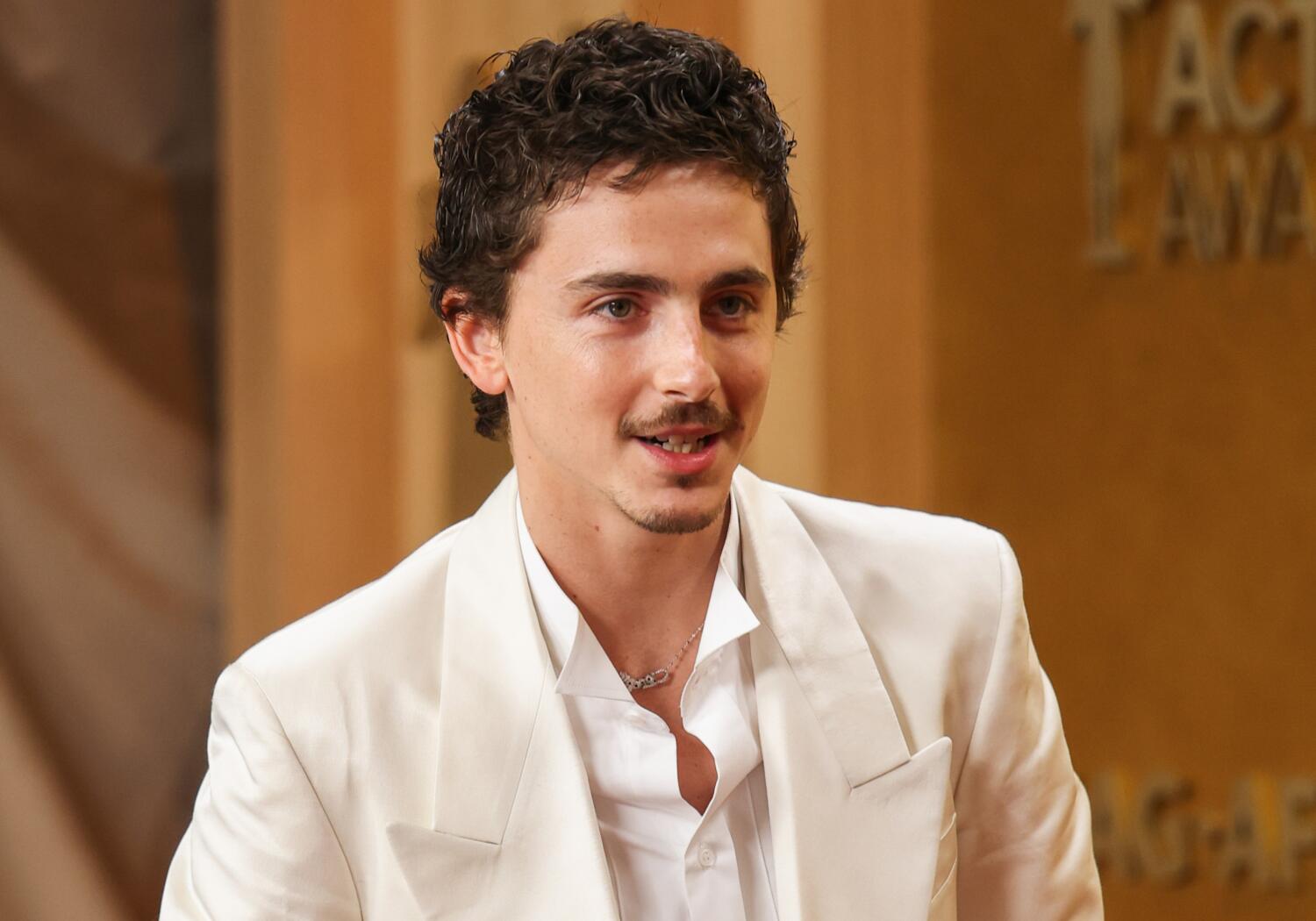
The visceral reaction to Timothée Chalamet’s recent commentary regarding the decline of "high culture"—specifically opera and ballet—reveals a structural tension between traditional cultural literacy and the democratic flattening of the digital attention economy. While critics labeled his observations as "pretentious" or "out of touch," a cold-eyed analysis of the interaction suggests that the backlash itself validates Chalamet’s thesis: the infrastructure required to appreciate complex, non-algorithmic art is being dismantled. The friction exists because Chalamet is highlighting a deficit in "cultural capital," a term coined by sociologist Pierre Bourdieu to describe the non-financial social assets that promote social mobility.
The Mechanics of Cultural Flattening
The current media ecosystem operates on a principle of radical accessibility. Platforms like TikTok and Instagram prioritize content that provides immediate dopamine rewards, which inherently disadvantages art forms requiring long-term investment, such as a four-hour Wagnerian opera or a non-narrative neoclassical ballet. When an influential figure suggests that these forms hold a specific, perhaps superior, value, it triggers a defensive mechanism in the digital collective.
This defensive mechanism functions through three distinct logical drivers:
- The Democratization Fallacy: The belief that because all information is accessible, all forms of expression are equally valuable. Any attempt to categorize art into "high" or "low" is viewed as an act of class aggression rather than a qualitative assessment of complexity.
- The Efficiency Gap: High art is inefficient. It requires "deep work" and a specific vocabulary. In an economy where time is the scarcest resource, the demand for high-effort consumption is declining.
- The Anti-Elitism Reflex: As economic inequality widens, symbols of the "elite"—even those that are publicly funded or historically revolutionary—are treated as targets for populist resentment.
The Cost Function of Artistic Engagement
The barrier to entry for opera or ballet is rarely just the ticket price; it is the "cognitive overhead." To find meaning in a performance of Giselle or The Ring Cycle, a spectator must possess an understanding of historical context, metaphorical language, and technical execution.
Chalamet’s point, stripped of its celebrity delivery, is that the collective "muscle memory" for this type of engagement is atrophying. When a significant portion of the public lacks the tools to decode a medium, they do not see a masterpiece; they see a void. The backlash is the sound of that void being filled with noise.
The "cost" of maintaining these art forms involves:
- Educational Subsidy: The time spent learning the medium's grammar.
- Attention Endurance: The ability to process information without a 15-second "hook" or "edit."
- Social Risk: The potential of being labeled "elitist" for participating in a niche, non-viral community.
The Lifecycle of a Celebrity-Driven Discourse
The lifecycle of the Chalamet controversy follows a predictable pattern of information degradation.
- Phase 1: The Observation. Chalamet makes a statement regarding the beauty or necessity of classical forms during a press junket.
- Phase 2: Decontextualization. Short clips are stripped of their nuance and shared on social media. The focus shifts from the subject (the art) to the subjectivity (the millionaire actor talking about the art).
- Phase 3: The Moralized Response. Influencers and commenters frame the statement as a slight against "normal people" or a "cringe" attempt at intellectualism.
- Phase 4: The Paradoxical Proof. The sheer volume of shallow, reactionary content generated in response to his plea for "depth" serves as empirical evidence that the depth he is mourning has indeed been replaced by surface-level engagement.
This cycle illustrates a bottleneck in modern discourse: we have maximized the speed of communication at the direct expense of the complexity of the message.
Mapping the Divergence of Taste and Utility
The devaluation of high art is not merely a matter of changing trends; it is a shift in the utility of culture. Historically, culture served as a "shibboleth"—a way to identify members of an in-group through shared knowledge. In the digital age, the in-group is no longer defined by what you know, but by what you share.
The utility of a Taylor Swift concert is high because it provides massive social currency, a shared vocabulary for millions, and infinite opportunities for content creation. The utility of an opera, by comparison, is low. It is difficult to film, the rules of etiquette discourage "content mining," and the audience size is too small to trigger a trending topic.
Consequently, the "market value" of high art is decoupling from its "artistic value." Chalamet is observing the price drop in artistic value and mourning the loss of the "gold standard" of culture. The public, meanwhile, is looking at the high market value of the "new culture" and wondering why he is trying to trade in a dead currency.
Structural Barriers to Appreciation
Critics of Chalamet often point to the "gatekeeping" nature of these institutions. This is a factual observation: opera houses and ballet companies have historically been exclusionary. However, the logic of the backlash suggests that the solution to exclusion is the destruction of the art form itself, rather than the expansion of its access.
The bottleneck to entry is currently defined by:
- Acoustic vs. Digital Fidelity: Live, unamplified performance (opera) is physically incompatible with the compressed audio formats of modern consumption.
- Geographic Centralization: High-tier companies are concentrated in expensive urban centers (New York, London, Paris, Milan), creating a physical barrier that reinforces the "elitist" label.
- The Death of the Middle-Brow: The disappearance of media outlets that "translated" high art for a general audience has left a vacuum between "The TikTok Algorithm" and "The Academic Journal."
The Strategic Value of Intellectual Friction
From a strategic standpoint, Chalamet’s stance is a calculated—or perhaps intuitive—preservation of his brand's "luxury status." In a world where celebrity is increasingly commodified and "relatable," positioning oneself as a defender of the inaccessible creates a moat.
Luxury brands thrive on friction. They are defined by what they are not. By aligning himself with opera and ballet, Chalamet separates himself from the "influencer" class and reaffirms his position as a "thespian." The backlash is a necessary component of this branding; for the association to remain "high-end," it must be rejected by the masses.
This creates a feedback loop where the actor gains prestige precisely because he is being attacked for being "above" the current cultural discourse. The critics think they are humbling him, but they are actually reinforcing his differentiation in the market.
Tactical Implications for the Future of Art Institutions
If high art institutions wish to survive this shift without becoming mere museums for the ultra-wealthy, they must address the "Translation Gap" identified by this controversy.
- Gamification of Competence: Institutions must create "onboarding" experiences that treat the learning of classical grammar as a skill-tree rather than a lecture.
- Hybridization of Space: Breaking the physical "temple" model of the opera house to reduce the social risk of attendance.
- Intellectual Protectionism: Accepting that high art will never be "viral" and instead doubling down on its "un-digital" nature as a premium, tactile experience.
The Chalamet incident is not a PR blunder; it is a diagnostic event. It shows that the cultural divide is no longer about wealth, but about the willingness to tolerate intellectual friction. The real "backlash" isn't against the actor, but against the uncomfortable realization that some things cannot be condensed into a swipe-able format.
Move beyond the binary of "pretentious vs. populist." The strategic priority for those invested in the survival of complex culture is to build "intellectual ramps" that allow a distracted public to climb back into high-effort engagement. Without these ramps, the "high culture" Chalamet speaks of will not just be hated; it will be forgotten, leaving a landscape where the only art that survives is the art that requires the least of its audience.
Optimize for the preservation of the "high-context" niche. In a saturated market, the only remaining value is found in the things that cannot be replicated by an automated process.