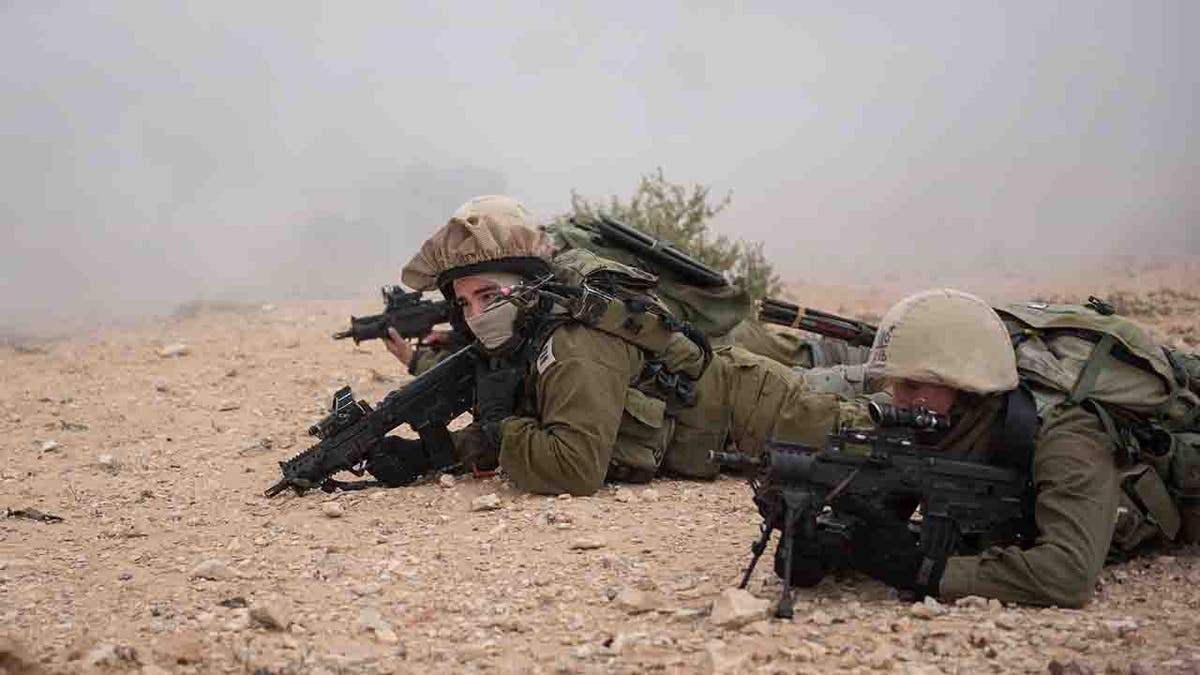
The United States Congress keeps reading the same script because it’s easier than admitting a structural failure in American foreign policy. The latest reports lamenting that Pakistan remains a "base" for terror groups and that military operations have "failed" are not just oversimplified; they are strategically illiterate. We love a clean narrative where "failed" states just won't pull the trigger on the bad guys. It saves us from looking at the maps we drew and the checks we signed.
Stop asking why Pakistan hasn't "cleared" its border regions. Start asking why the U.S. expects a sovereign nation to commit demographic and political suicide to satisfy a D.C. subcommittee’s quarterly report.
The Lazy Consensus of "Failure"
The prevailing beltway wisdom suggests that because groups like the TTP (Tehrik-i-Taliban Pakistan) or the remnants of Al-Qaeda still exist, the Pakistani military must be either incompetent or complicit. This binary is a comfort blanket for analysts who have never set foot in Waziristan.
In reality, Pakistan has conducted some of the largest internal counter-insurgency operations in modern history. Operations like Zarb-e-Azb and Radd-ul-Fasaad involved moving over 100,000 troops into terrain that makes the Swiss Alps look like a golf course. They displaced millions of their own citizens to flush out militants. By any objective military metric, the kinetic phase of these operations was a staggering undertaking.
The "failure" isn't military. It’s the refusal to acknowledge that you cannot kill your way out of a geography problem.
The Geography Trap
Look at the Durand Line. It is a 2,640-kilometer scar across the Hindu Kush. No amount of fencing—which Pakistan has spent billions on—can fully seal a border that local tribes have ignored for centuries. When Congress says Pakistan is a "base," they ignore the fact that the border is porous by design and necessity.
When the U.S. left Afghanistan in 2021, they didn't just leave behind a power vacuum; they left a multi-billion dollar arsenal and a blueprint for every insurgent group in the region. To blame Islamabad for the "resurgence" of terror while ignoring the fallout of the chaotic Kabul withdrawal is the height of geopolitical gaslighting.
The "Double Game" Fallacy
I have sat in rooms with defense contractors and intelligence spooks who treat "The Double Game" like a settled law of physics. They argue Pakistan supports certain groups as "strategic assets" while fighting others.
Here is the inconvenient truth: every nation on earth plays a double game. The U.S. maintains a "Major Non-NATO Ally" status with countries it simultaneously sanctions. The difference is that Pakistan’s double game is born of existential dread, not imperial ambition.
- The India Factor: If you are Pakistan, you view every move through the lens of New Delhi. If the U.S. builds a footprint in Afghanistan, Pakistan sees an encirclement.
- The Blowback Reality: The groups the U.S. wants Pakistan to "eliminate" are often woven into the social fabric of the border regions. A total scorched-earth policy doesn't just kill terrorists; it triggers a civil war.
The U.S. wants Pakistan to be a janitor for a mess the West helped create. When the janitor can't scrub the floor clean while the roof is still leaking, we call the janitor "unreliable."
The Flaw in the "People Also Ask" Logic
People often ask: "Why does the U.S. continue to give aid to Pakistan if they aren't stopping terror?"
This question is built on a false premise. The "aid" isn't a gift; it’s a rental fee for logistics and a bribe for silence. Most of what the public calls "aid" is actually Coalition Support Funds—reimbursements for money Pakistan already spent on operations the U.S. requested.
If the U.S. cut all ties tomorrow, the result wouldn't be a "terror-free" Pakistan. It would be a nuclear-armed state with zero Western influence, pivoting entirely toward China and Russia. The "brutal honesty" Congress won't tell you is that the U.S. needs Pakistan far more than it cares to admit, and these reports are just a way to vent frustration without actually changing the status quo.
The High Cost of the "Clear-Hold-Build" Fantasy
The U.S. military manual 3-24 (Counterinsurgency) preached "Clear, Hold, Build." It failed in Vietnam. It failed in Iraq. It failed in Afghanistan. Yet, we criticize Pakistan for not mastering it in the most difficult terrain on the planet.
The Pakistani military can "clear." They’ve proven they can "hold" at a massive cost of life (losing more soldiers than NATO did in twenty years). But they cannot "build." Not because they don't want to, but because the economy is in a death spiral.
- Debt-to-GDP: Currently hovering at levels that make infrastructure investment impossible.
- Inflation: Eating the middle class alive.
- Energy Crisis: Shutting down the very factories that could provide jobs to potential recruits for extremist groups.
When a young man in the tribal areas joins an insurgent group, it’s rarely because he’s read a manifesto. It’s because the group offers a salary and a sense of belonging that the state cannot afford to provide.
Stop Fixing the Wrong Problem
We are obsessed with "counter-terrorism" (CT) when we should be looking at "counter-extremism" (CE). The Congress report focuses on the number of bodies and bases. It ignores the radicalization happening in the vacuum of the state’s absence.
If you want to disrupt the terror infrastructure in South Asia, you don't do it with another drone strike or a sternly worded memo from a subcommittee. You do it by addressing the fundamental economic disparity that makes radicalization a viable career path.
But that’s expensive. It’s long-term. It doesn't fit into an election cycle.
The Real Risk Nobody Admits
The real danger isn't that Pakistan "failed" to counter terror groups. The danger is that the constant pressure from the West—combined with internal economic collapse—will break the only institution holding the country together: the Army.
If the Pakistani military actually "cleared" every group the U.S. demanded, the internal blowback would likely fracture the command structure. You would have a nuclear-armed state in a state of mutiny. Is that the "success" Congress is looking for?
The Insider's Perspective
I have watched billions of dollars flow through "security assistance" programs that were destined to fail because they were designed by people who think Rawalpindi is just a suburb of Kabul. They aren't the same. The motivations are different. The stakes are higher.
The Pakistani military isn't "failing" to counter terror; they are managing a permanent crisis. It’s a holding action. They are trying to keep the lights on in a house where the basement is on fire and the neighbors are throwing rocks through the windows.
Congressional reports are a form of political theater. They allow lawmakers to feel tough on terror without having to explain why the "War on Terror" has lasted nearly thirty years with no end in sight. They point the finger at Islamabad because looking in the mirror is too painful.
Stop looking for a "military solution" to a problem rooted in 19th-century borders and 21st-century economic despair.
The report says the operations failed. I say the operations did exactly what they were meant to do: prevent total state collapse. If you expected more, you weren't paying attention to the math.
If the U.S. wants a different result, it needs to stop treating Pakistan like a hired gun and start treating the region like a complex ecosystem that requires more than just high-altitude explosives. But that would require nuance, and nuance doesn't get votes.
Quit pretending the "failure" belongs to one side. The failure is a shared, stubborn refusal to accept that some borders cannot be tamed and some wars cannot be won.
Stop reading the reports. Look at the ledger. We aren't fighting a war; we’re subsidizing a stalemate.