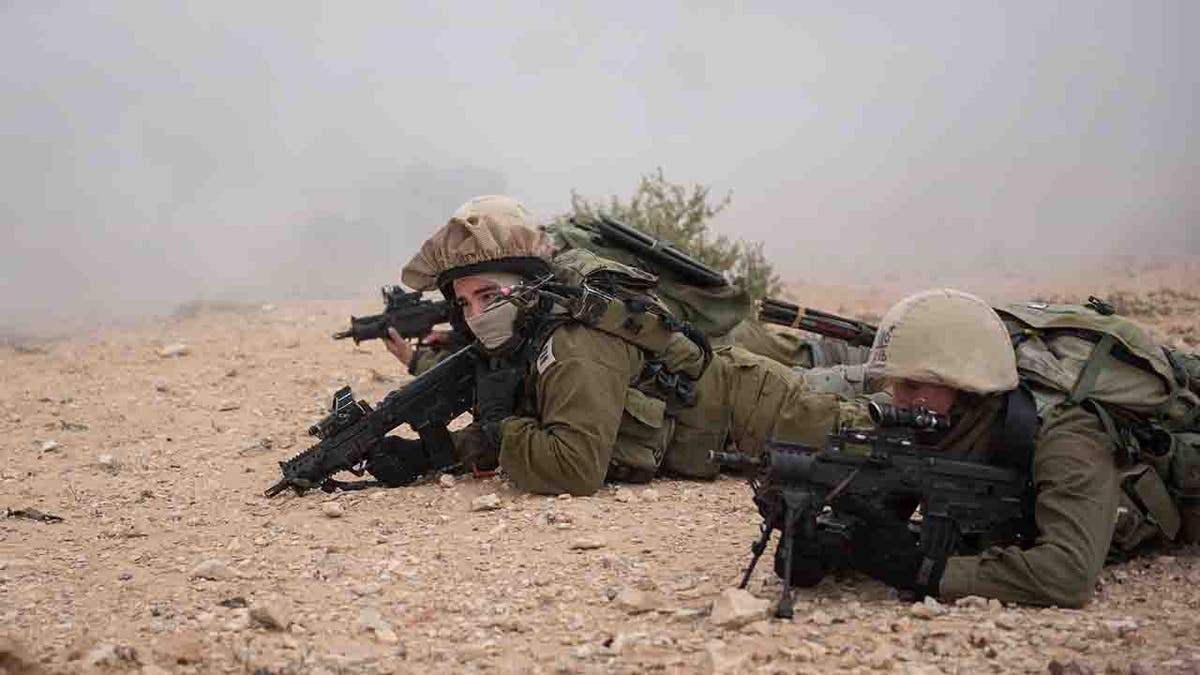
The Israeli Defense Forces (IDF) recently took the rare step of suspending an entire reserve battalion following the documented assault and detention of a United States-based news crew in the West Bank. While the military spokesperson’s office framed the move as an immediate commitment to "accountability," the incident exposes a much more corrosive reality on the ground. This wasn't a localized misunderstanding between soldiers and the press. It was a breakdown of the chain of command that highlights the growing friction between radicalized reserve units and the official military code of conduct.
The incident occurred during a period of heightened friction in the West Bank, where the lines between civilian policing and military combat have blurred beyond recognition. Members of the 9221st Reserve Battalion reportedly stopped a vehicle carrying journalists, including American citizens, who were clearly identified with "PRESS" insignia. What followed was not a standard security check but a series of physical altercations and an unauthorized detention that lasted for hours. The suspension of the unit is a blunt instrument. It is an admission that the rot within this specific battalion was too public to ignore, especially when the victims held American passports. Recently making news lately: Finland Is Not Keeping Calm And The West Is Misreading The Silence.
The Strategic Failure of the 9221st Battalion
For decades, the IDF has relied on its reserve system as the "people’s army." However, the 9221st Battalion represents a shift in the demographic and ideological makeup of these units. Many of the reservists called up for West Bank duty are residents of the very settlements they are assigned to protect. This creates an inherent conflict of interest. When a soldier views a journalist not as a neutral observer but as an enemy of their specific ideological project, the professional distance required for military operations vanishes.
The assault on the U.S. news crew was the tipping point. Reports indicate that soldiers used physical force to prevent the journalists from documenting a nearby military operation, despite the crew being located in a zone where media presence was legally permitted. This was not a tactical error. It was a deliberate attempt to enforce a media blackout through intimidation. By suspending the battalion, the IDF high command is signaling to Washington that they still maintain control over their ranks. But beneath the surface, the influence of hard-line political figures on the reservist class makes such control increasingly fragile. Further information regarding the matter are detailed by USA Today.
Accountability as a PR Tool
We have seen this pattern before. A high-profile incident involving foreigners or prominent media outlets triggers an immediate military police investigation. The news cycle moves on. The "suspension" eventually lapses, or the unit is quietly reassigned to a less visible sector. True accountability in the West Bank is historically scarce.
According to data from various legal advocacy groups operating in the region, the indictment rate for soldiers accused of harming Palestinians or obstructing legal activity is remarkably low. When the victims are American journalists, the math changes. The IDF understands that its relationship with the Pentagon and the U.S. State Department hinges on the appearance of a professional, disciplined force that respects international norms regarding the press.
The suspension of the 9221st is a diplomatic maneuver. It serves to de-escalate tensions with the U.S. Embassy in Jerusalem while avoiding the more difficult task of purging extremist elements from the reserve ranks. To believe this suspension solves the underlying issue is to ignore the structural incentives that encourage aggressive behavior against the media in the first place.
The Role of the Media in a Conflict Without Borders
Journalism in the West Bank has become a high-stakes gamble. For a U.S.-based news crew, the assumption of safety often rests on their credentials and their nationality. This incident proves those shields are thinning. Soldiers on the ground are increasingly emboldened by a political climate in Jerusalem that views the international press with open hostility.
When a reserve battalion feels empowered to detain a news crew without a direct order from the regional commander, it indicates that the informal "rules of engagement" have shifted. The soldiers likely believed they were acting in the interest of national security, or perhaps they simply felt untouchable. The promptness of the suspension suggests that the IDF leadership was horrified not necessarily by the act itself, but by the lack of "operational silence" surrounding it. They got caught.
The Breakdown of Command and Control
Military discipline relies on a clear hierarchy. In the West Bank, that hierarchy is being disrupted by "dual loyalty." Many reservists are more aligned with the local settler leadership than with the General Staff in Tel Aviv. This creates a situation where a battalion commander might give an order, but the ideological temperature of the squad dictates the execution.
The assault on the journalists was a symptom of this breakdown. If the IDF cannot guarantee the safety of accredited media from its own troops, it loses the ability to claim it is conducting a "transparent" security operation. This isn't just a headache for the military spokesperson; it’s a fundamental threat to the IDF's legitimacy as a state institution.
The Geopolitical Fallout
Washington’s reaction to this incident was uncharacteristically pointed. The State Department has been under pressure to address the treatment of American citizens in the West Bank, and an assault on a news crew is an easy rallying point for critics of the current administration’s Middle East policy. The IDF’s decision to suspend the battalion was likely communicated to U.S. officials before it was even announced to the Israeli public.
This brings us to the core of the crisis. The IDF is caught between a domestic political reality that demands "iron fist" tactics and an international reality that requires adherence to the laws of armed conflict. Every time a unit like the 9221st goes rogue, it forces the military to choose between its soldiers and its global standing. In this case, they chose the latter, but the resentment brewing within the reserve ranks over this "betrayal" by the high command will have long-term consequences for troop morale and internal stability.
Why Suspension Isn't a Solution
Suspending a battalion is a temporary fix for a chronic disease. It removes the problematic actors from the immediate vicinity, but it does nothing to address the culture of impunity that led to the assault. To truly fix the problem, the IDF would need to overhaul its training for reserve units, implement strict body-camera requirements for all West Bank interactions, and—most importantly—prosecute offenders in civilian or transparent military courts.
Instead, we see a tactical retreat. The 9221st will likely undergo "re-training," a vague term that usually involves a few lectures on media relations and a return to duty in a different valley. The journalists involved will carry the trauma of the detention, and other crews will think twice before heading into the field without a heavy security detail of their own. This chilling effect is exactly what the soldiers intended, regardless of their current suspension status.
The IDF’s move is a calculated gamble that the world will accept a "bad apple" narrative rather than looking at the barrel. But as more American citizens and international observers find themselves in the crosshairs of undisciplined reserve units, the "bad apple" excuse becomes impossible to sustain. The military is facing an identity crisis that no amount of suspensions can mask.
Check the disciplinary records of the individual officers involved in the 9221st over the next six months. That will tell you whether this was a genuine housecleaning or a well-timed performance for the U.S. State Department.