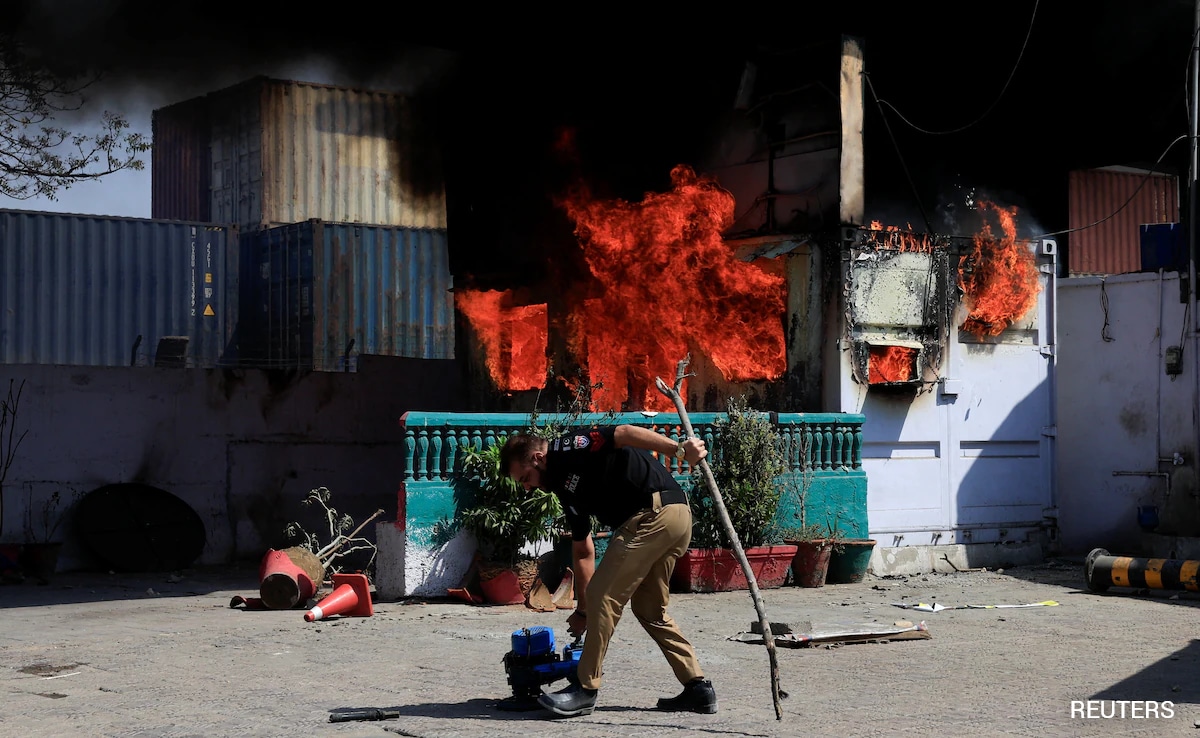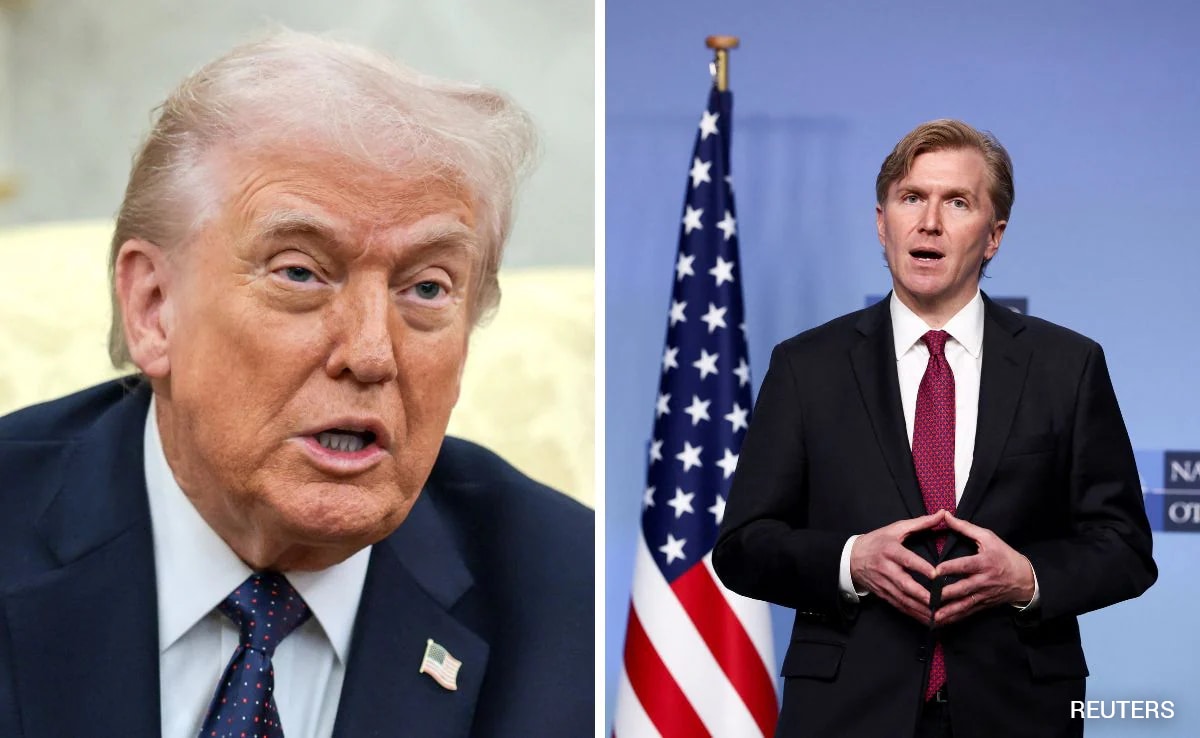
The fog of modern warfare is no longer just a physical reality on the battlefield; it is a calculated byproduct of conflicting digital narratives. When reports surfaced regarding a strike involving Iranian Supreme Leader Ali Khamenei, the immediate aftermath followed a predictable pattern of geopolitical theater. Donald Trump’s public assertion that the United States "got him" stood in direct, jarring contrast to statements from high-ranking defense officials who claimed the operation was not a product of American kinetic action. This discrepancy is not merely a failure of communication between a leader and his cabinet. It represents a fundamental breakdown in how the United States verifies, claims, and weaponizes intelligence in an era where deniability is the ultimate currency.
At the center of this friction is the question of attribution. In traditional twentieth-century warfare, a missile launch left a thermal signature and a clear point of origin. Today, the lines between state-sponsored assassination, internal sabotage, and autonomous drone strikes have blurred beyond recognition. If the U.S. military truly sat this one out, the alternative—that a regional power or an internal faction successfully targeted the most guarded man in Iran—suggests a massive shift in the Middle Eastern power balance that Washington may not be ready to admit it doesn't control. For a different look, see: this related article.
The Architecture of Contradiction
To understand why the Commander-in-Chief and the Pentagon would offer two different realities, we have to look at the mechanics of "credit-taking" in high-stakes optics. For a political leader, claiming a victory over a long-standing adversary provides immediate domestic leverage. It projects strength. It signals to the base that the administration is proactive. However, for the intelligence community and the Department of Defense, claiming a strike that they did not technically execute is a dangerous game.
If the U.S. claims an operation it didn't perform, it risks exposing deep-cover assets or, worse, being caught in a lie when the actual perpetrator eventually provides proof of their involvement. Defense officials often prefer the "gray zone." By maintaining a stance of non-involvement, the U.S. avoids immediate retaliatory escalations while letting the target wonder who else has the capability to reach them. This strategic ambiguity is a staple of modern covert operations, yet it is frequently undermined by the loud, declarative nature of executive-level politics. Related coverage regarding this has been provided by TIME.
The Role of Non-State Actors and Proxies
We are seeing a rise in "ghost operations" where the technology used—often loitering munitions or cyber-physical attacks—leaves no clear fingerprints. If the strike on Khamenei wasn't American, the list of suspects is short but the implications are long. Israel’s Mossad has a documented history of operating deep within Iranian borders, often using localized assets and specialized tech that avoids traditional radar detection.
However, if the strike originated from within Iran, we are looking at a security breach of catastrophic proportions for the Islamic Revolutionary Guard Corps (IRGC). The discrepancy in the U.S. narrative might actually be a protective measure. By denying involvement, the U.S. prevents Iran from having a clear target for "proportional" revenge, effectively trapping Tehran in a state of paranoid investigation into its own ranks.
Technological Asymmetry and the Death of Certainty
The hardware used in these high-value target (HVT) operations has evolved faster than our legal frameworks for claiming them. We are no longer talking about a Reaper drone flying at 50,000 feet. We are talking about micro-drones, precision-guided cyber-attacks that cause physical malfunctions, and electronic warfare suites that can spoof a target’s own security systems.
When a strike occurs, the "kill chain" involves multiple layers of satellite data, signals intelligence (SIGINT), and human intelligence (HUMINT). If the U.S. provided the intelligence but a regional ally pulled the trigger, who "got him"? This is where the language of the White House and the language of the Pentagon diverge. To a politician, providing the "where" and "when" is equivalent to the act itself. To a general, the distinction between "enabling" and "executing" is the difference between an act of war and a support mission.
The Intelligence Gap
- Signal Noise: The amount of raw data coming out of Tehran during a crisis is immense. Filtering the truth from state-mandated propaganda takes hours, sometimes days.
- Verification Lag: Intelligence agencies require "ground truth"—physical or visual confirmation that the target was actually neutralized—before making a formal statement.
- Political Impulse: Leaders often bypass the verification lag to win the news cycle, creating a "fact vacuum" that the military is then forced to fill or correct.
The Cost of Narrative Dissonance
When the executive branch and the military are not in sync, the primary beneficiary is the adversary. Iran thrives on the perception of American disarray. Every time a "we got him" is met with a "it wasn't us," the credibility of American intelligence takes a hit. It suggests that either the President is out of the loop or the military is operating on its own agenda. Neither scenario is particularly comforting to allies who rely on a steady, predictable American foreign policy.
This isn't just about one man or one strike. It’s about the erosion of the unified front. In the past, the U.S. government spoke with one voice on matters of international assassination and covert warfare. That unity acted as a deterrent. Now, the fragmentation of information has turned these events into "choose your own adventure" stories for the global public.
Why Washington Denies Success
It seems counterintuitive to deny a successful hit on a major enemy. Yet, there are several hard-nosed reasons for the Pentagon’s reticence:
- Legal Insulation: Under international law, claiming an assassination can have messy repercussions in the UN Security Council.
- Asset Protection: If the U.S. admits it knew exactly where Khamenei was, it tells the IRGC exactly which communication channels are compromised.
- Regional Stability: Sometimes, the U.S. wants a leader gone but doesn't want the credit because it wants to avoid a full-scale regional war that an official "act of state" might trigger.
The Future of the High-Value Target
The Khamenei incident is a blueprint for the future of warfare. We will see more strikes that nobody officially claims. We will see more "accidents" and "mysterious explosions." The technology has reached a point where a person can be removed from the board without a single soldier crossing a border.
In this environment, the truth is whatever the most dominant voice says it is, at least for the first forty-eight hours. The discrepancy between Trump’s claim and the official Pentagon line isn't a glitch; it is a feature of a system where political messaging and military reality have finally, irrevocably decoupled. The next time a high-ranking figure disappears from the world stage, don't look for a signed confession. Look for the silence.
The real power in modern geopolitics is no longer the ability to strike. It is the ability to strike and make the world argue about who actually did it. If you want to understand the current state of American intelligence, stop listening to the press releases and start watching the movement of the carrier groups. They rarely lie, even when the headlines do.
Assess the satellite imagery of the purported strike site for yourself before accepting any official timeline of events.