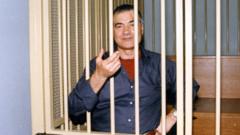
The air inside the Opera prison in Milan does not circulate; it stagnates, heavy with the scent of floor wax and the metallic tang of heavy gates. In a cell designed for the forgotten, a man once known as the "Beast" finally stopped breathing. He was 93 years old. He was frail. He was a shadow of the monster who once dissolved children in acid and orchestrated the blowing up of entire motorways.
His name was Salvatore "Toto" Riina, the "Capo dei Capi" of the Sicilian Mafia, and his death marks the end of an era defined by blood, silence, and a total war against the Italian state.
To understand why a frail old man dying in a hospital bed matters, you have to understand the sheer, paralyzing terror he once wielded. Imagine a small village in Sicily during the 1970s. You are a baker. You wake up at four in the morning. You see a man standing on the corner, watching. He doesn't say anything. He doesn't have to. You know that if you don't pay your "pizzo"—the protection money—your oven might explode, or your son might not come home from school. This wasn't a movie. This was the lived reality for millions under Riina’s thumb.
Riina was not a man of charisma or polished speeches. He was a peasant from Corleone who rose to power through a singular, terrifying philosophy: kill everyone who stands in your way. Not just your enemies. Their families. Their lawyers. The doctors who treat them.
The Summer the Earth Shook
The turning point for Italy—and the reason Riina’s death feels like the closing of a jagged wound—occurred in 1992. Two men, Giovanni Falcone and Paolo Borsellino, were the lead prosecutors in the "Maxi Trial," a legal crusade that finally dared to put hundreds of mobsters behind bars. They were symbols of hope. They were the first crack in the wall of omertà, the code of silence.
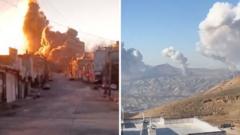
On May 23, 1992, Riina ordered the assassination of Falcone. It wasn't a simple shooting. His men packed a drainage pipe under the A29 motorway with 400 kilograms of explosives. As Falcone’s car passed, the world erupted. The explosion was so powerful it was recorded by local earthquake monitors. Falcone, his wife, and three bodyguards were vaporized. Two months later, Borsellino was killed by a car bomb outside his mother’s house.
The state didn't crumble. It woke up.
The murders of Falcone and Borsellino were a strategic blunder born of Riina’s arrogance. He thought he could decapitate the justice system. Instead, he turned the entire nation against Cosa Nostra. The people of Sicily, who had lived in fearful compliance for decades, began hanging white sheets from their balconies. These sheets were a silent, visual scream: Enough.
The Myth of the Man in the Shadows
For twenty-three years, Riina lived as a ghost. He was the most wanted man in Italy, yet he stayed in Sicily, right under the noses of the authorities. He lived in villas, raised his children, and continued to sign death warrants. This is the part that is hardest to grasp—the complicity of the system. Riina didn't just rule through violence; he ruled through a network of "invisible" friends in politics and business.
When he was finally captured in 1993, he didn't look like a kingpin. He looked like a confused grandfather in a cheap suit. He claimed he was just a poor accountant who didn't know what the "Mafia" even was.
"I am a man of the woods," he told the judges.
But the woods he came from were littered with bodies. He was convicted of ordering more than 150 murders. Some estimates suggest he was responsible for thousands more through the ripple effects of his heroin trafficking and the brutal internal wars he sparked.
The Price of a Lifetime of Secrets
Riina died under the "41-bis" prison regime. In Italy, this is the harshest form of incarceration, designed specifically to break the Mafia's ability to communicate. Total isolation. No newspapers from the outside. No physical contact with family.
For twenty-four years, Riina sat in that silence. He never repented. He never cooperated. He never gave up the names of the politicians who had once protected him. He died with his secrets locked inside his chest, a final act of defiance against the state he tried to burn down.
There is a dark, lingering question that haunts the Italian public: what happens now that the Beast is gone?
Many fear that his death creates a power vacuum. The "old guard" of the Corleonesi is largely dead or behind bars, but the Mafia is a shapeshifter. It has moved away from the spectacular bombings of the 90s and into the quiet boardrooms of Milan and Rome. It deals in public contracts, renewable energy, and digital fraud. It doesn't need to blow up motorways when it can simply buy the company that builds them.
A Legacy of Broken Families
Consider the story of Giuseppe Di Matteo. He was the eleven-year-old son of a Mafia turncoat. To silence his father, Riina’s men kidnapped the boy. They held him for 779 days. When the father still refused to stop talking to the police, the boy was strangled and his body was dissolved in a vat of acid.
When we talk about the "death of a boss," we are not talking about a political figure or a celebrity. We are talking about the man who signed the order for that vat of acid. The human element of this story isn't found in the prison records or the dry reports of his heart failure. It is found in the eyes of the mothers who still don't have a body to bury. It is found in the streets of Palermo, where the name "Riina" is still whispered with a shudder.
His death brings a certain kind of closure, but not justice. Justice would have been a confession. Justice would have been the dismantling of the entire shadow state he helped build.
As the sun sets over the Mediterranean, the bells of the churches in Corleone ring out, but they do not ring for him. They ring for a town that is trying, slowly and painfully, to scrub the blood from its cobblestones. The Beast is dead, but the silence he enforced for so long still echoes in the hills of Sicily.
The cell in Milan is empty now. The wax is still there. The metal gates are still there. But the man who turned a beautiful island into a graveyard has finally met the only authority he couldn't intimidate: his own mortality.
He left the world exactly as he lived in it—surrounded by stone, consumed by hate, and utterly alone.
In the end, even the most feared man in history is just a body that needs to be buried, leaving the rest of us to figure out how to live in the light he spent a lifetime trying to extinguish.