The rain in Tin Shui Wai has a way of blurring the horizon until the marshlands of the Northern New Territories look less like a map and more like a ghost. For decades, this patch of earth was the "backyard"—a stretch of fish ponds, brownfield sites, and quiet villages overshadowed by the neon gravity of Central. Now, it is the site of a $128 billion dream called the Northern Metropolis.
But dreams cost money. Real, cold, liquid cash.
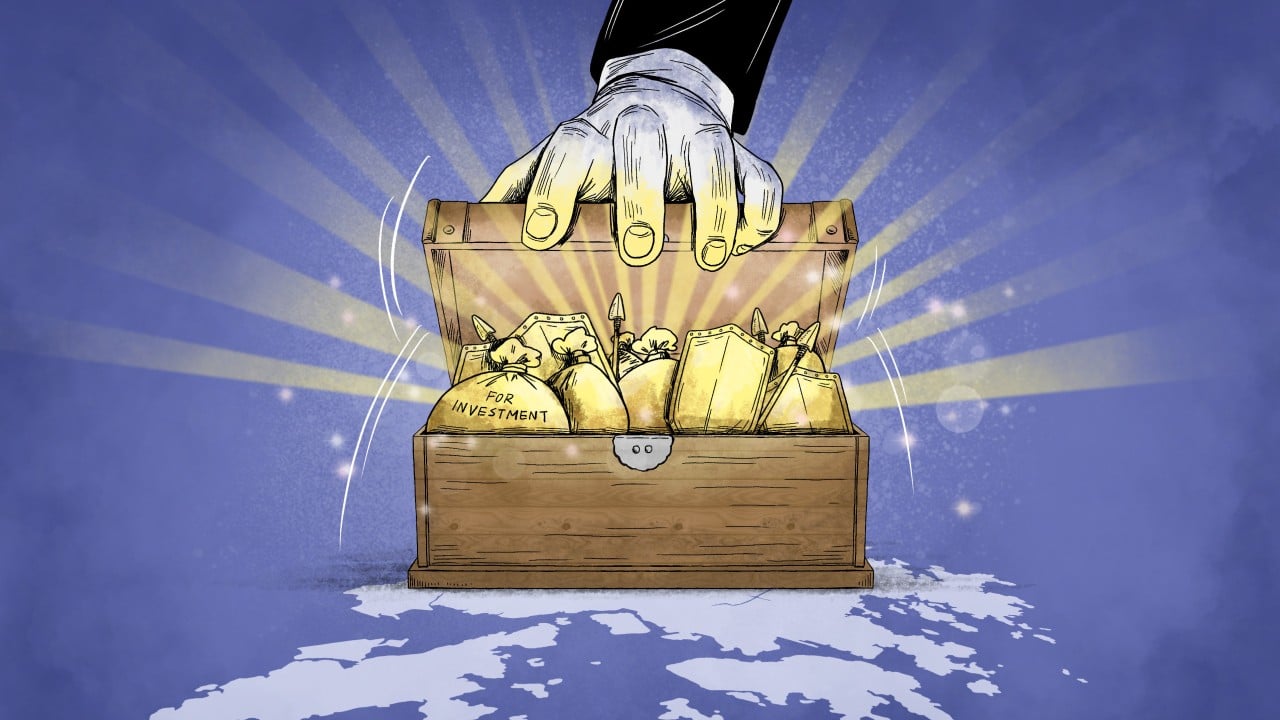
Hong Kong sits at a crossroads that isn't marked on any GPS. On one hand, there is the urgent, visceral need for housing and a new tech-driven soul. On the other, there is the "war chest"—the city’s fiscal reserves—which has begun to look uncomfortably thin. We are no longer talking about abstract accounting. We are talking about whether a city can build its way out of a deficit by spending the very thing it is trying to save.
The Ghost of 2003
To understand why people are sweating over spreadsheets in the Legislative Council, you have to look back at the scars. In the early 2000s, after the double hit of the Asian Financial Crisis and SARS, Hong Kong’s reserves were the shield. They were the reason the currency didn't collapse and the reason the city could breathe while the world choked.
Fast forward to today. The shield is dented.
Between the massive relief spending of the pandemic and a sluggish property market that usually fills the government’s pockets, those reserves have dropped from a peak of nearly $1.2 trillion to around $700 billion. It sounds like a lot until you realize the Northern Metropolis is just one of several mega-projects. Add the artificial islands of the Kau Yi Chau project, and you start to see the math stop making sense.
Think of it as a family that has saved for a generation. They have enough for a comfortable retirement, but the roof is leaking, and the kids need a world-class education to compete in a new economy. Do they spend the entire retirement fund on a massive renovation, hoping the house value triples? Or do they patch the leaks and wait?
A Tale of Two Citizens
Consider Mr. Lam. He’s 62, a retired bus driver living in a public housing estate in Yuen Long. To him, the Northern Metropolis is a promise of better transport and perhaps a park where his grandkids can run. He cares about the reserves because they represent the safety net for his healthcare. If the government spends the "war chest" on concrete and steel, what happens if another virus arrives? What happens if the global markets shiver?
Then there is Sarah. She’s 26, a biotech researcher who feels suffocated by the lack of space and the sky-high rents of the city south. For her, the Northern Metropolis is the only chance Hong Kong has to stay relevant. "If we don't build the infrastructure for a Silicon Valley of the East," she argues, "we won't have a tax base to protect in twenty years anyway."
Their conflict is the city's conflict.
The Northern Metropolis isn't just a housing project; it’s an attempt to pivot the entire economy toward the Greater Bay Area. It’s meant to house 2.5 million people and provide 650,000 jobs. It is, by all accounts, a survival strategy. But using "war chest" firepower—the fiscal reserves—to fund it is a high-stakes play. Usually, infrastructure is built on the back of land sales. But when developers are hesitant and the market is cold, the government has to look elsewhere.
The Danger of the Tipping Point
If the government dips too deep into the reserves, it risks its credit rating. It risks the stability of the Hong Kong Dollar’s peg to the US Dollar. The "war chest" isn't just a savings account; it’s a psychological barrier. It tells the global financial markets: You cannot break us.
When that number drops, the vultures start circling.
Critics argue that the government should turn to the private sector. Let the big developers build the roads and bridges in exchange for land rights. Or issue "Metropolis Bonds" to let the public invest in their own future. This sounds logical, but it shifts the risk. If the project fails to attract the tech giants and the residents it needs, those bonds become a weight around the city's neck for decades.
The logic of the "build it and they will come" philosophy is being tested against the brutal reality of a shrinking population and a changing global trade environment. We are betting that the future of Hong Kong lies in the north, integrated with Shenzhen, rather than looking purely toward the sea.
The Invisible Stakes
When we talk about "firepower," we are using a military metaphor for a reason. In a financial war, your reserves are your ammunition. Once you fire them, you can't just pick them up off the ground.
There is a technical term for what Hong Kong is trying to avoid: a structural deficit. This happens when your bills are consistently higher than your paycheck, and you start selling the furniture to pay the electricity. For years, land sales were the "bonus" that kept the city in the black. With those revenues stalling, the Northern Metropolis feels like a desperate attempt to build a new factory when the old one is struggling.
The human cost of getting this wrong is staggering. If the reserves are depleted and the project doesn't yield the expected economic boom, the government will have no choice but to raise taxes or cut services. Imagine a Hong Kong where the MTR fare doubles, or the wait time for a hospital bed triples, because we spent the "war chest" on a tech hub that stayed half-empty.
The Weight of the Shovel
The government insists they can manage. They point to the "Long-Term Fiscal Planning" and the potential for public-private partnerships. They speak of "financial prudency."
But walk through the villages of San Tin. Look at the vast stretches of land that are currently occupied by shipping containers and rusted car parts. The scale of the transformation required is biblical. It requires more than just money; it requires a level of execution that Hong Kong hasn't seen since the construction of the new airport at Chek Lap Kok.
Back then, we had the wind at our backs. Now, we are rowing against a tide of geopolitical tension and a domestic demographic shift.
The debate over the war chest is really a debate over confidence. If the government uses its reserves, it is telling the world: We believe in this so much we are willing to bet our last dollar on it. If they hesitate, they signal a lack of faith in the city’s next chapter.
It is a choice between the safety of the past and the gamble of the future.
There is a certain irony in the fact that the very thing meant to save Hong Kong—this massive, northern expansion—is the thing most likely to drain its historic strength. We are tearing down the old borders of the New Territories to create a seamless connection with the mainland, but in doing so, we are also tearing down the old fiscal rules that made the city an outlier of stability.
The sky over the New Territories remains heavy. The heavy machinery is moving in. The earth is being turned. Every scoop of dirt is a withdrawal from a bank account that took seventy years to fill.
We are no longer just building a city. We are spending our history to buy a future, hoping that when the dust settles, the house we’ve built is worth more than the gold we gave up to see it stand.
In the quiet hours of the night, when the spreadsheets are closed and the policy papers are stacked high, the question remains. If the war chest is empty and the rain keeps falling, what do we have left to hold back the flood?
Would you like me to analyze the specific financial instruments, like infrastructure bonds, that could protect the reserves while still funding the Northern Metropolis?