The metal of a launch pad doesn't care about diplomacy. It only understands the cold math of ignition, the violent expansion of gases, and the unyielding grip of gravity. In Pyongyang, that math has officially changed. It is no longer a variable subject to negotiation or a chip to be traded for grain and fuel. It has become the floor, the walls, and the ceiling of a nation’s identity.
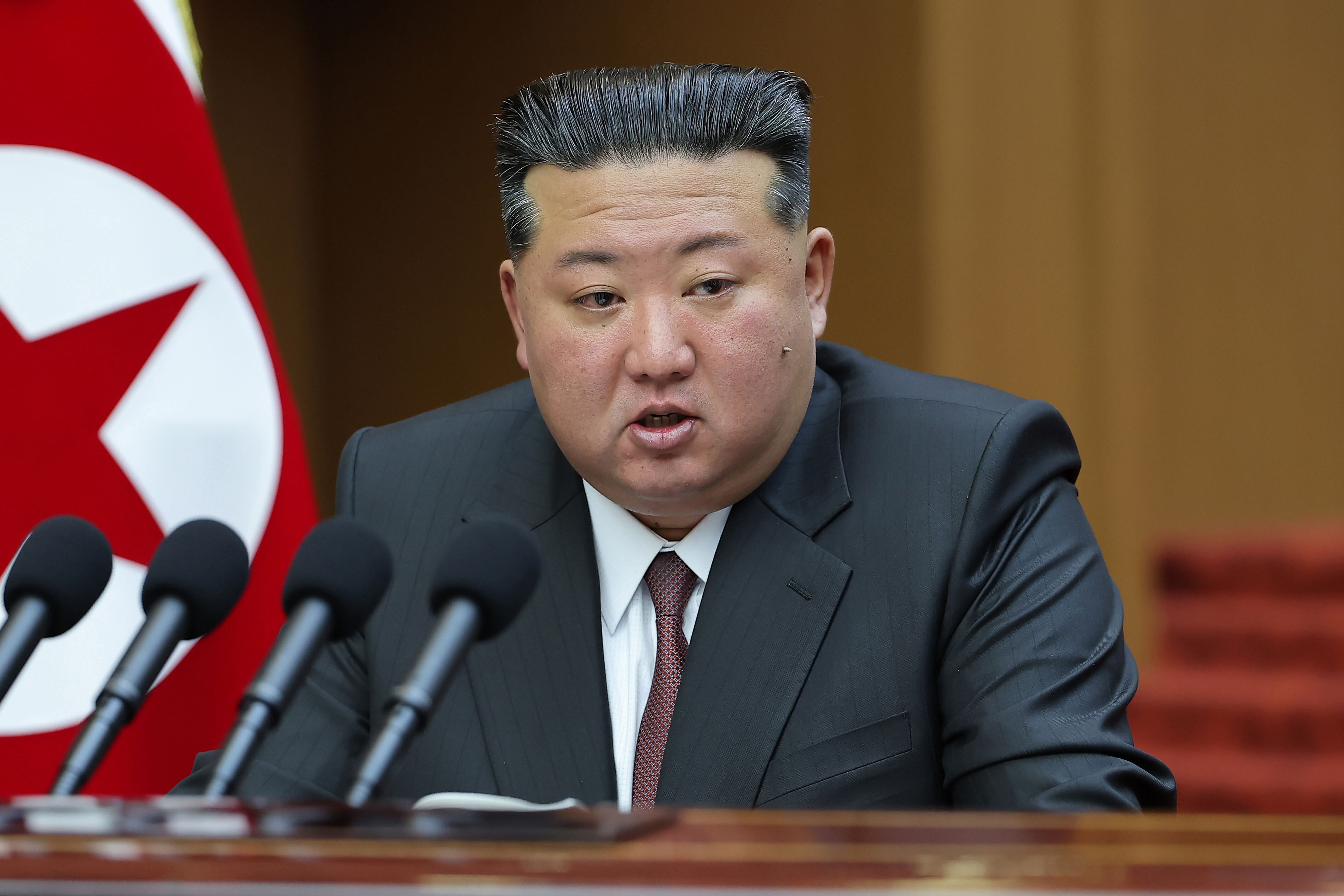
Kim Jong Un recently stood before his assembly and did something more significant than testing a missile. He closed a door. By declaring North Korea’s nuclear status "irreversible," he didn't just update a policy. He attempted to rewrite the future of the Korean Peninsula in permanent ink. The world used to talk about "denuclearization" as if it were a destination we were all driving toward, albeit on a rocky road. Now, Kim has shredded the map and burned the car.
The Weight of the Button
Imagine a technician in a sterile, underground facility near Punggye-ri. Let’s call him Pak. Pak doesn’t see the geopolitical ripples his work creates in Washington or Tokyo. He sees the calibration of a trigger. He feels the hum of the centrifuges through the soles of his boots. For Pak, and thousands like him, the nuclear program isn't a "threat" or a "provocation." It is the only thing that makes his country matter in a world that would otherwise look right through it.
This is the human element the West often misses. We see a rogue state; they see a survival vest. When the North Korean leadership watches the history of the last twenty years, they don't see the benefits of global integration. They see Muammar Gaddafi giving up his weapons program only to end up in a roadside ditch. They see Ukraine surrendering its Soviet-era stockpile for security assurances that eventually vanished like mist. To the Kim dynasty, a nuclear warhead isn't just a weapon. It is a life insurance policy written in plutonium.
The new law passed by the Supreme People’s Assembly takes this paranoia and codifies it. It authorizes automatic nuclear strikes if the leadership is threatened. Think about that for a second. It is a "dead man’s switch" on a national scale. If a decapitation strike were to target the command structure, the system is designed to fire back without waiting for a human to say "go."
The Ghost of the NPT
The Treaty on the Non-Proliferation of Nuclear Weapons (NPT) was supposed to be the world's great dam against the rising tide of atomic fire. For decades, it held. But North Korea found the cracks. They walked out in 2003, and since then, they have been building a fortress out of those cracks.
The transition from "we might have them" to "we will never give them up" is a psychological shift that changes how every neighboring country sleeps at night. In Seoul, the neon lights of Gangnam feel a little more fragile. In Tokyo, the arrival of a ballistic missile in the waters of the Exclusive Economic Zone is no longer a rare shock; it’s a Tuesday.
We often treat North Korea like a static problem, a puzzle we just haven't been smart enough to solve. But the puzzle is changing shape. This isn't the North Korea of the 1990s, bartering for light-water reactors. This is a state that has integrated nuclear logic into its DNA. The weapons are now part of the curriculum, the parades, and the very constitution. You cannot "denuclearize" a country that has decided its soul is made of enriched uranium.
The Invisible Chains
There is a cost to this "irreversible" status, and it isn't paid by the men in the high-collared suits. It’s paid in the silence of the countryside. To maintain a nuclear program that can rival superpowers, a small, isolated nation must cannibalize everything else. The electricity that should power a hospital in Hamhung is diverted to the cooling systems of a reactor. The steel that should be used for tractors is forged into missile casings.
The tragedy of the "irreversible" vow is that it also makes the poverty irreversible. By cutting off the possibility of denuclearization, Kim has effectively cut off the possibility of sanctions relief. He has told his people that they will continue to eat "the spirit of self-reliance" instead of imported rice. The narrative fed to the public is one of glorious defiance, but the reality is a slow, grinding isolation that turns the entire country into a pressure cooker.
Consider the logic of a cornered animal. If you know you can never leave the room, you spend all your time fortifying the door. You don't worry about the decor or the ventilation; you only worry about the hinges. North Korea has become a nation of hinges.
The Shift in the Wind
For years, the United States and its allies operated on the "CVID" principle: Complete, Verifiable, and Irreversible Dismantlement. It was a nice acronym. It looked good on briefing papers. But Kim has hijacked the word "irreversible" and turned it against the diplomats. He is betting that if he stays the course long enough, the world will eventually get tired of being angry. He is waiting for the moment when the West stops asking him to give up his nukes and starts asking him how many he has and where they are pointed.
That transition—from "disarmament" to "arms control"—is the ultimate goal. It would mean North Korea has finally been accepted as a nuclear power, alongside India or Pakistan. It would mean the "Hermit Kingdom" won the long game.
But games involving nuclear fire don't really have winners. They only have survivors.
The rhetoric coming out of Pyongyang suggests a leader who feels he has finally achieved a level of parity. He isn't begging for a seat at the table anymore; he’s building his own table and arming it with Hwasong-17 missiles. The danger now isn't just a planned conflict, but the terrifying possibility of a mistake. In a world where strikes are "automatic" and "irreversible," a technical glitch or a misinterpreted radar blip becomes a potential extinction event.
The Silence After the Blast
There is a specific kind of quiet that follows a missile test. In the North, it is the quiet of state-mandated celebration, where the cheers are as synchronized as the engines. In the South, it is the quiet of a people who have learned to live in the shadow of a volcano, going about their lives because the alternative is to stop living entirely.
Kim’s vow is a challenge to the very idea of progress. It suggests that some problems cannot be solved, only endured. He has anchored his dynasty to a weapon that can never be used without ensuring its own destruction, yet can never be discarded without ensuring its own fall. It is a paradox wrapped in a radiation suit.
As the sun sets over the Taedong River, the lights in the capital flicker. Some of those lights belong to the monuments of the Kims, bathed in a permanent, defiant glow. Others belong to the laboratories where scientists work late into the night, refining the tools of the "irreversible" path. They are building a world where the only thing more certain than the past is the threat of the future.
The door has been slammed shut. The bolt has been thrown. And inside the room, the oxygen is slowly starting to run out.


