The wind in Pyongyang doesn't just blow. It carries a specific, metallic weight, the kind of chill that settles into the marrow of your bones before you even realize you’re shivering. On the tarmac, the flags of two nations—one a sprawling Eurasian giant, the other a hermetic fortress—snapped in synchronized rhythm. This wasn’t just a diplomatic photo opportunity. It was a formalization of a ghost story that has haunted the West for decades.
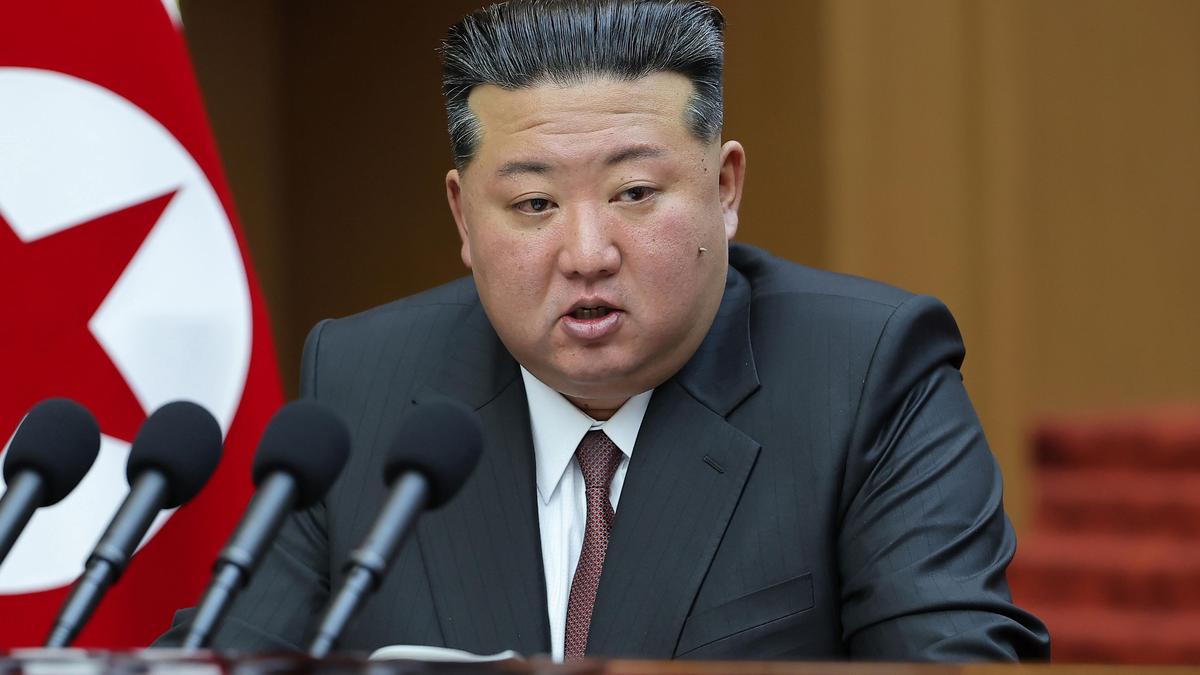
Kim Jong Un stood there, his expression unreadable, promising "unshakable" support for Vladimir Putin’s war. To the casual observer reading a ticker tape on a news site, it looks like a simple transaction: shells for satellites, food for fuel. But if you look closer, past the polished black limousines and the goose-stepping guards, you see the gears of a much larger, more dangerous machine grinding into place.
The stakes are no longer abstract. They are measured in the weight of 152mm artillery rounds being hoisted onto railcars in the North Korean interior, destined for the muddy trenches of the Donbas.
The Weight of a Promise
Imagine a factory worker in a gray, nameless city north of the 38th parallel. Let's call him Pak. For Pak, this "unshakable support" isn't a headline; it's a double shift. It’s the smell of industrial grease and the sound of metal screaming against metal as his plant pivots from outdated domestic quotas to the urgent demands of a foreign front. Pak doesn't know where Ukraine is. He only knows that the trains are leaving fuller than they have in forty years.
In exchange, the sky over Pyongyang is changing.
For years, North Korea’s space program was a series of expensive, high-altitude fireworks displays. They struggled with the delicate physics of liquid-fuel stages and the pinpoint precision required to put a "spy" in the sky. Then, the partnership deepened. Suddenly, the technical hurdles that had stymied their best scientists for a generation began to melt away. This is the invisible currency of the Russia-North Korea pact. It isn't just about the physical shells being fired today; it’s about the ballistic knowledge being whispered into Kim’s ear tomorrow.
The math is brutal. Russia needs volume. North Korea has stockpiles that have been fermenting in mountain bunkers since the end of the Cold War. It is a marriage of desperation and cold-eyed pragmatism. Putin, once a member of the global elite who hosted G8 summits, now finds his most reliable lifeline in a man the rest of the world treats as a pariah.
The Technology of the Silent Partner
When we talk about "support," we often think of soldiers. But in the modern age, support is digital and orbital.
The real danger lies in the transfer of sensitive military technology. North Korea’s recent successes in satellite launches and solid-fuel missile tests aren't coincidences. They are the fingerprints of a superpower sharing its homework. Consider the complexity of a modern ICBM. It requires advanced guidance systems, heat-shielding materials that can survive re-entry into the atmosphere, and the ability to miniaturize nuclear warheads.
Russia has mastered these for half a century. North Korea is a hungry student.
For the rest of the world, this creates a terrifying feedback loop. The more North Korea helps Russia sustain its war of attrition, the more Russia helps North Korea modernize a nuclear arsenal that can reach Los Angeles or London. It is a cycle of escalation where the currency isn't money, but the ability to threaten the status quo.
A Mirror of 1950
History doesn't repeat, but it certainly rhymes with a haunting cadence. We are seeing the reconstruction of a bloc that many thought was buried under the rubble of the Berlin Wall.
Back in the 1950s, the Soviet Union was the primary patron of the North. Today, the roles have shifted slightly. Russia is the one coming with an open hand, seeking the raw materials of war. Yet, the underlying sentiment remains the same: a shared defiance of a Western-led order that both leaders view as a cage.
Kim’s vow of "unshakable" support is a signal to his own people as much as it is to the world. It tells the citizens in the darkened streets of Pyongyang that they are no longer alone. They have a big brother again. A brother with a veto on the UN Security Council. A brother with a deep, shared resentment of the sanctions that have strangled their economies.
This bond is forged in the fires of necessity. When two men who feel backed into a corner find each other, they don't just shake hands. They lock arms.
The Invisible Toll
While the leaders toast with champagne in gilded halls, the reality on the ground is far more somber. The "unshakable" support means that the war in Ukraine will be longer, bloodier, and more unpredictable. Each North Korean shipment allows Russia to bypass the manufacturing bottlenecks that should have, by all logic, forced them to the negotiating table by now.
It also changes the calculus in the Pacific.
South Korea and Japan are watching this alliance with a growing sense of dread. For them, a Russia-backed North Korea is a fundamentally different beast than the isolated hermit kingdom of a decade ago. If Russia provides North Korea with advanced submarine technology or stealth capabilities, the balance of power in Asia shifts overnight.
The world is becoming smaller, and the lines are being drawn in permanent marker.
We often think of global politics as a game of chess played by giants. But the moves being made in Pyongyang affect the price of grain in Africa, the security of suburbs in Europe, and the long-term survival of the non-proliferation treaty. It is a ripple effect that starts with a single promise and ends with a world that is significantly more dangerous than it was yesterday.
The Ghost in the Machine
There is a certain irony in the fact that the most "unshakable" alliance in the 21st century is built on 20th-century hardware. The steel of the shells and the iron of the rails are what matter most. In an era of cyberwarfare and AI-driven drones, the deciding factor is still the ability to rain metal down on a trench.
Kim and Putin have realized that while the world looks toward the future, the power to disrupt it lies in the grim, industrial past. They are betting that the West’s patience will wear thin before their stockpiles do.
The "support" isn't just about winning a war; it's about outlasting a system.
As the sun sets over the Taedong River, the trains keep moving. They move under the cover of darkness, across a border that used to be a footnote and is now a primary artery of global conflict. The handshake has been exchanged. The vows have been made. The world waits to see what happens when "unshakable" support meets the immovable reality of a world that refuses to look away.
The steel is cold, the promises are heavy, and the silence from the border is the loudest sound of all.
Would you like me to analyze the specific types of military hardware North Korea is rumored to be receiving in exchange for its artillery?