Twenty-one miles.
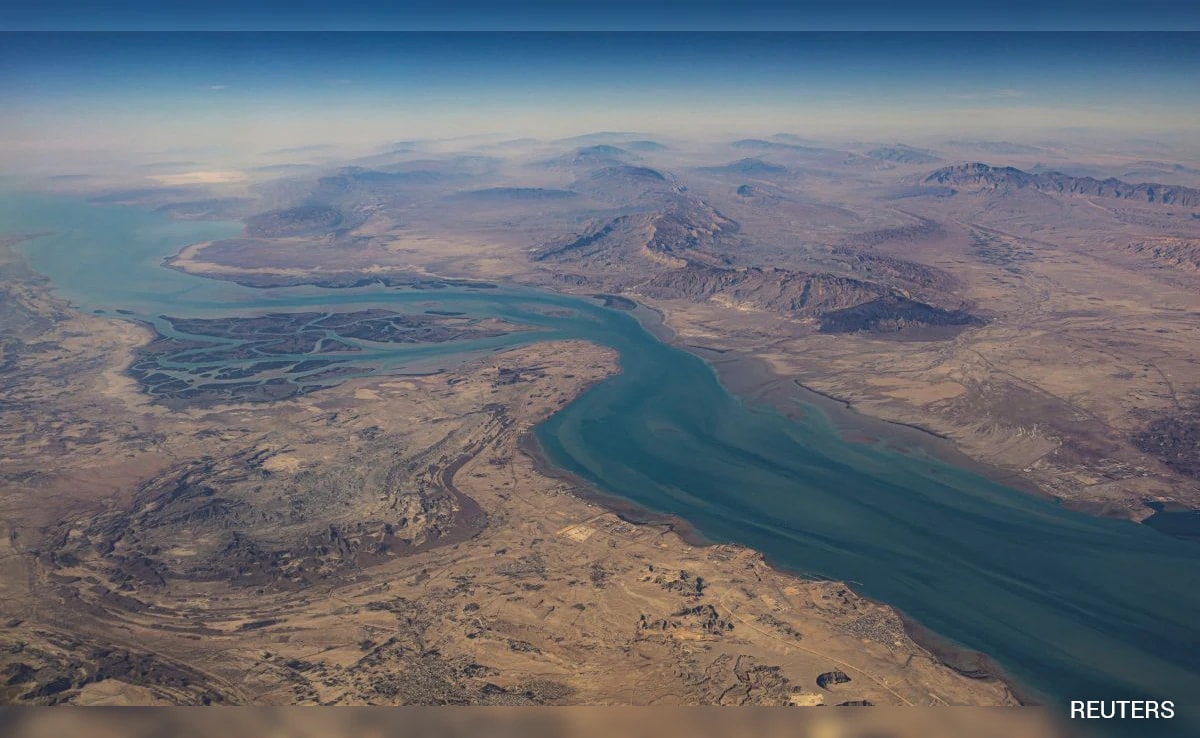
To a marathon runner, that is the point where the body begins to eat itself. To a commuter in Los Angeles, it is a frustrating forty-minute crawl. But in the turquoise waters between the jagged cliffs of Oman and the coast of Iran, twenty-one miles is the width of a throat. Building on this theme, you can find more in: Why the Green Party Victory in Manchester is a Disaster for Keir Starmer.
The world breathes through this throat.
Imagine a giant tanker, the Al-Ghashamiya, as it sits low in the water, burdened by its own weight. Under the scorching Arabian sun, the steel deck is hot enough to sear skin. The captain on the bridge isn't looking at the beauty of the Musandam Peninsula. He is watching the radar for the swarms of small, fast-attack boats that occasionally buzz like hornets around the massive slow-moving prey. He is monitoring the depth, ensuring his hull—as long as three football fields—doesn't find a stray rock in the shipping lanes. Observers at TIME have also weighed in on this situation.
Every day, nearly 21 million barrels of oil pass through this specific stretch of water known as the Strait of Hormuz. That is roughly one-fifth of the entire world's daily petroleum consumption. If you have ever felt the sting of a sudden price hike at the gas pump, or wondered why a head of lettuce suddenly costs twice as much as it did last week, there is a high probability the answer lies in these twenty-one miles.
The Physics of the Bottleneck
The Strait of Hormuz is not just a geographic coincidence; it is a physical constraint on global civilization. While the waterway is technically wider than twenty-one miles at its narrowest point, the actual shipping lanes used by these behemoth tankers are much tighter. To prevent collisions, the traffic is funneled into two-mile-wide lanes—one for entering the Persian Gulf, one for leaving—separated by a two-mile-wide buffer zone.
It is a high-stakes game of Tetris played with billions of dollars of volatile liquid.
The sheer volume of energy passing through this needle's eye is staggering. While the Suez Canal and the Panama Canal are famous for their engineering and historical weight, Hormuz is the undisputed heavyweight champion of energy transit. It is the primary artery for the oil and liquefied natural gas (LNG) flowing from the fields of Saudi Arabia, Iraq, Kuwait, the United Arab Emirates, and Qatar to the hungry markets of Asia, Europe, and North America.
When people talk about "energy independence," they often forget that the global oil market is exactly that: global. Even if a country produces its own fuel, the price is set on a world stage. When the Strait of Hormuz catches a cold, the rest of the planet starts shivering.
The Invisible Chains of the Supply Chain
Think about a small business owner in a quiet suburb, perhaps a baker named Elias. Elias doesn't track geopolitical tensions in the Middle East. He tracks the cost of flour and the electricity bill for his ovens.
One Tuesday, a rumor ripples through the trading floors in London and New York. A drone has been spotted over a tanker in the Strait. An insurance company decides to triple the "war risk" premium for any vessel passing through the Musandam. Suddenly, the shipping company transporting the grain Elias needs has to pay an extra fifty thousand dollars for a single voyage.
The shipping company passes that cost to the wholesaler. The wholesaler passes it to Elias.
Elias looks at his ledger and realizes he has to raise the price of a sourdough loaf by fifty cents. To his customers, it looks like corporate greed or inflation. To the captain of the Al-Ghashamiya, it is the inevitable tax of navigating the world's most precarious transit point.
This is the "Hormuz Premium." It is a phantom cost embedded in almost every plastic toy, every gallon of milk, and every smartphone delivered across the ocean. We are all connected to those twenty-one miles by invisible, economic chains.
The Geography of Anxiety
Why can't we just go around?
In a world of satellites and tunnels under the sea, it seems absurd that we are still beholden to a single strip of water. Nations have tried to build alternatives, of course. There are pipelines that cross the desert of Saudi Arabia to the Red Sea, and others that cut through the UAE to the Gulf of Oman.
But these are straws trying to drink an ocean.
The existing pipelines can only handle a fraction of the volume that moves by ship. To replace the Strait of Hormuz, you would need to build a continent-spanning network of steel that would take decades and trillions of dollars to complete. Until then, we are stuck with the geography we inherited.
The tension in the Strait is rarely about a full-scale war. It is about the threat of disruption. Iran, which sits on the northern shore of the Strait, knows this better than anyone. They view the Strait as their "choke point" leverage. By merely conducting a naval exercise or placing a few mines in the water, they can send global markets into a tailspin without firing a single shot.
It is a psychological weapon as much as a physical one. When a tanker is seized or a shadow war plays out between covert operatives on the docks of Bandar Abbas, the world watches with bated breath. This isn't just about geopolitics; it's about the fundamental stability of the modern world.
The Human Cost of the Watch
Consider the crews on these ships. They are often invisible participants in this global drama. Thousands of sailors from the Philippines, India, and Eastern Europe spend months at a time on these floating islands of steel.
When they enter the Strait, the mood on board shifts. The "Citadel"—a reinforced room where the crew hides in case of a pirate or military boarding—is prepped. The fire hoses are pressurized to repel boarders. The lookout stands on the wing of the bridge, binoculars pressed to his eyes, scanning for the telltale wake of a fast boat.
These sailors aren't politicians or oil tycoons. They are people trying to send money home to their families. Yet, they find themselves at the center of a geopolitical chess match where they are the most vulnerable pieces. If the Strait closes, they are the first to be trapped. If a conflict breaks out, they are the first in the line of fire.
The Shift to the East
The gravity of the Strait is shifting. A few decades ago, the primary concern of a Hormuz closure was the gas lines in the United States. Today, the stakes have moved East.
China, India, Japan, and South Korea are now the primary destinations for the oil flowing through the Strait. For these nations, Hormuz is not just a business concern; it is a matter of national survival. Without that energy, the lights in Tokyo go out. The factories in Shenzhen stop humming. The massive economic engines of the 21st century would grind to a screeching halt.
This shift has created a new kind of tension. As the United States becomes more energy-independent through fracking and renewables, its appetite for policing the Strait may wane. Who picks up the slack? Does China build a blue-water navy to protect its interests? Does the region spiral into a power vacuum?
The uncertainty adds another layer of cost to every barrel of oil.
The Fragility of Our "Normal"
We live in a world that prizes efficiency above all else. We have "just-in-time" delivery for everything from car parts to heart valves. This efficiency is a miracle of the modern age, but it is built on the assumption that the pathways of the world will always be open.
The Strait of Hormuz is the ultimate reminder of how fragile that "normal" really is.
We take it for granted that when we flip a switch, the light comes on. We take it for granted that when we go to the store, the shelves will be full. We forget that these things are possible only because thousands of tankers are moving in a synchronized dance across the world's oceans, threading through narrow gaps in the earth's crust.
It is a reminder that for all our digital sophistication, our civilization is still powered by a thick, black liquid that must pass through a single, narrow door.
The Silent Sentinel
As night falls over the Strait, the heat begins to dissipate, replaced by a humid, heavy air. The lights of the tankers look like a slow-moving city drifting across the water. On the shore, the jagged mountains of the Musandam Peninsula stand like silent sentinels, indifferent to the billions of dollars and the frantic political maneuvering happening at their feet.
The Strait doesn't care about oil prices. It doesn't care about the rivalry between Riyadh and Tehran. It is simply a physical reality—a narrowing of the world.
We spend our lives thinking we are in control of our destinies, our economies, and our futures. But as long as we depend on the energy that flows through those twenty-one miles, we are all, in some small way, at the mercy of the tide and the whims of those who guard the gate.
Next time you see a price change at the pump, don't just look at the numbers. Think of the captain on the bridge of the Al-Ghashamiya, staring into the dark, navigating the twenty-one miles that keep the world turning.
The throat of the world is narrow, and it never sleeps.
Would you like me to research the current security protocols for tankers navigating the Strait or the latest progress on the East-West pipeline projects in Saudi Arabia?