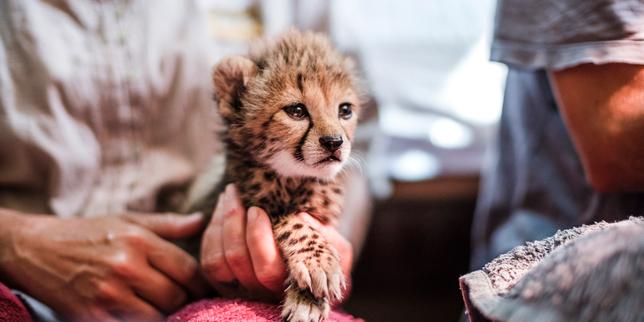
The standard narrative regarding the Somaliland-Gulf cheetah trade is a comforting fairy tale of villains and victims. You’ve read the reports from NGOs and high-brow journals. They paint a picture of ruthless poachers snatching cubs from the Horn of Africa to satisfy the decadent whims of Gulf billionaires. They call for more rangers, harsher border controls, and "awareness" campaigns.
It is a failure of logic. It is a failure of economics. More importantly, it is a death sentence for the Acinonyx jubatus.
If you want to save the cheetah, you have to stop trying to "save" it through the lens of Western moralism. The current strategy—prohibition, militarized conservation, and shaming—is actually the primary engine driving the species toward extinction. We are witnessing a classic display of the Cobra Effect, where the attempted solution worsens the problem it intends to fix.
The High Cost of Moral Posturing
The "lazy consensus" suggests that the illegal trade is a byproduct of greed. In reality, it is a byproduct of a broken market that Western conservationists refuse to acknowledge. By treating the cheetah exclusively as a "sacred" ecological asset with zero legal trade value, we have ensured that the only way for a local pastoralist in Somaliland to derive value from the animal is through the black market.
I have spent years looking at how black markets react to pressure. When you increase the risk of a trade without addressing the demand, you don’t stop the trade; you simply increase the price. Higher prices attract more sophisticated, more violent criminal networks.
When a nomadic herder in the Geed-Deeble region sees a cheetah cub, he doesn't see a "majestic predator." He sees a threat to his goats—his only capital—and a potential $5,000 to $10,000 payday on the black market. Telling that man to "respect nature" while his children are hungry is not conservation; it is elitist delusion.
Why the "Stop the Demand" Campaign Failed Before It Started
The most frequent "People Also Ask" query regarding this topic is: How can we stop people in the Gulf from buying cheetahs?
The question itself is flawed. You are trying to use Western social media logic to dismantle a status symbol that predates your favorite "awareness" hashtag by centuries. In the Gulf, the cheetah is not a "pet" in the sense of a Golden Retriever. It is a historical symbol of prestige, speed, and nobility.
Attempts to shame the buyers ignore the psychological reality of the ultra-wealthy. When an item is banned, its status value doubles. By making the cheetah an "illegal" luxury, conservationists have inadvertently made it the ultimate flex.
The Brutal Math of Survival
Let’s look at the survival rates that the glossy NGO brochures won’t tell you.
It is estimated that for every one cub that reaches a living room in Dubai or Doha, five others die in transit. They die of dehydration in plastic crates. They die of feline panleukopenia because they weren't vaccinated. They die because they are being smuggled in the shadows.
If the trade were legalized, regulated, and taxed, those cubs wouldn't be dying in crates.
"We are killing 80% of the supply to maintain a moral high ground that doesn't actually protect the animals."
Imagine a scenario where the Somaliland government, instead of playing a losing game of whack-a-mole with poachers, established a state-sanctioned breeding and export program.
- Revenue Reinvestment: A single legally sold cheetah could fund the protection of an entire habitat range.
- Traceability: Microchipped, vaccinated, and legally registered animals would collapse the black market overnight.
- Health Standards: Legal transport means professional veterinary oversight.
The conservationists will scream. They will talk about "ethics." But ask yourself: which is more ethical? A world where 300 cubs die annually in the back of a truck, or a world where 50 cubs are sold legally to fund the survival of the remaining 6,000 in the wild?
Somaliland is Not a Crime Scene; It’s a Marketplace
We need to stop treating the Horn of Africa as a passive backdrop for wildlife crime. Somaliland is a de facto independent state seeking international recognition. Its inability to control its borders is a direct result of its lack of formal status and resources.
The "Stop the Trade" movement ignores the sovereignty of the people living alongside these animals. We expect the world's poorest people to bear the entire cost of protecting a global "natural heritage" while receiving none of the benefits.
When a cheetah kills a goat in rural Somaliland, the herder loses a significant portion of his net worth. In the current "fortress conservation" model, he gets nothing. In a market-based model, that cheetah is an asset.
The Expert Fallacy: Why CITES is Part of the Problem
The Convention on International Trade in Endangered Species (CITES) Appendix I listing is the "gold standard" for protection. It is also a blunt instrument that lacks nuance.
By placing the cheetah on Appendix I, we have effectively said: "This animal has zero legal value."
When you give something zero value, you ensure that only criminals will handle it. We saw this with the ivory ban, which led to a massive spike in poaching as stockpiles became more valuable. We are seeing it now with the cheetah.
The heavy hitters in conservation biology—those who actually work on the ground rather than in London boardrooms—know that "Sustainable Use" is the only path forward. Look at the success of trophy hunting programs in Namibia. Love it or hate it, Namibia has the largest cheetah population in the world because they made the animal valuable to the people living on the land.
The DNA of a Better Solution
If we want to disrupt the deadly trade, we have to stop fighting the market and start steering it.
1. Decentralized Conservation Credits
Instead of funneling millions into "awareness" ads in Times Square, create a direct-to-pastoralist payment system. If a herder can prove—via a simple smartphone app and geo-tagged photos—that a cheetah pair is successfully raising cubs on his land, he gets paid more than the poacher would offer him.
2. The Gulf Partnership
Instead of scolding Gulf states, we should be partnering with their world-class veterinary facilities. Turn the "owners" into "stewards." If a wealthy individual wants to keep a cheetah, they must fund a specific "Wild Block" in Somaliland. No funding, no permit.
3. Professionalizing the "Exotic Pet" Industry
The demand isn't going away. You can’t "educate" away a thousand-year-old cultural preference. You can, however, provide a legal, captive-bred alternative that makes the poached "wild" cub an inferior, risky, and socially taboo product.
The Uncomfortable Truth
The downside of my approach? It’s messy. It requires us to get our hands dirty with the realities of trade, money, and the commodification of nature. It requires us to admit that the "wild" is no longer a pristine Eden, but a managed landscape.
But the alternative—the status quo—is the slow-motion filming of an extinction. We are watching the cheetah vanish while we pat ourselves on the back for having the "right" opinions.
We are obsessed with the "tragedy" of the trade, but we ignore the tragedy of the solution. Every time a border guard seizes a crate of dead cubs, the "conservation" industry uses it as a fundraising tool. They need the tragedy to stay in business.
I don't want your awareness. I don't want your "stolen beauty" campaigns.
I want a market where a live cheetah in the bush is worth more to a Somali herder than a dead one in a crate. Until you provide that, you aren't a conservationist. You're just a tourist documenting a funeral.
Stop trying to save the cheetah. Start paying for it.