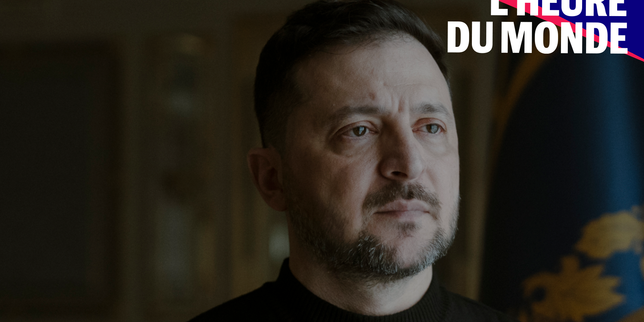
Media outlets treat an "exclusive" with a head of state like a holy relic. When Le Monde landed its sit-down with Volodymyr Zelensky, the industry did what it always does: it back-slapped, analyzed the "coulisses" (behind-the-scenes), and marveled at the stagecraft. They focused on the optics of the wartime leader, the fatigue in his eyes, and the strategic placement of his olive-drab fleece.
They missed the point.
Most modern political interviews aren't journalism. They are high-stakes stenography. When a publication brags about "exclusive access," they are really admitting to a transaction. The price of that access is almost always a surrender of critical distance. You don't get the interview by promising to dismantle the subject’s narrative; you get it by agreeing to provide a prestigious megaphone.
The Myth of the Strategic Reveal
The common defense of these glossy profiles is that they allow us to see the "real" leader behind the podium. Le Monde and its contemporaries suggest that by observing Zelensky in a private room, we gain insight into his true mental state or the secret direction of the war.
This is a fantasy.
Zelensky is a master of the medium. He understands the camera better than the people filming him. Every sigh, every pause for effect, and every pointed appeal to European values is calculated. To analyze the "coulisses" as if they are raw, unscripted moments is to fall for the very production you're supposed to be critiquing.
I’ve sat in rooms where "unfiltered" access was traded for favorable framing. The "behind-the-scenes" details—the cold coffee, the ringing phones, the hurried aides—are the sprinkles on a pre-baked cake. They serve to humanize the subject so the reader drops their guard before the talking points begin.
Why the Premise is Flawed
The public asks: "What does Zelensky want from the West now?"
The media answers by repeating his request for F-16s or long-range missiles.
This is the wrong question. It’s the "lazy consensus" of the 24-hour news cycle. The real question—the one access journalism avoids to stay in the good graces of the press office—is: "What is the structural breaking point of Ukrainian mobilization, and why is the gap between presidential rhetoric and the reality of the front line widening?"
By focusing on the man, the media ignores the machine. We treat geopolitics like a personality study. We analyze Zelensky's "resolve" as if it were a measurable physical constant that can override the brutal mathematics of artillery ratios and demographic decline.
Logic dictates that a leader's charisma cannot replace a shell. Yet, when you read these "exclusive" analyses, the focus remains stubbornly on the psychological. It’s easier to write about a hero’s journey than it is to explain the grueling, un-cinematic reality of attritional warfare.
The High Cost of the "Exclusive"
Let’s talk about the business of the scoop. When a legacy brand like Le Monde secures an interview, it isn't just for the readers. It’s for the brand’s ego. It’s a signal to advertisers and rivals that they are still "in the room."
But being in the room is often the worst place to be if you want to see the house clearly.
- The Proximity Trap: The closer you get to power, the more you start to empathize with its constraints. You stop being a skeptic and start being a confidant.
- The Narrative Sunk Cost: Once you’ve invested the resources to get the interview, you are incentivized to make it "important." You can't come back and say, "Actually, he just repeated the same three points he made on Telegram yesterday." You have to dress it up as a "pivotal moment" (to use a term I despise for its inaccuracy).
- The Translation Loss: Not linguistic, but conceptual. The nuances of Ukrainian internal politics—the tension between the military command and the civilian administration—are often smoothed over to present a clean, digestible story for a French or American audience.
Information vs. Influence
We need to stop pretending that these interviews provide information. They provide influence. Zelensky uses Le Monde to pressure the Quai d'Orsay. Le Monde uses Zelensky to sell subscriptions. The reader is the only one who walks away with a lighter pocket and a heavier dose of curated narrative.
If you want to understand the state of the war, don't look at the leader's face in an exclusive photograph. Look at the railway logistics in the Donbas. Look at the energy grid data. Look at the bond markets. These things don't have PR teams, and they don't grant "exclusive interviews," which is exactly why they are more honest.
The obsession with "the man" is a relic of 20th-century journalism. It assumes that history is driven purely by the will of Great Men. It’s a comfortable lie because it’s easier to believe in a hero than to face the cold, hard data of a stalemate.
The Industry’s Cowardice
The reason you don't see more aggressive questioning in these pieces is fear. Not fear of the leader, but fear of being blacklisted. If a journalist pushes too hard on the corruption scandals within the Ministry of Defense or the reality of casualty rates, they don't get invited back. The "exclusive" becomes a one-time event that ends their career in high-level access.
So, they play nice. They ask about "the weight of responsibility" and "the hope for the future." They write about the "coulisses" because the actual substance is too dangerous to touch if they want to keep their seat at the table.
The Actionable Truth
Stop reading for the quotes. Start reading for the omissions.
When you see an interview with a world leader, ignore the adjectives. Ignore the descriptions of their mood. Look at what they aren't being asked.
- If the interviewer doesn't ask about the specific failure of the latest counter-offensive, the interview is a PR exercise.
- If the piece focuses on the "spirit of the people" rather than the "logistics of the winter," it’s a puff piece.
- If the conclusion feels like a movie trailer, you've been sold a script, not a report.
The status quo of journalism is a symbiotic relationship between those who hold power and those who document it. Both sides need each other to maintain their relevance. But the reader doesn't need either of them to be a part of that dance.
True insight doesn't happen in a palace or a bunker with a French reporting team and a photographer. It happens in the spreadsheets, the satellite imagery, and the uncomfortable silence of the questions left unasked.
Burn the "exclusive" and look at the data.
Stop buying the fleece.