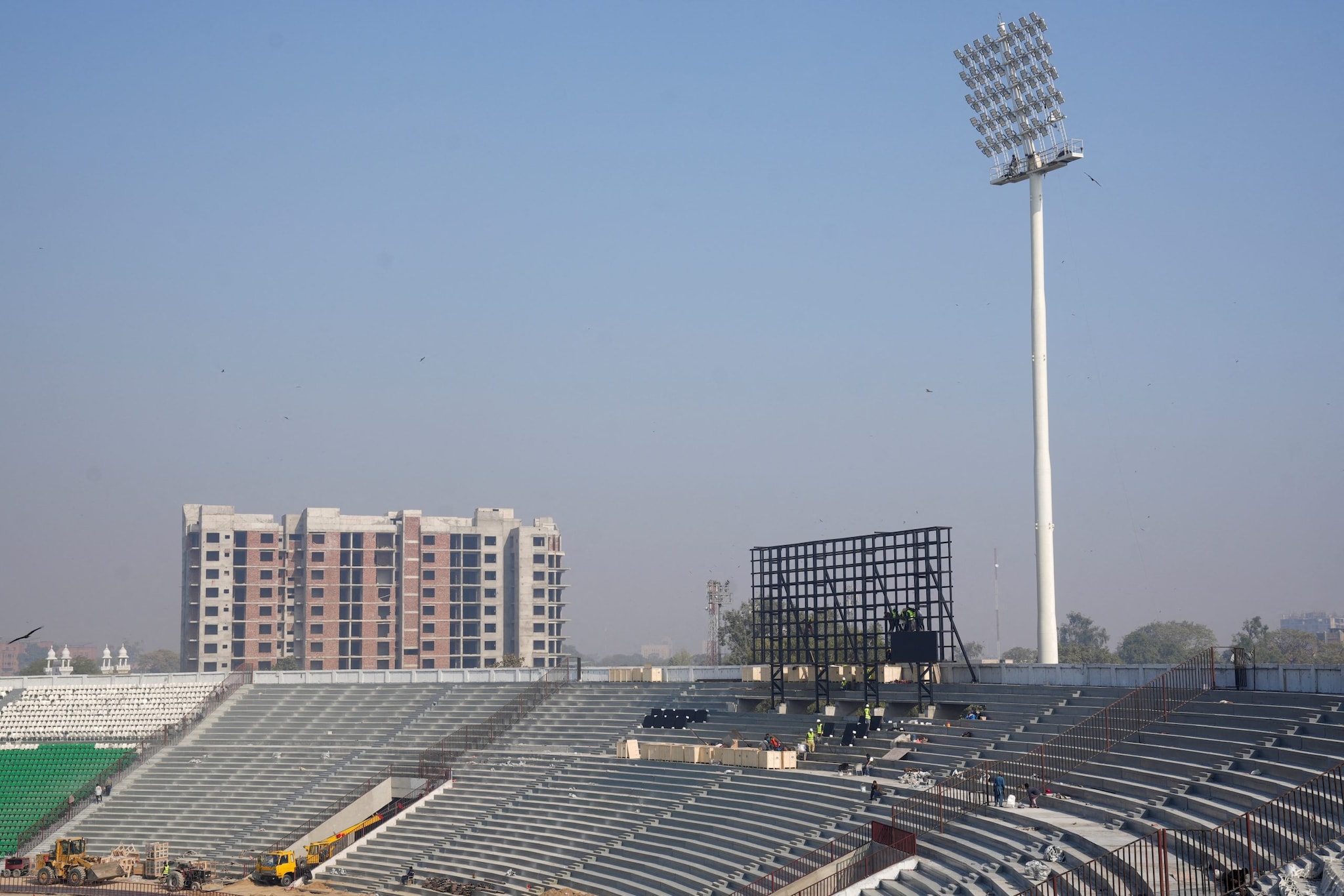
The Pakistan Super League (PSL) has long functioned as more than just a cricket tournament; it is a carefully curated display of national resilience. But the decision to move matches behind closed doors and axe the multi-million dollar opening ceremony is not a simple logistical pivot. It is a surrender to a crushing economic reality. Pakistan is currently grappling with a fuel crisis and an inflation spiral that has made the optics of a glittering, floodlit stadium impossible to justify. While the official narrative leans on "austerity measures," the underlying truth is far more grim. The state cannot afford to keep the lights on for a party while its industrial hubs go dark.
The financial machinery that powers T20 leagues relies on a delicate balance of ticket sales, sponsorships, and broadcast rights. By removing the live audience and the ceremonial pomp, the Pakistan Cricket Board (PCB) has effectively admitted that the cost of securing and powering these venues outweighs the immediate revenue they generate. This is a watershed moment for sports in developing economies. It proves that even the most beloved pastimes are not immune to the hard math of a balance-of-payments crisis.
The Empty Stands and the Power Grid
Cricket stadiums are massive energy sinks. A single night match under high-intensity LED or metal-halide floodlights consumes enough electricity to power thousands of average Pakistani households for a day. When the national grid is teetering on the edge of collapse, and fuel imports are being rationed to prioritize hospitals and essential transport, the sight of a stadium glowing against a darkened city skyline becomes a political liability.
The decision to go "behind closed doors" is a tactical retreat to save the broadcast product. The PCB knows that the real money is in the television and digital streaming rights. By playing in empty stadiums, they can manage the event with a skeleton crew, reduced security cordons, and significantly lower power requirements. However, this move guts the atmosphere that makes the PSL a premium product. Without the roar of the crowd, the league loses its cultural soul, transforming a national festival into a sterile studio broadcast.
The Fuel Paradox
Pakistan’s energy sector is heavily dependent on imported Liquefied Natural Gas (LNG) and furnace oil. As global prices fluctuated and the Pakistani Rupee plummeted, the cost of generating a single kilowatt-hour soared. For the PSL, the logistical nightmare goes beyond just the lights. Moving six teams, their support staff, broadcast rigs, and security apparatus across the country requires a massive amount of diesel and aviation fuel.
Internal memos suggest that the logistics providers for the league requested price adjustments that the PCB simply couldn't meet. Instead of a high-profile collapse mid-tournament, the board chose to preemptively scale back. This isn't just about saving money. It is about physical availability. There are days when the fuel simply isn't there, regardless of the price.
A Sponsorship Nightmare
Corporate partners sign onto the PSL to be associated with joy, energy, and massive public engagement. When you strip away the fans and the ceremony, the value proposition for brands like HBL or various beverage giants shifts dramatically. A "closed-door" tournament feels like a crisis-time substitute, not a premier sporting event.
- Activation Loss: Sponsors spend millions on stadium stalls, fan zones, and half-time shows. All of that investment is now a sunk cost.
- Brand Association: No brand wants to be the face of a tournament that the public perceives as a drain on national resources.
- Reduced Reach: While TV numbers might stay steady, the physical "touchpoints" with consumers disappear entirely.
The ripple effect on the local economy is equally devastating. Small vendors, security contractors, and transport companies in cities like Lahore, Karachi, and Multan rely on the PSL window for a significant portion of their annual income. By shuttering the gates, the PCB has cut a vital lifeline for thousands of workers who exist in the league's periphery.
The Security Cost Factor
Security for a PSL match is a paramilitary operation. Thousands of police officers and soldiers are deployed to create "red zones" around hotels and stadiums. This requires a fleet of hundreds of vehicles running 24/7. In a fuel crisis, the optics of a 40-car motorcade for a cricket team are disastrous. The public, waiting in miles-long lines for petrol, sees the elite's games as a slap in the face.
By moving to a closed-door model, the security perimeter shrinks. You no longer need to manage 30,000 fans entering and exiting a venue. You don't need the massive traffic diversions that paralyze city centers and burn thousands of gallons of idling fuel in redirected civilian cars. The move is a desperate attempt to lower the "visibility" of the league's consumption.
Is the PSL Model Sustainable?
The current crisis raises a fundamental question about the franchise model in volatile markets. If a league cannot survive a period of national economic stress without abandoning its fans, its foundation is shaky. Most PSL franchises are already struggling to break even. High tax rates, fluctuating currency values, and now the loss of gate receipts put the entire ecosystem at risk.
We are seeing a divergence in the world of cricket. Leagues in wealthy nations or those with massive domestic markets (like the IPL) can weather these storms. But for the PSL, the margin for error has evaporated. The board is currently cannibalizing the long-term brand value of the league to ensure short-term survival.
The Opening Ceremony Fallacy
For years, the PSL opening ceremony was a point of pride—a chance to show the world that Pakistan could produce a show on par with the IPL or the Big Bash. They featured international artists, massive drone shows, and pyrotechnics. In reality, these ceremonies were often loss-leaders. They cost more to produce than they ever brought in through direct sponsorship.
Scrapping the ceremony is the most honest thing the PCB has done in years. It is an admission that the "fake it till you make it" era of Pakistani sports administration is over. The focus has shifted from international prestige to basic operational viability. It is a grim realization that in the hierarchy of needs, 30 minutes of fireworks ranks far below a stable power grid.
The Impact on Player Recruitment
International players are the lifeblood of the PSL. They come for the money, yes, but they also come for the atmosphere. Playing in an empty stadium in a country undergoing an economic meltdown is a hard sell. While the "security" situation has improved over the years, the "stability" situation is now the primary concern.
If players see the league shrinking, or if they worry about the liquidity of the franchises to pay their contracts in US Dollars, they will look elsewhere. The competition for the T20 calendar is fierce. With new leagues in the UAE, South Africa, and the USA, the PSL cannot afford to be seen as a "distress" destination.
What Happens Next?
The PCB is currently trying to renegotiate its way out of a corner. They are asking the provincial governments to waive the costs of security and electricity—costs that those governments, also broke, are hesitant to absorb. This is a standoff between a sporting body that views itself as a national icon and a government that sees it as an expensive luxury.
If the fuel crisis persists, we may see the PSL move its entire operation back to the UAE in future seasons. This would be a heartbreaking reversal of the progress made to bring cricket back to Pakistan, but it may be the only way to keep the league commercially viable. The "home" advantage is meaningless if you can't afford to open the doors.
The Social Cost of Silence
Cricket is the one thing that unites a fractured Pakistani public. In times of high inflation and political turmoil, the PSL serves as a necessary distraction. By taking the fans out of the equation, the state has removed a vital social pressure valve. The quiet stadiums are a haunting metaphor for the current state of the country: the game goes on for the cameras, but the people are left outside in the dark.
The PCB must decide if it is a commercial entity or a national institution. If it is the former, it must cut costs ruthlessly and perhaps move abroad. If it is the latter, it must find a way to remain accessible to the public, even if that means a smaller, less "shiny" tournament. The current middle ground—a televised ghost show—satisfies no one. It is a temporary fix for a permanent problem.
The era of the "spectacle" is over for Pakistan's cricket. What remains is a lean, stripped-back version of a game that used to represent a nation’s ambitions. Now, it merely represents its ability to endure.
Check the local fuel price index and the PCB's latest financial disclosure to see just how deep this deficit runs before the next toss.