Canadian officials are currently in Houston attempting to breathe life into the corpse of the Keystone XL pipeline. During meetings at the CERAWeek conference this week, Natural Resources Minister Tim Hodgson and Ambassador Mark Wiseman pitched Trump administration representatives on a "revival" of the project, now rebranded under the banner of South Bow and its American partner, Bridger Pipeline. The pitch is simple: Canadian oil can insulate the United States from the supply shocks of the ongoing war in Iran. But beneath the talk of energy security and "easy approvals," the project faces a reality that no amount of political will can easily override.
The original Keystone XL was more than a pipeline. It was a decade-long proxy war for the soul of North American energy policy. When TC Energy walked away in 2021 after President Biden pulled the plug, the industry assumed the book was closed. Now, the ghost of the project has returned, driven by a desperate Canadian government looking for leverage against Trump’s tariff threats and an American administration that views fossil fuel expansion as a primary tool of statecraft.
The Rebranding of a Relic
The version of the project being discussed today is not the 1,200-mile behemoth of 2008. Instead, the focus has shifted to a hybrid model. South Bow, the liquids-focused spin-off from TC Energy, is looking at a "partial revival" that would utilize approximately 150 kilometers of pipe already buried in Alberta soil. This would connect to a new 1,038-kilometer segment proposed by Bridger Pipeline, running from the Montana border down to Guernsey, Wyoming.
From Guernsey, the oil would theoretically move through a new 680-kilometer link to Steele City, Nebraska, finally plugging into the existing Keystone mainline. It is a logistical jigsaw puzzle. Proponents claim this configuration could boost Canadian crude exports to the U.S. by 12 percent, roughly 550,000 barrels per day.
The Geopolitical Ransom Note
Prime Minister Mark Carney is playing a high-stakes game. Facing 25 percent tariffs on steel, aluminum, and autos, the Canadian government is offering the pipeline as a peace offering—or perhaps a bribe. By framing the project as a solution to the energy shortages caused by the Iran conflict, Ottawa is trying to align itself with Trump’s "America First" energy doctrine.
The logic is blunt. The U.S. consumes 20 million barrels of oil per day but produces only 13 million. Canada already provides over 60 percent of that deficit. Minister Hodgson’s message in Houston was clear: if you want lower prices at the pump and a stable supply while the Middle East is in flames, you need our bitumen.
However, this reliance on the U.S. market is exactly what Carney is simultaneously trying to escape. Even as Hodgson talks up Keystone in Houston, Carney is traveling the world to find buyers for the 300,000 barrels per day that will soon flow through the Trans Mountain expansion to the Pacific Coast. Canada is trying to have it both ways—acting as a loyal American gas station while aggressively seeking an exit strategy.
The Industry’s Cold Feet
Politics moves fast, but infrastructure moves at the speed of capital. And right now, the capital is hesitant. While Trump has promised "easy approvals" and an "almost immediate start," the private sector remembers the $1.3 billion Alberta lost when the last permit was revoked.
Investors are asking the one question politicians hate: what happens in 2028? If a different administration takes the White House, the permit could be pulled for a third time. Pipelines are 40-year assets. They cannot function in four-year cycles of political retribution. South Bow is already facing scrutiny from analysts over its ability to fund a multi-billion-dollar project while maintaining dividends and managing a heavy debt load inherited from TC Energy.
Furthermore, the legal barriers haven't moved. The indigenous groups and environmental coalitions that defeated the original Keystone XL are still there. The Rosebud Sioux and the Nakoda tribes have already signaled that any attempt to use the old route or its variations will face immediate litigation. In the American court system, a presidential permit is a beginning, not an end.
The Shadow of the 51st State
Adding to the tension is the bizarre diplomatic backdrop. Trump’s off-hand suggestions that Canada could become the "51st state" if trade imbalances aren't corrected have turned a technical energy discussion into a matter of national sovereignty. Conservative leader Pierre Poilievre has seized on this, calling for a "Sovereignty Act" to fast-track Canadian projects regardless of U.S. whims, while simultaneously advocating for the Keystone relaunch as a tool of economic strength.
Poilievre’s stance highlights the internal Canadian rift. He argues that Canada has become "complacent" and needs to build its own leverage rather than begging for exemptions. His plan to link defense spending to tariff-free market access suggests a much more transactional relationship than the one Carney is currently attempting to navigate.
The Pipe is Still in the Dirt
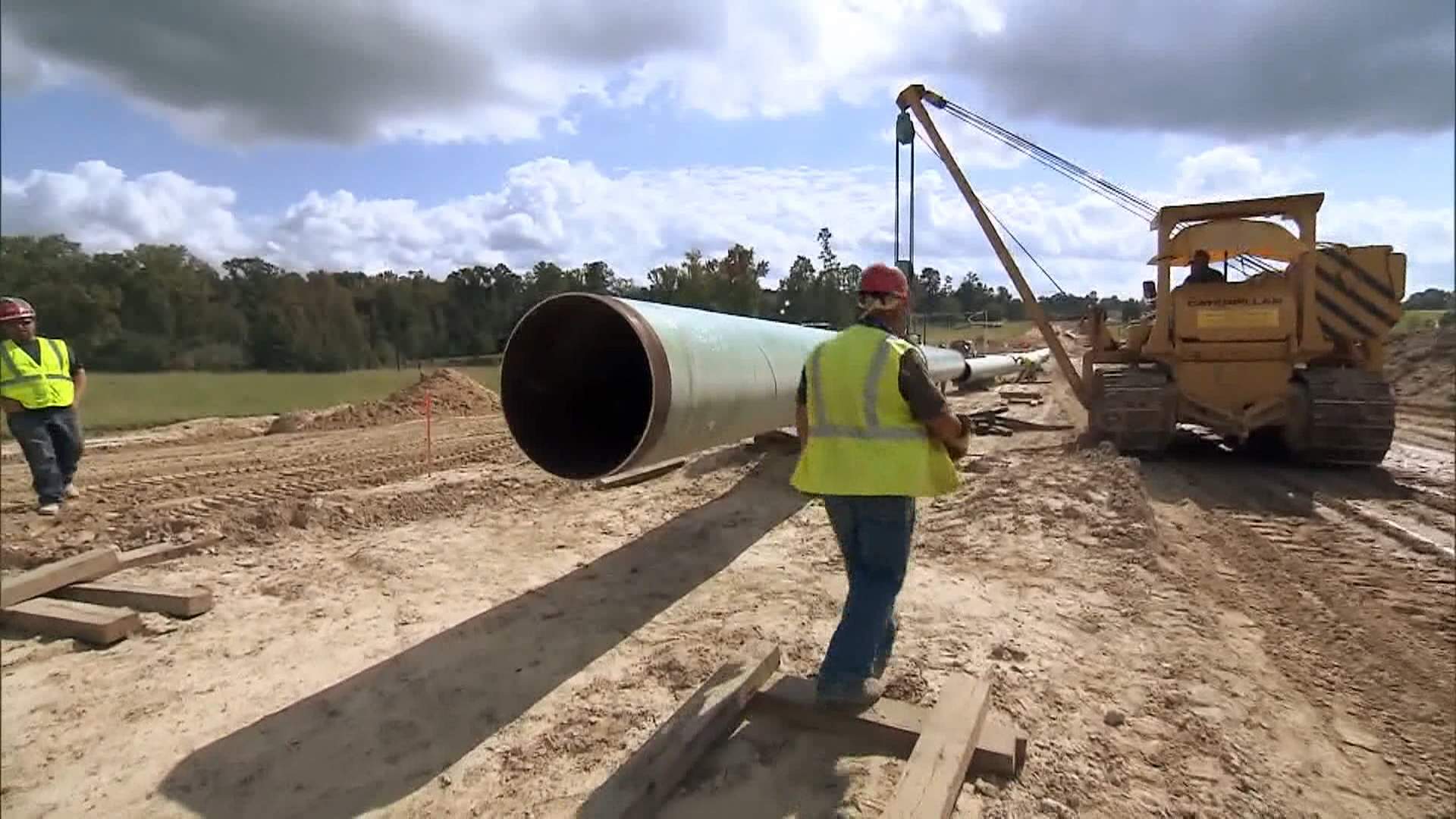
Walking through the storage yards in Gascoyne, North Dakota, you can still see the stacks of 36-inch diameter steel pipe. They have been sitting there for years, rusting in the sun. They are a physical manifestation of a project that has become a political football.
Reviving Keystone XL isn't just about welding steel. It’s about whether North American energy policy can ever transcend the cycle of executive orders and court injunctions. If South Bow and Bridger Pipeline move forward, they aren't just building a conduit for oil; they are betting that the current geopolitical chaos is permanent enough to outweigh the legal and financial risks of the past two decades.
The Houston meetings ended without a formal commitment from the White House. For now, the pipeline remains a "thoughtful option" in the eyes of U.S. Energy officials. But for the people of Alberta and the refiners on the Gulf Coast, the ghost of Keystone XL is starting to look less like a memory and more like a recurring nightmare.
The math for Canada is simple: build or be built upon.
Would you like me to analyze the specific tariff exemptions Canada is currently offering in exchange for the pipeline's fast-track approval?