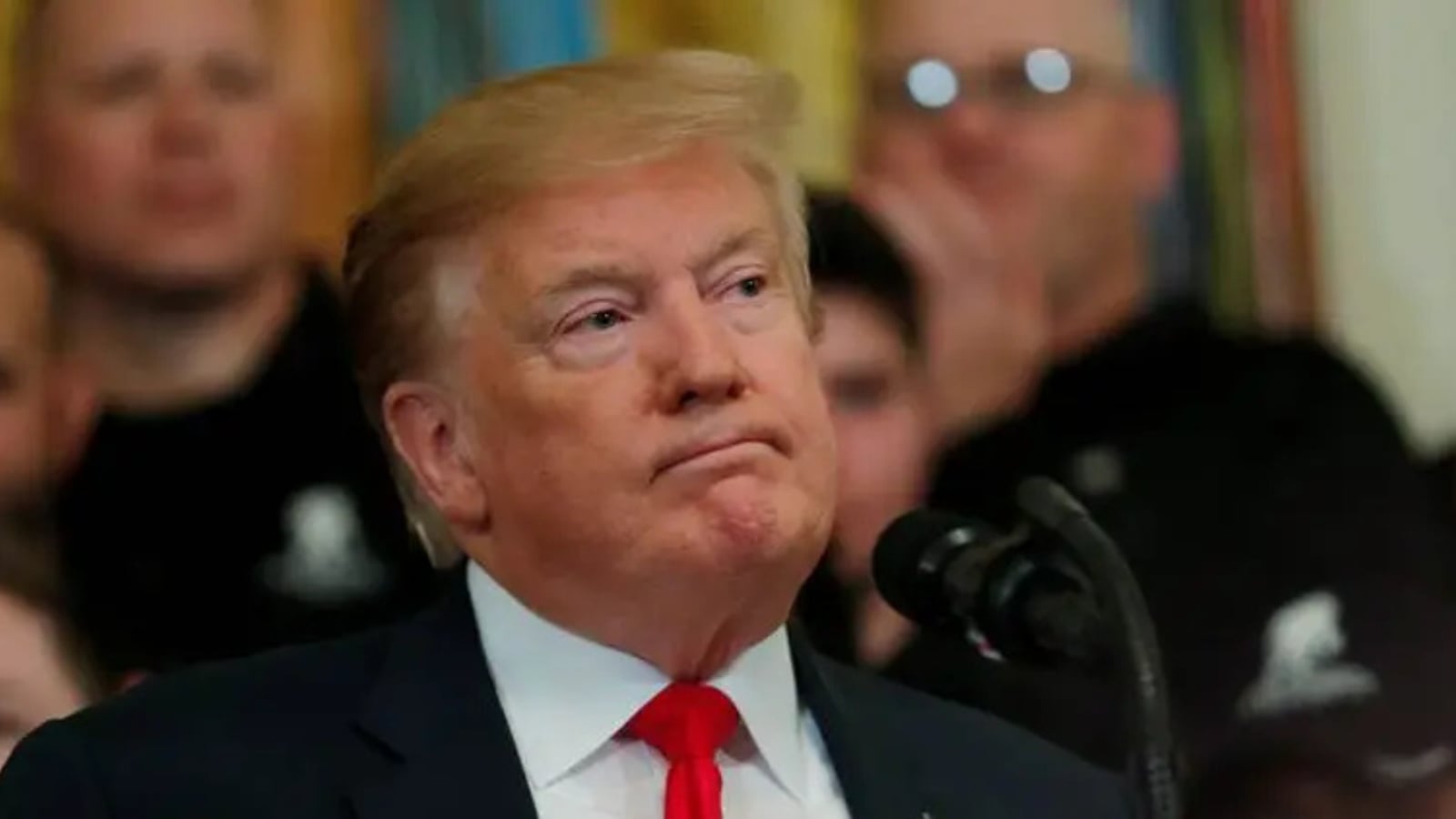
The modern State of the Union has devolved into a hollowed-out theatrical production where the performance of partisanship matters more than the substance of policy. When Donald Trump stood before the joint session of Congress, the immediate fallout followed a script so rigid it could have been written by a computer. Republicans stood in orchestrated waves of applause while Democrats remained seated in a choreographed display of silent protest. This wasn't a debate over the direction of the country; it was a high-stakes loyalty test where the primary audience wasn't the American public, but the donor class and the primary voters who punish nuance.
The divide that followed the speech isn't just about different visions for taxes or healthcare. It is a fundamental breakdown in how the legislative branch functions. We are witnessing the death of the "middle" as a viable political space. Lawmakers no longer see themselves as representatives of a geographic district first, but as soldiers in a national ideological war. The reactions to the speech proved that the actual words spoken by the President are irrelevant. The partisan response is pre-baked, issued by press offices before the President even reaches the podium.
The Performance of Outrage
Behind the scenes, the mechanics of these reactions are fueled by a sophisticated fundraising machine. Within minutes of the President’s remarks, both parties blast out millions of text messages and emails. These communications don't aim to explain the nuances of trade policy or the complexities of border security. They are designed to trigger a fight-or-flight response. The "outrage" seen on the House floor is the raw material for digital advertisements.
This cycle creates a feedback loop that makes actual governance impossible. When a Republican lawmaker stands to cheer a proposal, they are signaling to their base that they are a "fighter." When a Democrat sighs or shakes their head for the cameras, they are doing the same. This isn't just about optics. This behavior effectively kills any chance of bipartisan negotiation before the night is even over. If you have spent the evening publicly performing disdain for the other side, you cannot sit down with them the next morning to hammer out a compromise on a spending bill.
The Death of Legislative Leverage
Historically, the State of the Union served as a starting gun for the legislative year. It was a moment where a President could use the "bully pulpit" to pressure the opposing party into coming to the table. That leverage has vanished. In its place, we have a permanent campaign cycle where the goal is to prevent the other side from achieving anything that could be framed as a "win."
Consider the data on legislative productivity. In decades past, a major presidential address would often be followed by a flurry of committee hearings. Today, those hearings are more likely to be used as venues for social media clips than for actual fact-finding. The divide isn't a byproduct of the speech; it is the entire point of the speech. By framing every issue as a binary choice between American greatness and national ruin, the President forces lawmakers into corners from which they cannot legally or politically escape.
The Geography of the Divide
The polarization we see on the screen is a mirror of a deeply sorted electorate. People are no longer just moving for jobs or better weather; they are moving to areas where their neighbors share their political leanings. This geographic sorting means that for the vast majority of lawmakers, the only threat to their job comes from a primary challenger who is even more extreme than they are.
When a President speaks, a lawmaker from a "safe" district isn't listening for policy ideas. They are listening for "trap doors"—any statement that, if they don't sufficiently oppose or support, could be used against them in a 30-second attack ad. This has turned the State of the Union from a policy roadmap into a political minefield.
The Economic Incentives of Gridlock
It is a mistake to think the division is purely ideological. There is a massive economy built around this stalemate. Lobbyists, consultants, and media networks all profit from a Washington that is perpetually at its own throat. Total gridlock is predictable, and predictability is what markets crave. If neither side can pass major legislation, the status quo remains protected.
The division following the State of the Union serves as a smokescreen. While the public argues over who clapped and who didn't, the structural issues—the national debt, the crumbling infrastructure, and the rising cost of living—remain largely unaddressed because the political cost of fixing them is higher than the cost of simply arguing about them.
Breaking the Cycle of Performative Politics
If we want to understand why the country feels so fractured, we have to look at the incentives. Currently, there is no reward for a lawmaker who crosses the aisle after a presidential address. They are labeled a traitor by their own party and viewed with suspicion by the other.
The solution isn't as simple as "getting along." It requires a fundamental shift in how we conduct our elections and how we consume our news. Until the penalty for polarization is higher than the reward for outrage, the State of the Union will remain a scripted drama rather than a report on the health of the republic.
The seats in the chamber will continue to fill, the cameras will roll, and the speeches will be written to provoke rather than persuade. We are watching a system that has mastered the art of the spectacle while losing the ability to govern. The true state of the union isn't found in the President's words, but in the silence between the two sides of the aisle.
Check the voting records of your local representative over the next thirty days to see if their legislative actions match the rhetoric they posted on social media during the speech.