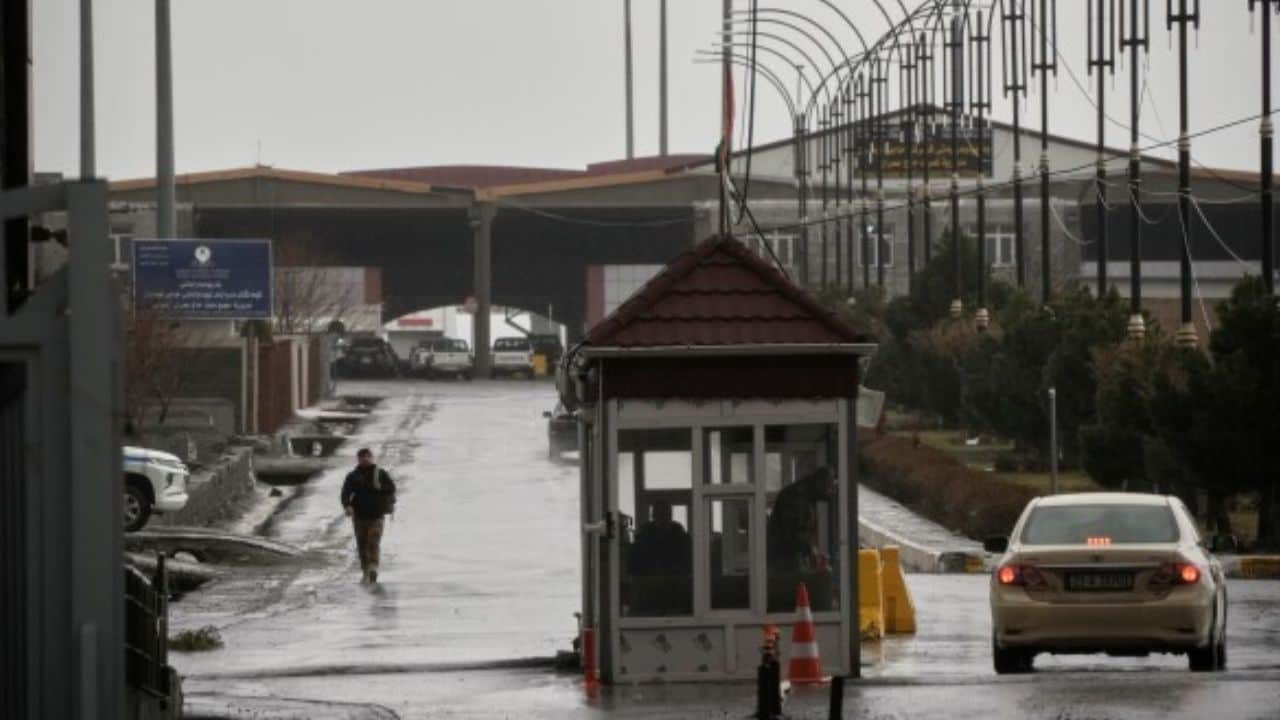
The flow of humanity across the Shalamcheh border crossing is no longer a matter of religious pilgrimage or routine tourism. It has become a desperate logistical workaround for a collapsing domestic economy. Thousands of Iranians are streaming into southern Iraq, specifically Basra and its satellite towns, for the most basic of human needs: affordable food and a stable internet connection. While regional airstrikes and the constant threat of military escalation have rattled the geopolitical surface, the real story is the quiet, grinding erosion of the Iranian rial and the emergence of a lopsided border economy that is turning Iraq into Iran's essential utility provider.
This is not a temporary shift. It is the result of a currency in freefall and a central government in Tehran that has prioritized ideological defense over the price of a loaf of bread or the stability of a data packet.
The Arithmetic of Desperation
To understand why a resident of Khorramshahr would spend hours in a border queue to buy groceries in Basra, you have to look at the purchasing power parity that has been completely obliterated. The Iranian rial has depreciated to the point where even basic subsidies cannot keep pace with the market reality. In Basra, the Iraqi dinar is relatively stable, backed by oil exports and a banking system that, while flawed, remains connected to the global dollar trade in ways the Iranian system is not.
For an Iranian family, the math is simple. If you can cross the border, you can buy poultry, flour, and cooking oil at prices that are effectively 30% to 50% lower than what is available in sanctioned Iranian markets. This isn't because Iraq is an agricultural powerhouse; much of what is sold in Basra is actually imported. The difference lies in the currency. When your own money loses value every week, any foreign market looks like a sanctuary.
This creates a strange, parasitic relationship. Iraqi vendors in the border provinces have started pricing goods specifically for the "crosser" market. They are making a killing. Meanwhile, the local Iraqi population in Basra, which has its own history of poverty and infrastructure failure, watches as their own local inflation ticks upward because of the sudden surge in demand from their neighbors.
Digital Refigees in the Basra Internet Cafes
The most modern indicator of this crisis isn't found in a grocery bag, but on a smartphone screen. Every time regional tensions flare and the threat of airstrikes increases, the Iranian government tightens its grip on the domestic internet. This isn't just about censoring political dissent; it is a tactical "blackout" strategy designed to prevent the coordination of any civil unrest during periods of military stress.
For the Iranian middle class—the freelancers, the tech workers, and the small business owners—these blackouts are terminal. They are crossing into Iraq not just for rice and beans, but for a handshake with the global web.
In the dusty streets of southern Iraq, "internet tourism" is the new growth industry. Iranians cross the border, buy a local Iraqi SIM card, and sit in cafes for six or eight hours at a time. They are downloading updates, filing work for international clients, and communicating with family members abroad. They are digital refugees. The Iraqi fiber optic network, which is often criticized by locals for being slow and unreliable, is a high-speed miracle compared to the firewalled, throttled, and often non-existent "Intranet" currently being forced upon the Iranian population.
The Shadow of the Airstrikes
The backdrop to this migration is the persistent hum of drone activity and the occasional thunder of an actual strike. Since late 2023, the border regions have been on high alert. However, the psychological impact of these strikes has had an inverse effect on movement. Rather than scaring people away from the border, the instability has accelerated the "buy now" mentality.
When people expect the situation to get worse, they stockpile. But you cannot stockpile what you cannot afford. This has turned the southern Iraqi markets into a pressure valve. If the border were to close tomorrow due to a military escalation, the humanitarian crisis in the bordering Iranian provinces would go from a slow burn to a flashpoint within days.
The regional military posture—the deployment of air defense systems and the movement of militias—is what gets the headlines in the West. But the real casualty of this conflict is the total breakdown of the domestic Iranian supply chain. If Tehran cannot provide physical or digital security for its citizens, those citizens will find it elsewhere, even if it means crossing into a country that was once a bitter battlefield enemy.
The Disruption of Local Iraqi Markets
It would be a mistake to think this is a one-sided benefit for Iraq. The influx of Iranian buyers is distorting the local economy in Basra and Amara. Iraqi wholesalers are increasingly diverting stock to the border regions where they can charge a premium to desperate Iranians, leading to localized shortages for Iraqi citizens.
Price gouging has become rampant. An Iraqi laborer in Basra now competes for the same carton of eggs with an Iranian visitor who is buying in bulk to take back home. This is brewing a quiet resentment. While the two populations share cultural and religious ties, the economic reality is creating friction.
There is also the matter of the "Grey Market" logistics. This isn't just individuals carrying bags of groceries. It is a sophisticated network of small-scale smugglers and "porters" who move goods across the Shatt al Arab. They operate in the gaps of the official customs checkpoints. They know which guards to pay off and which hours the patrols are lightest. This informal trade undermines the official economy and ensures that neither government has a real grasp on the volume of trade actually occurring.
Why the Security Apparatus Allows It
One might wonder why the Iranian Revolutionary Guard Corps (IRGC), which maintains tight control over the borders, allows this exodus of capital and people. The answer is cynical: it is a relief valve.
If the government were to strictly enforce border controls and stop the flow of goods from Iraq, they would face a full-scale riot in the Khuzestan province. By allowing people to cross and fend for themselves, the state offloads the responsibility of providing for the populace. It is an admission of failure disguised as a border policy.
On the Iraqi side, the government in Baghdad is in a delicate position. They cannot afford to alienate their powerful neighbor to the east, nor can they ignore the fact that their own citizens are being priced out of their own markets. The result is a policy of "managed chaos." They let the trade continue because the alternative—a closed border and a starving neighbor—is a recipe for a security nightmare that would spill over into the Iraqi interior.
The Technical Breakdown of the Iranian Grid
The internet issue deserves a deeper look because it represents a permanent shift in how sovereignty is viewed. Iran has spent billions on its National Information Network (NIN). The goal was a "halal" internet that could be disconnected from the world at a moment's notice.
But the Iranian economy, despite the sanctions, is still tied to the global web. Cryptocurrencies, which many Iranians use to bypass banking sanctions, require a constant connection. Software developers need access to GitHub. Students need access to global research. When the "Kill Switch" is flipped during an airstrike scare, the economic damage is calculated in the millions of dollars per hour.
Crossing into Iraq to use a $10 SIM card is the ultimate indictment of the NIN. It proves that technological isolation is a fantasy in a globalized world. The people of Abadan and Khorramshahr are effectively voting with their feet, choosing the "unsecured" and "foreign" internet of Iraq over the state-sanctioned darkness of their own homes.
The Infrastructure of the Border Crossing
The physical reality of the Shalamcheh crossing is one of exhaustion. The heat is often unbearable, reaching 50°C in the summer months. There are no luxury amenities here. It is a landscape of concrete barriers, dust-covered minivans, and endless lines.
- The Porters: Men who carry massive loads on their backs for a pittance, moving everything from electronics to bulk flour.
- The Money Changers: Operating out of small booths or just with stacks of cash in their hands, they are the real-time barometers of the rial's collapse.
- The SIM Card Sellers: Crowding around the arrival gates, offering "Freedom in a Plastic Card" to every Iranian who steps across the line.
This infrastructure is permanent. These are not the signs of a temporary surge; these are the signs of a new, entrenched way of life. The border has ceased to be a line between nations and has become a marketplace of survival.
A Systemic Failure
The current situation is the logical conclusion of "Maximum Pressure" met with "Maximum Resistance." The sanctions have bled the Iranian economy dry, and the Iranian leadership's response has been to insulate the regime while letting the periphery suffer.
The airstrikes are merely the catalyst that speeds up the decay. They provide the excuse for the blackouts and the justification for the military's heavy presence. But the underlying cause is a total loss of faith in the domestic currency and the domestic infrastructure.
Iraq, a country that has spent the last two decades trying to rebuild itself, has unexpectedly become the "stable" neighbor. It is a stunning reversal of roles that few analysts predicted a decade ago. The "Basra Hub" is now a lifeline, but it is a fragile one. If the Iraqi government, under pressure from its own disgruntled citizens, decides to tax or limit this trade, the resulting shock will be felt in the streets of Tehran.
The Iranian middle class is being systematically dismantled. Those who can afford to leave the country permanently have already done so. Those who remain are left with these stop-gap measures—weekend trips to Basra for WhatsApp access and cheaper chicken. It is a survival strategy that functions on a week-to-week basis, with no long-term viability.
The reality on the ground is that the border is no longer a filter; it is a leak. And as long as the rial continues to lose value and the "Kill Switch" remains the go-to tool for the Iranian security services, that leak will only grow. The people crossing the Shatt al Arab aren't looking for a vacation; they are looking for a way to remain part of the modern world while their own country retreats into a self-imposed dark age.
Watch the exchange rate in the morning and you can predict the length of the border queue by the afternoon. The math doesn't lie, even when the governments do. The border economy is the only honest metric left in the region. It tells a story of a population that has learned to bypass their leaders to secure their own survival, one data packet and one grocery bag at a time.