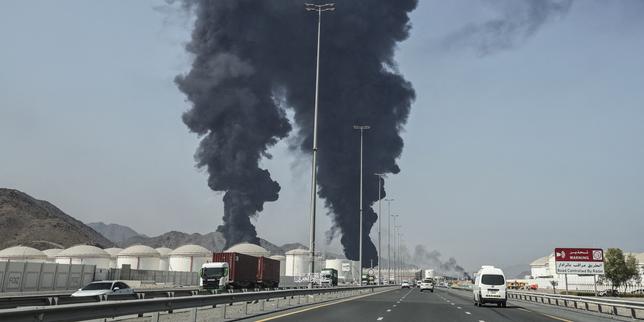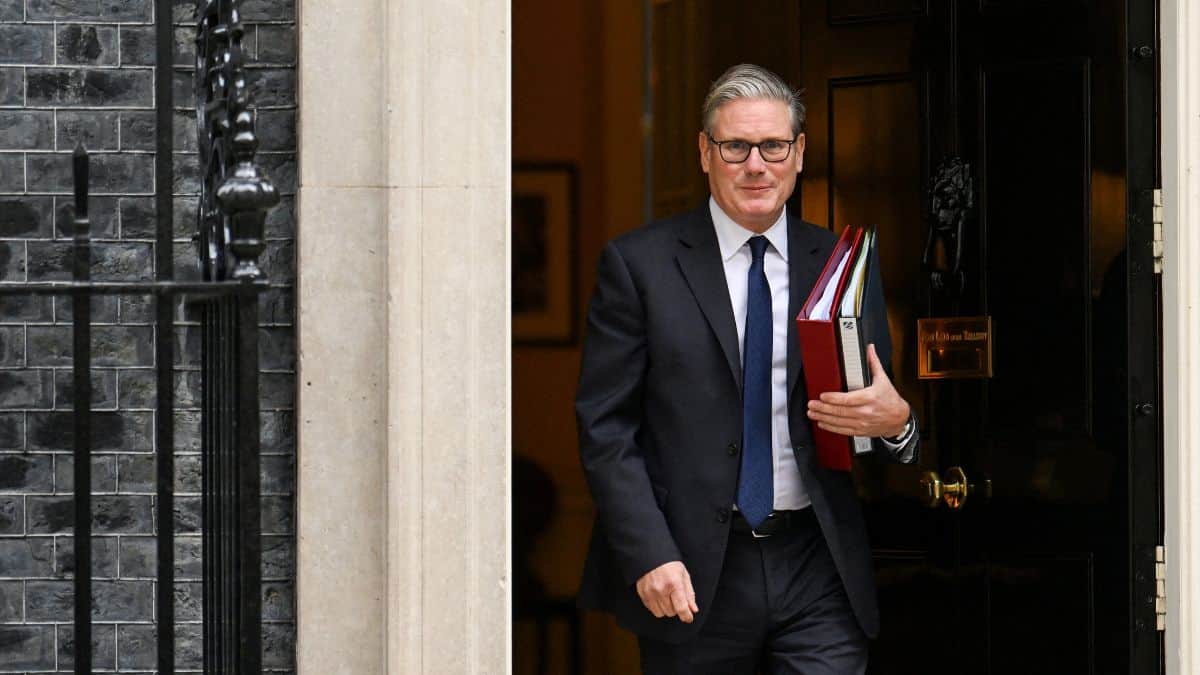
The UK government’s allocation of £50 million to mitigate the domestic energy impact of the Iran-Israel conflict represents a symbolic rather than systemic intervention. While the Starmer administration frames this as a "support package," the sum is mathematically insignificant when measured against the daily liquidity requirements of the UK’s retail energy market. To understand the actual utility of this policy, one must move past the political rhetoric and analyze the three distinct transmission mechanisms through which Middle Eastern instability affects British household costs: Brent Crude volatility, European Natural Gas (TTF) correlation, and the "Risk Premium" embedded in supplier hedging strategies.
The Scale Mismatch and Fiscal Arithmetic
The £50 million package, when distributed across the approximately 28 million households in the United Kingdom, equates to roughly £1.78 per household. Given that the Ofgem price cap fluctuates by hundreds of pounds based on wholesale shifts, this capital injection does not function as a price-suppressant. Instead, it operates as a targeted liquidity bridge for the most vulnerable "fuel poor" demographics.
The fiscal limitation of this package highlights a core structural reality: the UK government lacks the balance sheet capacity to subsidize wholesale energy prices at the scale seen during the 2022 invasion of Ukraine. During that period, the Energy Price Guarantee cost the Treasury billions. The current £50 million figure signals a pivot toward "Precision Support" over "Universal Insulation." This shift forces a reliance on the efficiency of the UK’s social security infrastructure to deliver these funds before the lagging effects of a regional war hit the monthly utility bill.
Mapping the Conflict Transmission Chain
Conflict in the Middle East does not affect British energy through direct supply lines—the UK imports negligible amounts of Iranian oil or gas. The impact is mediated through global price discovery and logistical bottlenecks.
- The Strait of Hormuz Bottleneck: Approximately 20% of the world’s liquefied natural gas (LNG) and oil passes through this point. Any Iranian kinetic action that closes the Strait triggers an immediate spike in global LNG prices. Because the UK is heavily dependent on LNG to supplement its North Sea production, it competes in the same global market as Asian and European buyers.
- The Brent-Gas Correlation: Although the UK generates a significant portion of its electricity from renewables and gas, the marginal price of electricity is often set by gas-fired power stations. When global oil prices rise due to war, gas prices frequently follow due to "oil-indexed" contracts in other regions, which creates a pull-effect on the UK’s National Balancing Point (NBP).
- The Hedging Squeeze: Energy retailers purchase energy months in advance to provide price stability. High volatility in the Middle East increases the "Margin Calls" these companies must pay to maintain their hedges. If a conflict drives prices up too quickly, smaller retailers face a solvency crisis regardless of the £50 million government cushion.
Structural Vulnerabilities in the UK Energy Grid
The necessity of a £50 million intervention—even one of limited scope—exposes the fragility of the UK’s "Just-in-Time" energy model. Unlike France, which utilizes a massive nuclear base load, or Norway, which leverages hydroelectric storage, the UK’s reliance on gas as a transition fuel makes it a "Price Taker" in international markets.
The "Cost Function of Resilience" in the UK is currently misaligned. Capital is being diverted to short-term subsidies rather than long-term storage infrastructure. The UK has one of the lowest gas storage capacities in Europe, often cited as enough for only 4-5 days of peak winter demand, whereas Germany maintains storage for several weeks. This lack of a physical buffer means that a kinetic event in the Persian Gulf reflects in UK wholesale prices within minutes, not months.
The Psychology of the Risk Premium
Markets do not wait for a bomb to drop to adjust prices; they trade on the probability of the bomb dropping. This "Risk Premium" is a hidden tax on the British consumer. Even if the Iran-Israel conflict remains contained, the mere threat of escalation increases the cost of insuring tankers and securing futures contracts.
The Starmer administration’s package aims to address the "Outcome" of this premium, but it ignores the "Origin." By announcing a support package, the government is effectively attempting to manage the domestic political fallout of a geopolitical risk they cannot control. The strategic limitation here is that the announcement itself can signal to the market that the government expects a sustained period of high prices, potentially reinforcing the very inflationary expectations they seek to dampen.
Deconstructing the Allocation Strategy
For the £50 million to have any measurable impact, it must be deployed through existing, high-velocity channels. The logic of the intervention suggests a three-tier distribution model:
- Tier 1: Direct Credit to Prepayment Meters: This addresses the segment of the population most susceptible to immediate "self-disconnection" when prices spike.
- Tier 2: The Warm Home Discount Supplement: Utilizing the existing framework to bypass the administrative costs of a new program.
- Tier 3: Local Authority Crisis Funds: Providing discretionary capital to councils to catch those who fall through the cracks of national datasets.
The bottleneck in this strategy is "Data Latency." The government often lacks real-time visibility into which households are currently struggling, leading to a "Shotgun Approach" where funds are distributed too thinly to change the economic reality for any single recipient.
The Displacement of Strategic Investment
The primary analytical critique of the £50 million support package is the "Opportunity Cost" of the capital. In a high-interest-rate environment, every pound spent on consumption subsidies is a pound not spent on supply-side hardening.
If the goal is to "ease the fallout" of Middle Eastern wars, the most logical allocation of £50 million would be in accelerating the decoupling of the UK electricity price from the global gas price. This is a technical process known as "Electricity Market Reform" (EMR). Currently, the cheapest kilowatt-hour (often from wind or solar) is sold at the price of the most expensive kilowatt-hour (usually from gas). Breaking this link would do more to insulate the UK from Iran than any small-scale subsidy.
Geopolitical Variables and the 2026 Horizon
The effectiveness of this intervention depends on variables outside of Whitehall’s influence. If the conflict escalates to include a direct strike on Iranian energy infrastructure or a total blockade of the Strait of Hormuz, the UK will face a "Price Shock" that scales in the billions, not millions.
The Starmer government is betting on a "Contained Volatility" scenario. In this model, the £50 million acts as a psychological sedative for the electorate—a signal that the government is "watching" the markets. However, if the Brent Crude price breaches $120 per barrel, the £1.78-per-household subsidy will be viewed as a historical footnote of inadequacy.
The Imperative of Demand-Side Management
The missed opportunity in the current policy discourse is the lack of "Demand-Side Response" (DSR). A more robust strategy would involve using the £50 million to incentivize large-scale industrial shifts in energy usage timing. By paying industrial users to reduce demand during peak volatility, the government could lower the clearing price for everyone. Instead, the focus remains on "Post-Hoc Compensation"—paying for the damage after it has occurred.
The UK's energy security is now a function of its ability to transition from a "Gas-First" mentality to a "Storage and Flexibility" model. The Iran conflict is merely the latest stress test in a series of global events that will continue to punish systems designed for the stable geopolitical climate of the 1990s.
Strategic Deployment of the Final Tranche
To maximize the utility of the remaining fiscal year's budget, the administration should pivot from direct consumer subsidies to "Supply Chain Liquidity Guarantees."
The most effective use of the next £50 million is not in the hands of the consumer, but in a "Collateral Support Facility" for mid-sized energy retailers. By reducing the cost of collateral that these companies must post on energy exchanges, the government can prevent a repeat of the 2021-2022 retail market collapse. This protects the consumer indirectly by maintaining competition and preventing the "Socialized Debt" that occurs when a supplier fails and its costs are distributed across every remaining household's bill. This move shifts the intervention from a populist gesture to a structural defense of the energy market's plumbing.
Move the capital from the "Support" bucket to the "Liquidity" bucket immediately to prevent a systemic retail failure if the Strait of Hormuz is closed.