The silence in Kingston used to have a specific texture. It wasn't the empty silence of a vacuum, but a living, breathing hum. If you walked along the edge of the Mile Square Forest on a Tuesday morning, you’d hear the rhythmic knocking of a pileated woodpecker and the soft, constant respiration of white pines filtering the Atlantic breeze.
Now, that silence is gone. It has been replaced by the high-pitched scream of steel meeting sapwood.
When the first yellow excavators rolled off the flatbeds three weeks ago, Sarah Miller didn’t look at the blueprints. She didn’t need to. She looked at her seven-year-old son, Leo, who was pointing at the mechanical yellow line forming along the ridge. To a developer, that ridge is a "suboptimal density zone" ripe for a residential "refresh." To the people who live in the shadow of those oaks, it is the lungs of the neighborhood.
The conflict currently boiling over in Kingston isn’t just about property lines or zoning permits. It is about the fundamental, often invisible contract between a community and the land it occupies.
The Anatomy of a Clear-Cut
To understand why the local town hall is currently packed to the rafters with angry residents, you have to understand what happens when a forest disappears. It isn't a slow transition. It is an erasure.
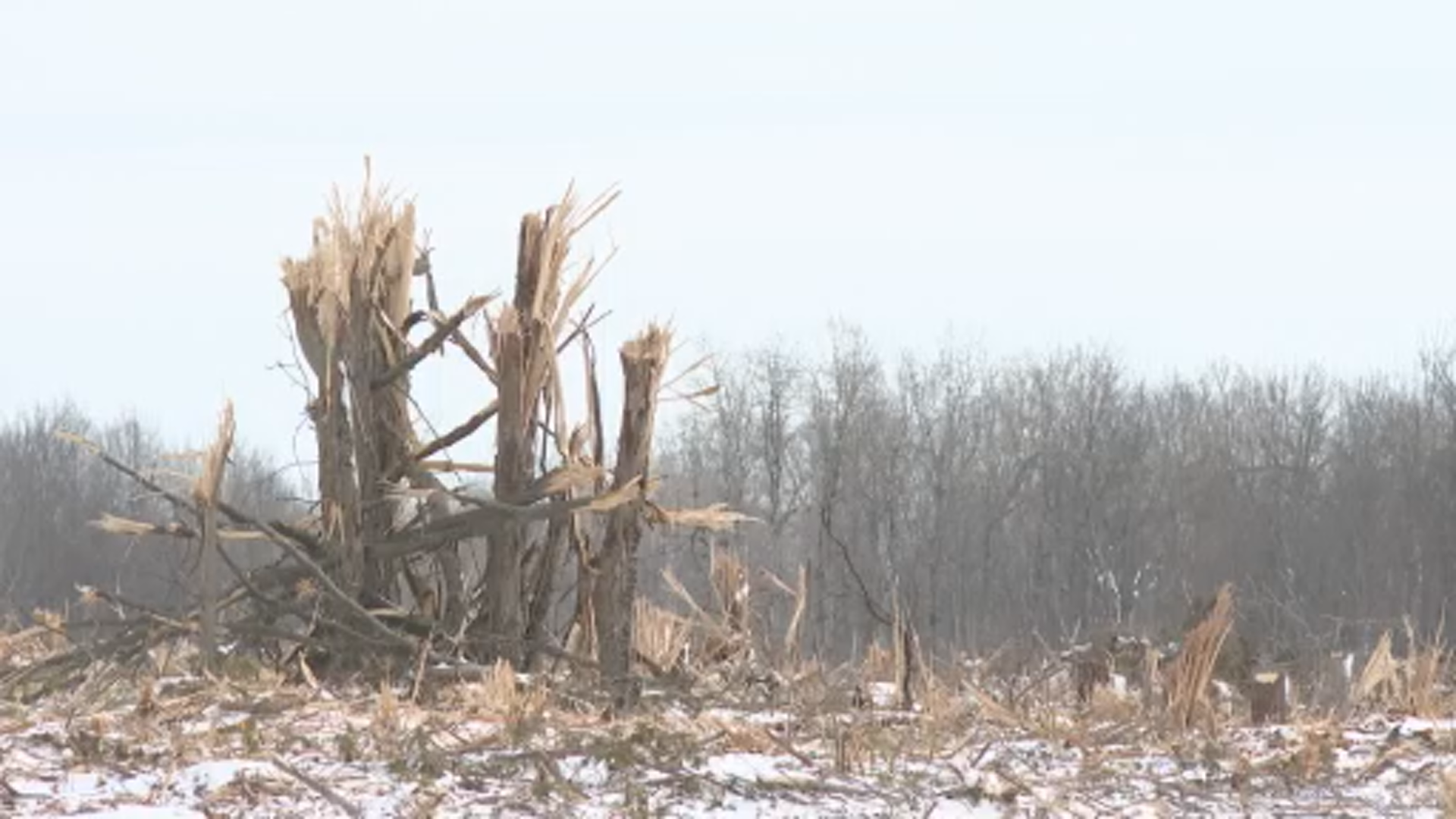
When a crew clear-cuts a patch of land like the Mile Square, they aren't just removing trees. They are stripping the topsoil of its structural integrity. The root systems of a century-old oak act like an underground cathedral, holding the earth in a complex, interlocking grip. Without them, the next heavy rain doesn't soak into the ground; it sleds across the surface, carrying silt, oil, and debris directly into the local storm drains.
In Kingston, those drains lead to the Mettatuxet River.
"They tell us it’s progress," Sarah says, standing on her porch while the distant rumble of a feller-buncher vibrates through the floorboards. "But I have to explain to Leo why the owls we used to hear at night are suddenly hitting our windows because they have nowhere left to go. Is a new cul-de-sac worth a dead ecosystem?"
The developers, a consortium operating under the name Ridgeview Partners, argue that the town needs the tax revenue. They point to the "housing crisis" as a moral shield. It is a classic move: framing the destruction of a finite natural resource as a necessary sacrifice for the greater good. They speak in terms of "units" and "square footage." They rarely speak in terms of "drainage basins" or "carbon sequestration."
The Hidden Calculus of Shade
There is a scientific term for what Kingston is about to lose: the Urban Heat Island effect.
Trees are nature's air conditioners. Through a process called evapotranspiration, a single large tree can provide the cooling power of ten room-sized air conditioners running 20 hours a day. When you remove a square mile of canopy and replace it with asphalt shingles and blacktop driveways, the local temperature can spike by as much as 10 degrees Fahrenheit.
This isn't a theoretical concern for the elderly residents of Kingston who live in the smaller, non-air-conditioned bungalows adjacent to the woods. For them, the forest is a literal lifesaver. It provides a microclimate that keeps their homes habitable during the sweltering July humidity.
Beyond the mercury in the thermometer, there is the matter of the water. The Mile Square Forest sits atop a critical section of the local aquifer. Trees act as a massive, biological sponge. They slow down the descent of rainwater, allowing it to trickle into the underground reserves that feed the town's wells.
When you pave over that sponge, you aren't just building houses. You are potentially starving the town's future water supply.
A Town Divided by a Yellow Line
Walk into the Kingston General Store and the air is thick with more than just the smell of coffee. It’s the tension of a community watching its identity be reconfigured by people who don't live there.
"I've hunted those woods, my father hunted those woods, and my kids played there," says Jim Thorne, a retired contractor who has lived in Kingston for sixty years. "We aren't against building. We’re against stupid building. You don't take the heart out of a place just because it's easier to run a bulldozer in a straight line than it is to build around the terrain."
The residents are demanding a "halt and reassess" order. They aren't asking for a permanent ban on growth; they are asking for a surgical approach instead of a blunt-force trauma.
The strategy used by Ridgeview Partners is a familiar one in the world of rapid development. They move fast. They clear the land before the legal challenges can clear the court dockets. Once the trees are down, the argument for "preservation" becomes moot. You can’t preserve a stump.
This creates a frantic, desperate energy in the protest. Every hour the chainsaws run, a piece of Kingston’s history—and its biological future—is fed into a wood chipper.
The Ghost of Forests Past
We often treat the environment as a backdrop, a static green screen for our lives. But a forest is a living history book. The Mile Square contains stone walls built by farmers in the 1800s, remnants of a time when the land was respected because it was the only thing that kept people fed.
There is a profound irony in the fact that the new development will likely be named "Oak Ridge" or "Pine Valley"—named after the very things that were destroyed to make room for it. It is a linguistic ghost, a way for marketing teams to sell the memory of a landscape to the people who moved in after it was murdered.
Consider the local wildlife, which doesn't have a seat at the town council meetings. The Mile Square is a corridor. It connects the larger state parks to the coastal wetlands. When that corridor is severed, the genetic diversity of local species—from red foxes to wood turtles—begins to collapse. They become trapped in "islands" of green, surrounded by a sea of traffic and fences.
The Cost of "Efficiency"
The developers argue that clear-cutting is the most efficient way to prepare a site. It’s cheaper. It’s faster. It allows for standardized grading.
But efficiency is a narrow lens. If you factor in the cost of the increased flooding the town will have to manage, the higher energy bills for residents who lost their shade, and the loss of property value for those whose "wooded view" is now a view of a neighbor's vinyl siding, the math changes.
The "efficiency" of the developer is a direct tax on the community's future.
The residents of Kingston have started a rotating picket line at the entrance of the Mile Square. They aren't professional activists. They are teachers, mechanics, and nurses. They are people like Sarah Miller, who spent her Saturday making cardboard signs with her son instead of taking him to the park.
"I want him to see that things are worth fighting for," she says, her voice barely audible over the roar of a truck passing by. "I want him to know that a tree isn't just wood. It’s a promise we made to the people who come after us."
The Final Stand
As the sun sets over Kingston, the heavy machinery finally falls silent. The crews go home to their own neighborhoods, leaving behind a scarred earth that looks like a battlefield. The air smells of sawdust and diesel.
The town council is scheduled to vote on an emergency injunction on Tuesday. For the Mile Square, that might be forty-eight hours too late. For other towns watching Kingston, it is a warning.
A forest takes a century to find its voice. It takes a man with a saw less than twenty minutes to silence it forever.
The residents stay at the gate long after the workers leave. They light small fires in metal barrels to keep the chill away. They talk. They share stories of the things they’ve seen in those woods—the time a rare hawk nested near the creek, the hidden clearing where the blueberries grew thickest, the way the light looks when it filters through the canopy in late October.
They are holding a vigil for a neighbor they are losing in real-time.
High above them, in the branches of a white pine that has stood since the end of the Civil War, a great horned owl settles in to wait. It watches the flickering lights of the town below, unaware that the ground beneath its talons has already been sold, surveyed, and scheduled for disappearance.
The owl doesn't know about tax revenue or housing units. It only knows that the wind is changing, and the shelter it has always known is being dismantled, branch by splintered branch, while the world sleeps.