The ink on a federal order is thin. It weighs less than a gram. Yet, when that ink forms the signature of a Secretary of State, it carries the kinetic energy of a closing cell door. For four individuals recently residing within the United States, that ink just became a wall.
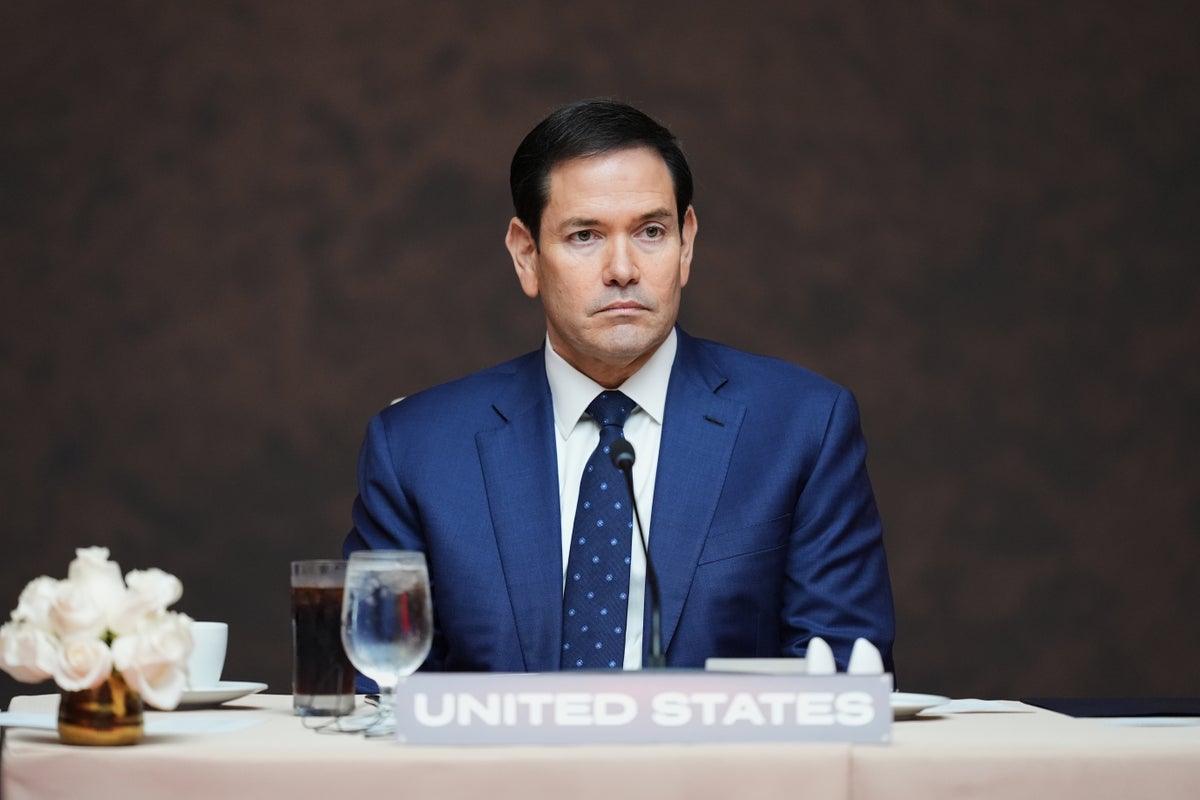
Marco Rubio, stepping into his role with the calculated precision of a man who views diplomacy as a chess match played with live ammunition, has made his first major move regarding Iranian influence. He didn't hold a press conference to debate the nuances of international law. He simply reached for the levers of the visa system and pulled. Four Iranian nationals, individuals who had secured the right to walk American streets, breathe American air, and perhaps even build American lives, suddenly found their legal status evaporated.
Visas gone. Green cards revoked. The transition from "resident" to "ineligible" happened in the time it takes to refresh an inbox.
To understand why this matters, we have to look past the bureaucratic jargon of the State Department. We have to look at the invisible lines of loyalty that govern the modern world. In Washington, the argument is no longer about whether a person has committed a specific crime on U.S. soil. It is about the shadow they cast. Rubio’s action signals a shift from reactive law enforcement to proactive national hygiene. If you are tied to a regime that views the West as an existential enemy, your presence here is no longer viewed as a bridge. It is viewed as a vulnerability.
Consider the hypothetical case of a man we will call Reza. He isn't a spy from a paperback thriller. He doesn't carry a poison-tipped umbrella. In this scenario, he might be a researcher or a mid-level businessman. He has a favorite coffee shop in Northern Virginia. He knows which floorboards creak in his apartment. He has a routine. Then, a letter arrives. Or perhaps he is stopped at an airport gate. The technicality is "involvement in activities inconsistent with status," but the reality is simpler: the geopolitical climate changed, and he was caught in the frost.
This isn't just about four people. It is a signal fire meant to be seen from Tehran.
The move targets those with alleged ties to the Iranian government or its paramilitary wings. For years, the American immigration system operated on a philosophy of "innocent until proven a threat." Rubio is flipping the script. Under this new direction, the privilege of American residency is being treated as a high-stakes contract that can be canceled for breach of alignment. The "why" is buried in classified briefings, but the "how" is starkly public.
There is a specific kind of silence that follows a revocation. It is the sound of a life being packed into suitcases. When a green card is pulled, the clock doesn't just start ticking; it screams. There are leases to break, bank accounts to freeze, and connections to sever. The legal machinery of the United States is the most powerful engine on earth, and when it shifts into reverse, it crushes everything in its path.
Rubio’s critics will call this a performance. They will say that four visas in a country of millions is a drop in the ocean. But they miss the psychological weight of the act. Diplomacy is often a language of symbols. By targeting specific individuals, the administration is telling the Iranian leadership that the era of "strategic patience" has been replaced by "surgical removal." The message is clear: we know who you are, we know where you live, and we can make you leave.
The complexity of these cases often hides in the details of the Immigration and Nationality Act. It grants the Secretary of State broad, almost king-like powers to revoke visas if their presence is deemed "detrimental to the interests of the United States." It is a vague phrase. It is a powerful phrase. It allows a single desk in D.C. to reach across the country and snap the thread of a person's future.
What does it feel like to be the target of that power?
It feels like the ground turning to water. One day, you are part of the fabric of a community. The next, you are a ghost. You are still physically present, but legally, you have ceased to exist. You cannot work. You cannot travel. You are waiting for the knock at the door that confirms what the paper already told you.
The Iranian government will likely respond with its own brand of theatrical outrage. They will call it "Zionist-driven aggression" or "human rights violations." But inside the halls of power in Tehran, the move will be read for exactly what it is: a narrowing of the playing field. The "gray zone" where individuals could serve two masters—or at least live comfortably in the gap between them—is shrinking.
This is the new architecture of the border. It isn't just a fence in the desert or a wall of steel. It is a digital perimeter guarded by data analysts and intelligence officers. They are looking for the thumbprints of the IRGC. They are looking for the financial trails that lead back to sanctioned banks. When they find them, they don't always launch a drone. Sometimes, they just delete a visa.
The four individuals at the center of this current storm are now symbols of a larger divorce. The United States and Iran are moving further apart, and the people caught in the middle are being forced to choose a side, or have a side chosen for them.
The sun sets over the Potomac, and the lights in the State Department stay on. More files are being reviewed. More backgrounds are being checked. The ink is still wet. For those watching from the sidelines, it is a reminder that a passport is not a shield; it is a temporary agreement. And agreements can be torn up.
In the end, we are left with the image of a man sitting in a terminal, looking at a stamp that has been voided. He is surrounded by people rushing toward their futures, but he is trapped in a present that has no place for him. He is the human collateral of a cold war that just got a little colder. The world keeps moving, but for him, the door has clicked shut, and the key has been turned by a hand he will never shake.