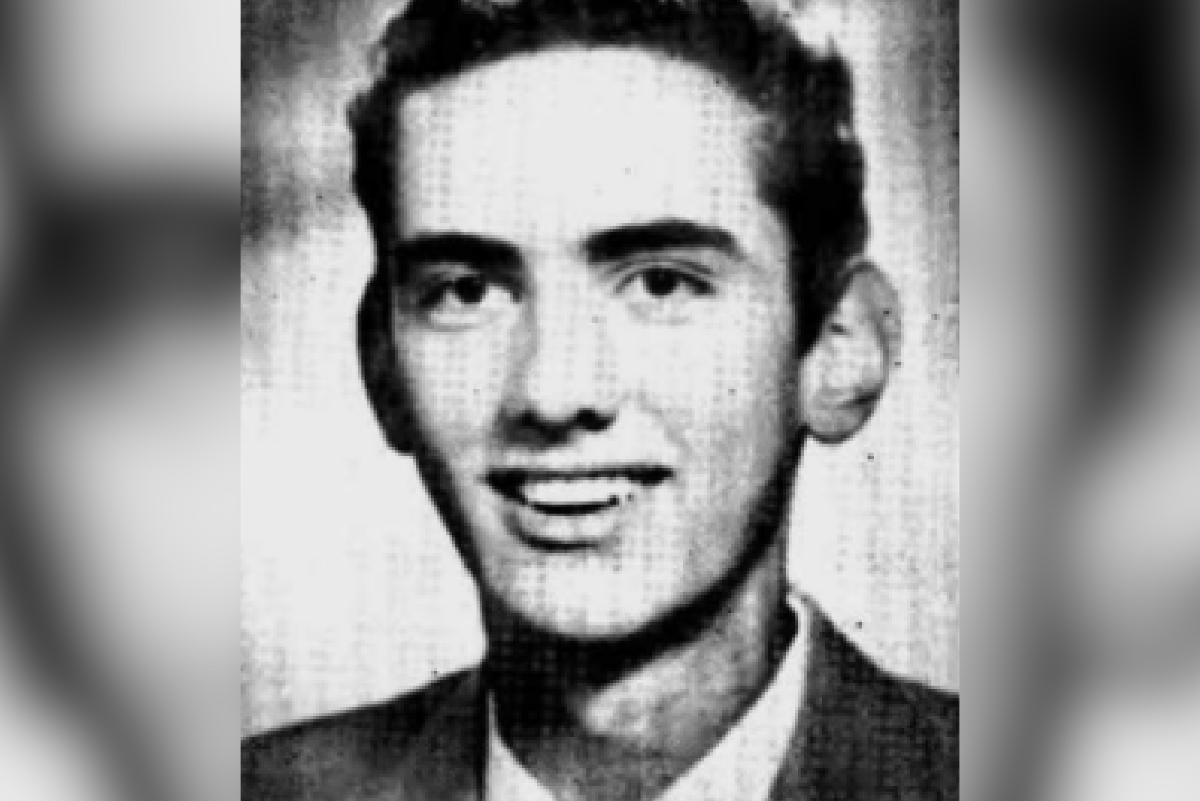
Finding a body once is a tragedy for any family. Finding the remains of the same person twice, decades apart, is the kind of macabre anomaly that sounds like a glitch in reality. This is exactly what happened with the case of Kevin J. Thomas, a Los Angeles banker who vanished in 1999. It’s a story that challenges our understanding of how ocean currents work and how forensic science deals with the fragmented reality of missing persons.
Most people think of a "closed case" as a binary state. Someone is found, or they aren't. But the sea doesn't always give back its secrets in one piece. For the family of Kevin Thomas, the ocean has been a slow, cruel messenger, delivering his remains in installments across twenty-five years. This isn't just a story about a missing person; it's about the terrifying persistence of the Pacific and the limitations of modern recovery efforts.
What Happened to Kevin Thomas in 1999
Kevin Thomas was a 38-year-old banker with a life that, on the surface, looked stable. He lived in the San Fernando Valley and worked for a major financial institution. Then, in late 1999, he simply stopped being where he was supposed to be. His car was eventually found near the Vincent Thomas Bridge in San Pedro, a notorious jumping point for those looking to end it all.
When a car is left on a bridge, the assumption is usually clear. Law enforcement searches the water, but the Pacific Ocean isn't a swimming pool. It's a massive, churning engine of current and cold. If you aren't found in the first forty-eight hours, the odds of being found at all drop to nearly zero. The case went cold. Thomas became another name in the California Missing Persons Clearinghouse, a digital ghost.
The First Discovery in 2001
The ocean finally spoke in 2001. A hiker walking along a rugged stretch of beach in San Pedro found a human skull. It was weathered, bleached by the salt and sun, but it was human. DNA technology in 2001 wasn't what it is today, but it was advancing.
After a period of investigation and testing, the Los Angeles County Medical Examiner confirmed the skull belonged to Kevin Thomas. For many, that was the end. His family had a piece of him to bury. They had a death certificate. They had the grim "closure" that society tells us we need. The case was, for all intents and purposes, settled.
But the ocean wasn't finished.
Why the Second Discovery in 2024 Changed Everything
Fast forward to late 2024. A beachgoer near the Point Fermin area—not far from where the car was originally found—spotted more remains. This time, it was a pelvic bone. Given the location, the police initially thought they were looking at a new victim. Maybe a recent accident or a crime.
When the lab results came back, the investigators were stunned. The DNA matched the profile of Kevin Thomas. The same man whose skull was found and buried over two decades ago.
This second discovery raises a lot of questions about how we treat missing persons cases. It’s rare. Usually, when remains are found years later, they belong to someone new. To find more of the same person twenty-three years after the first piece was recovered is statistically staggering. It tells us something about the "graveyard" of the San Pedro coastline. The rocky crevices and underwater caves in that area can trap remains for generations.
The Science of the Double Find
How does this actually happen? You have to understand the San Pedro shelf. The water there moves in complex eddies. When a body enters the water from a height like the Vincent Thomas Bridge, the impact and the environment cause what forensic experts call "disarticulation."
Nature is efficient. Crustaceans, fish, and the sheer mechanical force of the tide break a body down. Bones become separated. Some float, some sink, and some get wedged into the reef.
- Buoyancy: Different bones have different densities. A skull might move differently in a current than a pelvis or a femur.
- Sedimentation: A bone can be buried under sand for a decade, only for a particularly violent winter storm to scour the seafloor and toss it back onto the shore.
- Location: Both finds occurred within a few miles of each other. This suggests that Thomas’s remains likely never left the immediate coastal area, but were instead caught in a localized "loop" of current.
I've looked at plenty of coastal recovery maps, and this specific area of California is notorious for this. The geography of Point Fermin acts like a natural trap.
What Most People Get Wrong About Forensic Closure
We have this Hollywood idea that a forensic team walks into a room, finds a skeleton, and the credits roll. Reality is much messier. The Kevin Thomas case highlights a massive gap in how we handle Jane and John Doe remains.
If you find a bone on a beach today, it’s compared against a database. But if that bone belongs to someone who was "found" twenty years ago, the system might not immediately flag it as a priority. Why look for someone who is already officially dead?
The Los Angeles County Medical Examiner deserves credit here. They didn't just shrug it off. They ran the DNA against the CODIS (Combined DNA Index System) and historical records. They connected the dots. It’s a reminder that "missing" doesn't always mean "gone," and "found" doesn't always mean "whole."
The Emotional Toll of the Installment Plan
Imagine being the family. You’ve grieved. You’ve moved on as much as one can. Then, twenty-five years later, you get a phone call. "We found another piece of him."
It’s a reopening of a wound that had long since scarred over. It forces a family to relive the trauma of 1999 all over again. There is no manual for how to handle the "second finding" of a loved one. It’s a unique, haunting kind of grief that only a handful of families in the world have ever experienced.
Why This Case Matters for Cold Cases in 2026
The reason we are talking about Kevin Thomas now is because of the massive leaps in genetic genealogy and DNA sensitivity. We can now get profiles from bone fragments that would have been useless in 1999 or even 2010.
There are thousands of unidentified fragments in lockers across California. Many of them likely belong to people who have already been partially identified. As we get better at testing, we are going to see more "double finds."
It’s not just about solving crimes. It’s about the ethics of recovery. Do we have an obligation to keep looking for the rest of a person once the death certificate is signed? The Thomas case suggests that the ocean will keep making that decision for us, whether we are ready for it or not.
How to Handle Discoveries on the Coast
If you’re walking a beach in Southern California and you see something that looks like it doesn't belong—something that looks biological and old—don't touch it.
- Mark the spot. Use a GPS pin on your phone. Tides move fast, and what is visible at 2:00 PM might be gone by 4:00 PM.
- Call local law enforcement. Don't assume it's an animal bone. Let the experts make that call.
- Understand the context. California’s coast is a high-energy environment. These remains can travel miles or stay stuck in one crevice for thirty years.
The case of Kevin Thomas is a grim lesson in patience and the power of the Pacific. It’s a reminder that the sea never truly forgets, and eventually, everything comes back to the surface. It’s a weird, sad, and fascinating ending to a mystery that started in the last millennium. The banker from the San Fernando Valley is finally, perhaps, fully accounted for.
If you find yourself near San Pedro, look at the water. It looks calm, but it’s a vault. And every once in a while, the vault opens.