Commercial aviation operates on the rigid optimization of three-dimensional space, where the profitability of a narrow-body aircraft is tethered to a fixed cabin width. When an individual passenger’s physical volume exceeds the allocated dimensions of a standard seat—typically 17 to 18 inches—the resulting friction is not merely social, but operational. The recent public conflict regarding an airline’s requirement for a passenger to purchase a second seat highlights a systemic failure to align physical reality with the contractual language of a Ticket of Carriage.
To understand this conflict, one must strip away the emotional optics and analyze the intersection of safety regulations, seat geometry, and the economic variables of weight and balance.
The Geometry of Encroachment
The fundamental unit of airline revenue is the Available Seat Mile (ASM). Each seat is a discrete asset designed to contain a single human form within specific lateral boundaries. When a passenger cannot fit within these boundaries with the armrests lowered, they initiate a "lateral encroachment" event.
This is not a matter of subjective judgment by gate agents; it is a breach of the technical specifications of the cabin. Lateral encroachment creates three primary points of failure:
- Safety Obstruction: In the event of an emergency evacuation, Federal Aviation Administration (FAA) and European Union Aviation Safety Agency (EASA) standards require a clear path to the aisle. A passenger spilling into the egress space or impeding a neighbor's movement violates the 90-second evacuation mandate.
- Hardware Integrity: Seatbelts and seatbelt extenders are rated for specific load distributions. If a passenger’s mass prevents the armrest from deploying, the structural integrity of the seat "pod" as a safety cell is compromised.
- The Neighbor’s Contract: A ticket is a contract for a specific volume of space. If Passenger A occupies 20% of Passenger B’s seat, the airline has technically failed to deliver the product Passenger B purchased, creating a liability for a refund or involuntary downgrading.
The Cost Function of the Extra Seat Requirement
Airlines do not mandate extra seats out of malice; they do so to mitigate "Variable Displacement Costs." When an airline identifies a passenger of size at the gate, the following economic chain reaction occurs:
- The Inventory Lock: If the flight is full, the airline cannot simply "give" the passenger a second seat. They must bump another ticketed passenger, triggering Involuntary Denied Boarding (IDB) compensation, which can cost the airline up to 400% of the original one-way fare.
- The Displacement Ratio: A standard Boeing 737 or Airbus A320 uses a 3-3 configuration. Losing one seat reduces the row’s capacity by 16.6%. Over a high-frequency route, this margin loss is unsustainable without a price adjustment (the second seat purchase).
- Weight and Balance Sensitivity: While a single passenger rarely tips the center of gravity, the cumulative effect of underestimating passenger weight—especially in regional jets—affects fuel burn calculations.
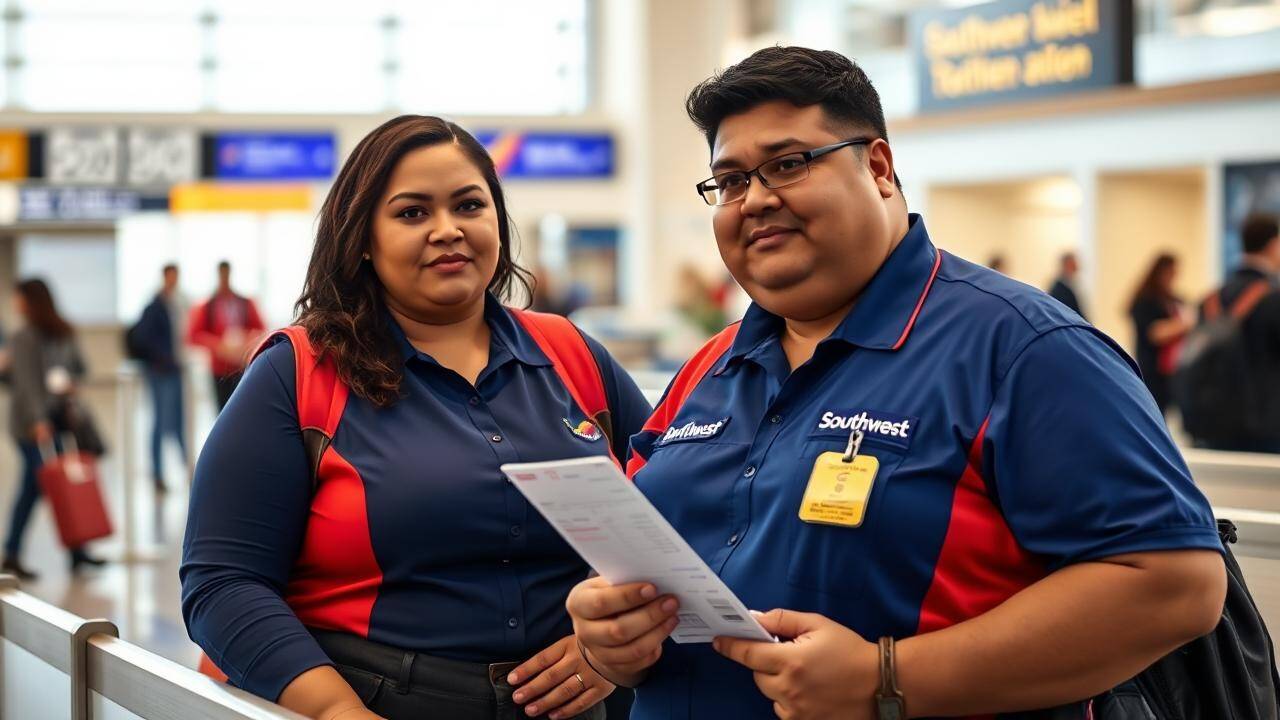
The "Person of Size" (POS) policies across the industry lack standardization, which is the root cause of the "slamming" and public outcry observed in recent incidents. Southwest Airlines, for example, utilizes a "refund" model where the second seat is purchased upfront but reimbursed if the flight departs with an open seat. United and Delta generally require the seat to be booked in advance at the prevailing rate to guarantee transport.
The Architecture of Conflict: Employee Discretion vs. Rigid Policy
The flashpoint for these controversies usually occurs at the boarding bridge, a high-stress environment where gate agents are forced to perform "visual triage." This creates a bottleneck in the customer journey and introduces high levels of variance in policy enforcement.
The Subjectivity Trap
When an airline employee tells a passenger they need an extra seat based on a visual assessment, they are performing an ad-hoc biometric scan without standardized tools. This lack of objective measurement (like the "sizer" boxes used for carry-on luggage) leads to accusations of bias.
The Protocol Gap
Most airlines fail to trigger the "Extra Seat" conversation during the digital booking flow. By allowing the passenger to reach the gate before addressing the spatial mismatch, the airline ensures a high-conflict encounter. The failure is logistical: the system allows the sale of a product (a single seat) to a customer whose physical requirements exceed that product's specifications.
Strategic Frameworks for Spatial Management
To move beyond the cycle of social media "slams" and PR crises, the industry must adopt a quantitative approach to passenger volume.
1. The Volumetric Threshold Model
Airlines should move away from weight-based assessments and toward volumetric measurements. If a passenger's hip width exceeds the distance between the interior of the armrests (the "Clear Width"), a second seat requirement should be automatically triggered by the booking algorithm. This removes human discretion and replaces it with a physics-based standard.
2. The Shared Liability Pricing Model
Currently, the burden of the second seat falls entirely on the passenger or is absorbed as a loss by the airline. A middle-ground strategy involves a "Space Plus" fare—a 1.5x seat width product priced at a 1.25x premium. This provides the passenger with guaranteed comfort and the airline with a recovery of the displaced inventory cost.
3. Pre-Boarding Biometric Integration
Self-service kiosks could integrate subtle pressure sensors or optical sensors to verify that a passenger can fit within standard dimensions before they reach the gate. This allows for a private, automated resolution (such as a rebooking or an upgrade) rather than a public confrontation.
The Inevitability of Standardized Dimensions
The tension between the airline and the passenger of size is a symptom of the "Incredible Shrinking Seat." Since the 1970s, average seat pitch has dropped from 35 inches to 31, and width has constricted as airlines seek to cram more "LOPA" (Layout of Passenger Accommodation) into the same airframe.
As the global population's average Body Mass Index (BMI) trends upward while seat dimensions trend downward, the intersection point—the moment where a standard seat becomes physically unviable for a significant percentage of the population—is no longer an outlier. It is a projected statistical certainty.
Airlines that continue to rely on "visual checks" by gate agents are exposing themselves to brand erosion and potential regulatory intervention. The solution is not more sensitivity training, but more rigorous data integration.
Airlines must immediately audit their "Contract of Carriage" to include precise millimeter measurements for seat occupancy. They must then integrate these measurements into the check-in interface, requiring passengers to self-certify their fit against those specific dimensions. By moving the point of friction from the jet bridge to the digital interface, the airline transforms a public relations disaster into a transparent, albeit difficult, commercial transaction. The goal is to move from a "Size Comment" to a "Spatial Agreement."