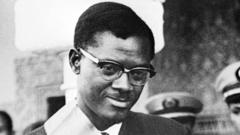
Justice is rarely fast. Sometimes it takes sixty-five years to even get a foot in the door. A Belgian appeals court just made a massive call by clearing the way for a trial involving the 1961 kidnapping and murder of Patrice Lumumba. He was the first democratically elected Prime Minister of the Democratic Republic of the Congo. He was a symbol of African independence. He was also a man who was dissolved in acid to hide the evidence of a colonial crime.
If you think this is just some dusty history lesson, you're wrong. This case hits the heart of how modern international law handles "crimes against humanity." It’s about whether a former colonial power can be held accountable for a Cold War-era execution that changed the trajectory of an entire continent. The court’s decision means that several people—mostly former Belgian officials and police officers—could finally face a judge.
We aren't talking about a simple murder. This was a coordinated effort to decapitate a new nation. For decades, the official story was a mess of denials. But the truth has a way of leaking out, even if it takes over half a century.
The cold facts of the 1961 execution
To understand why this court ruling is a big deal, we have to look at what happened in January 1961. Lumumba had been in office for only a few months after Congo gained independence from Belgium in 1960. He was charismatic. He was uncompromising. He wanted Congo’s vast mineral wealth to benefit Congolese people, not Brussels or Washington. That made him a target.
The execution wasn't a "rogue" operation. It involved the Katangese secessionists, Belgian advisors, and silent approval from Western intelligence agencies. Lumumba was flown to the breakaway region of Katanga, beaten, and shot.
What happened next is the stuff of nightmares. Belgian police commissioner Gerard Soete later admitted to helping dispose of the body. They chopped it up. They dissolved it in sulfuric acid. Soete even kept two of Lumumba’s teeth as "trophies." One of those teeth was finally returned to Lumumba’s family in 2022. That return wasn't just a gesture. It was a catalyst for this legal push.
Why the Belgian court finally moved
The legal battle has been a slog. Lumumba’s son, François, filed a complaint back in 2011. Since then, the case has bounced around the Belgian legal system like a pinball. The main hurdle was always the statute of limitations. Usually, you can't prosecute a crime after decades have passed.
But there’s a loophole for the worst of the worst. Crimes against humanity don't expire.
The appeals court in Brussels had to decide if the killing of Lumumba fit that specific, heavy definition. By clearing the path for a trial, they've basically signaled that the evidence suggests a systematic attack against a civilian or a political group. This isn't just a "cold case" anymore. It’s a live prosecution of state-sponsored violence.
Belgium has a complicated relationship with its past. King Philippe has expressed "deepest regrets" for the colonial abuses, but regrets don't carry the weight of a courtroom verdict. A trial forces a public accounting of the logistics. Who signed the orders? Who provided the plane? Who supplied the acid? These are the questions that keep the Belgian establishment awake at night.
The shadow of the Cold War and the CIA
You can't talk about Lumumba without talking about the CIA and the global power struggle of the 1960s. The US government was terrified that Lumumba would flip to the Soviet Union. Documents released years ago show that the Eisenhower administration had its own plans to assassinate him using poisoned toothpaste.
While the current Belgian trial focuses on Belgian nationals, the context is global. The UN was also on the ground at the time. Their failure to protect Lumumba remains one of the organization’s biggest stains. By pursuing this trial in Brussels, the legal team is pulling on a thread that connects to some of the most powerful institutions in the world.
Critics say it’s too late. Many of the suspects are dead or in their 90s. Does it matter if a 95-year-old man goes to jail? Maybe not for the jail time itself. But for the record, it matters immensely. It’s about the "right to truth."
What this means for international law
This case sets a precedent for other former colonies. If Belgium can be forced to try its own citizens for crimes committed during decolonization, what does that mean for France in Algeria? Or the UK in Kenya?
It shifts the power dynamic. For a long time, international law felt like something the West used to judge everyone else. Now, the tools of the European legal system are being used to look inward.
The defense will likely argue that these men were just following orders in a chaotic war zone. They'll try to say the court doesn't have jurisdiction. But the appeals court has already cleared the biggest hurdle. The "political" excuse doesn't work when you're dealing with the extrajudicial killing of a head of state.
Tracking the next steps of the prosecution
The case now moves toward the "Chambre de mise en accusation," which determines which specific individuals will stand trial before a jury. We should expect a lot of procedural delays. Lawyers for the suspects will fight every inch.
If you want to follow this, keep an eye on the Belgian federal prosecutor’s office. They've been quiet, but the court’s ruling puts the ball in their court. We’re looking at a potential trial date that could finally provide a definitive historical record.
For the people of the DRC, this isn't just about a tooth or a 60-year-old murder. It's about the fact that their country's progress was violently interrupted. Lumumba's death led to the rise of Mobutu Sese Seko, a dictator who looted the country for thirty years. You can draw a straight line from the acid pit in 1961 to the instability in the Congo today.
Stop waiting for a "friendly" apology from former colonial powers. Real accountability happens in a courtroom. Watch the Belgian courts closely over the next twelve months. The testimony of the few remaining witnesses will be the last chance to get the story straight before it passes entirely into history. Read the 2001 Belgian parliamentary commission report on the assassination if you want the full, brutal background on how the state already admitted "moral responsibility" before the legal battle even started.