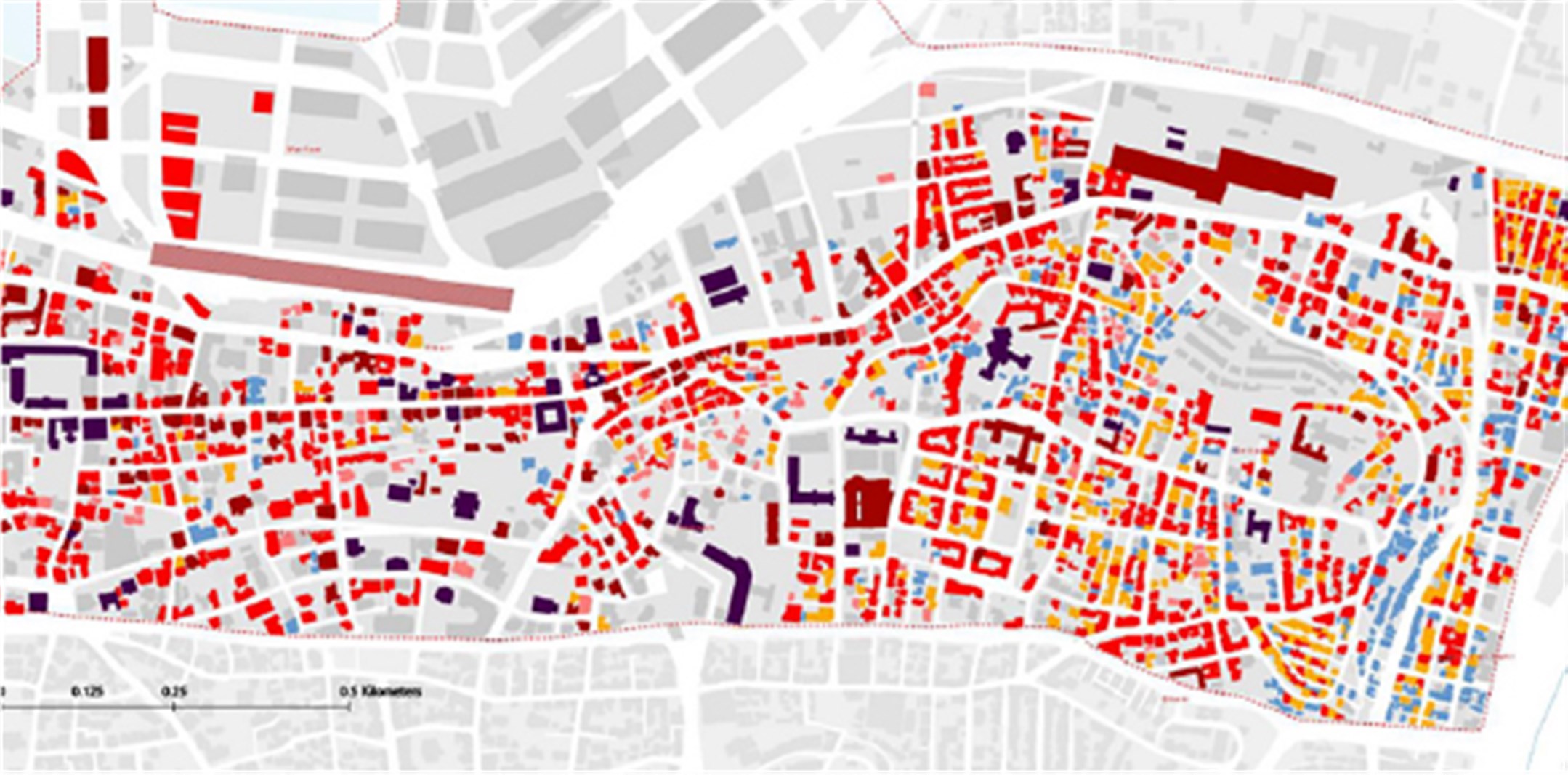
The operational reality of Beirut is defined by a systemic disconnect between state-level failure and localized, private-sector optimization. To understand the city from a strategic perspective, one must discard the lens of "chaos" and replace it with a study of dual-track infrastructure. The city functions through a series of workarounds that have become the primary systems, creating a high-friction environment that rewards hyper-locality and punishes reliance on centralized utilities.
The Architecture of Parallel Infrastructure
The most critical variable in Beirut’s functionality is the Private Utility Nexus. This is not an informal economy in the traditional sense; it is a sophisticated, tiered system of service delivery that replaces the defunct state grid.
The Energy Arbitrage Model
Electricity in Beirut is managed through a complex hierarchy of sources. The state provider, Électricité du Liban (EDL), functions as a baseline frequency rather than a reliable power source. Consumers navigate a tripartite energy stack:
- State Power: Variable, providing between zero and four hours of electricity daily.
- Neighborhood Micro-grids: Privately owned diesel generators that sell "amperage" (e.g., 5-amp or 10-amp subscriptions).
- Solar Hybridization: A rapid-onset transition where rooftops have been converted into decentralized power plants to mitigate the rising cost of diesel fuel.
The cost of living and doing business is dictated by this stack. A business’s margins are directly tied to its "energy independence ratio." Establishments with high solar capacity or efficient generator contracts out-compete those reliant on spot-market fuel purchases.
The Potable Water Paradox
While Lebanon is geographically water-rich, the delivery systems are structurally compromised. Residents manage a "Two-Tank Strategy." One tank collects municipal water (used for cleaning and non-potable needs), while a second, private delivery system provides high-quality water for consumption. The logistical cost of trucking water through narrow, high-density urban corridors creates a permanent tax on residential and commercial operations.
The Dual Economy and Currency Stratification
The Lebanese Lira (LBP) has transitioned from a medium of exchange to a psychological anchor, while the US Dollar (USD) functions as the actual unit of account. This "dollarization" has created a stark bifurcation in the city's socioeconomic landscape.
Purchasing Power Parity in a Devalued State
The economy now operates on two distinct tracks. The "Import Track" is fully dollarized and services the upper-middle class and expatriates. The "Lira Track" services those with fixed state incomes or local-market wages. For an analyst, the city’s vibrancy is deceptive; it is fueled by a massive influx of remittances (estimated at over 30% of GDP) rather than internal productivity. This creates a "Consumption-Only" economy where capital flows into hospitality and luxury goods while manufacturing and high-tech sectors face structural bottlenecks due to the lack of credit.
The Death of Traditional Banking
The collapse of the banking sector has forced the city into a cash-only modality. The absence of a functioning credit market means:
- Real estate transactions are conducted in physical currency.
- Business expansion is funded through private equity or family reserves.
- Risk management is impossible through insurance, leading to high "contingency loading" in all project pricing.
Spatial Analysis of Risk and Density
Beirut's geography is a map of varying risk profiles. Understanding the city requires an appreciation of "Micro-Sovereignty." Different neighborhoods operate under different security and political umbrellas, which dictates the flow of people and capital.
The Buffer Zone Logic
Commercial activity is concentrated in "Resilience Hubs" like Mar Mikhael, Achrafieh, and Hamra. These areas have developed a self-sustaining ecosystem of private security and infrastructure. However, these hubs are sensitive to external shocks. The 2020 Port Explosion demonstrated the fragility of these hubs, where the physical destruction of the primary logistics node (the port) instantly decapitated the city's supply chain.
Logistics and the Last Mile
The city's topography and lack of urban planning create extreme "Last-Mile Friction."
- Transit: The absence of public transport has led to a proliferation of "service" taxis and private vehicles, causing chronic congestion that acts as a hidden tax on time.
- Supply Chain: Businesses must over-stock inventory because the reliability of the port and customs remains low. This ties up working capital that could otherwise be used for scaling operations.
The Resilience Threshold and Burnout
The term "resilience" is often used to describe the Lebanese population, but a rigorous analysis reveals this is actually a process of "Resource Depletion." The constant need to solve basic problems (finding fuel, securing water, navigating exchange rates) consumes significant cognitive load.
The Talent Outflow Factor
The most significant long-term threat to Beirut is not physical destruction, but the "Human Capital Drain." The educated middle class—doctors, engineers, and tech workers—are migrating to more stable regulatory environments. This leaves the city with a demographic "hourglass" shape: a wealthy elite at the top and a struggling labor class at the bottom, with a shrinking professional core to manage the city's complex systems.
Strategic Operational Directives
For those navigating or investing in the Beirut environment, success is predicated on three tactical pillars:
- Hard-Asset Isolation: Every project must be designed to be 100% off-grid. This includes independent water filtration, redundant power (Solar + Lithium + Generator), and satellite-based communication (Starlink or similar) to bypass local telecom outages.
- Liquidity Primacy: Operating in a cash economy requires a total rethink of treasury management. Foreign entities must maintain offshore USD accounts and utilize local "money transfer" agents for payroll and vendor payments, accepting the 1% to 3% transaction friction as a cost of doing business.
- Localized Intelligence Networks: Because official data is non-existent or manipulated, operational decisions must be based on "Boots on the Ground" data—monitoring local fuel prices, observing neighborhood security shifts, and tracking the black-market exchange rate in real-time.
The path forward for Beirut is not a return to a centralized state, but the formalization of these private workarounds into a cohesive, decentralized urban model. The city is a living laboratory for "Post-State Urbanism," where the ability to self-organize at the neighborhood level determines the survival of the collective.
Prioritize the acquisition of physical real estate in the high-density Achrafieh and Badaro corridors, as these areas have shown the highest "Recovery Velocity" following shocks. Ensure all contracts are written in "Fresh Dollars" (external USD) to hedge against further Lira volatility. Establish a private logistics corridor for essential supplies, bypassing the centralized port when possible through smaller, secondary ports or land routes via Tripoli.