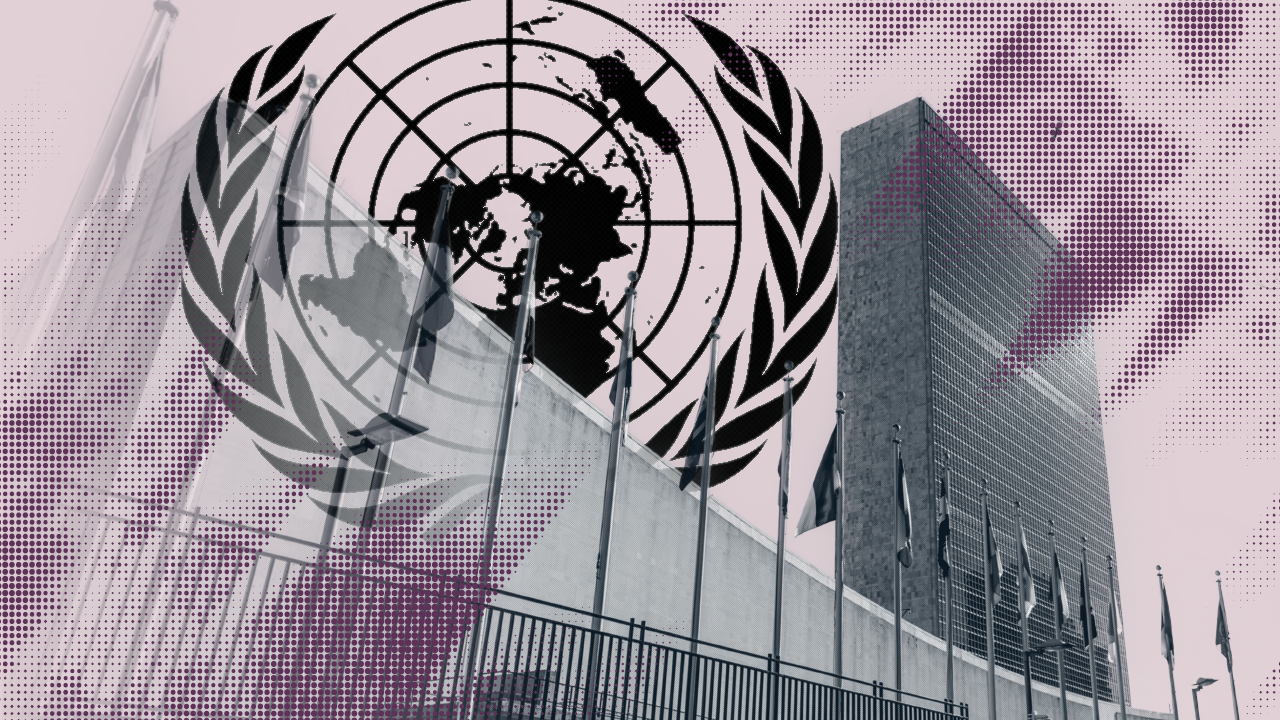
The global diplomatic order is currently snagged on a single, fifty-five-year-old sentence. While the world tracks missile tests and trade wars, a far more quiet and consequential struggle is playing out within the administrative belly of the United Nations. At the center of this friction is UN General Assembly Resolution 2758, a document passed in 1971 that changed the course of history by recognizing the People’s Republic of China (PRC) as the only legitimate representative of China to the UN. However, a massive gap has emerged between what that resolution actually says and how Beijing now forces the world to interpret it.
For decades, the PRC has successfully convinced—or coerced—international bodies into believing that Resolution 2758 settled the "Taiwan question" once and for all. It did not. The text never mentions Taiwan by name. It does not state that Taiwan is a part of the PRC, nor does it explicitly bar Taiwanese citizens from participating in global health, aviation, or climate forums. Yet, through a relentless campaign of "legal warfare," Beijing has effectively weaponized this omission to erase Taiwan from the map of international cooperation. Washington is finally pushing back, but the inertia of five decades of diplomatic silence makes this an uphill fight.
The Invention of a Legal Mandate
The 1971 resolution was a blunt instrument designed to solve a specific problem: who gets the "China" seat? At the time, the Republic of China (ROC) government in Taipei and the PRC in Beijing both claimed to be the rightful government of all of China. The UN chose Beijing. The resolution "decided to restore all its rights to the People’s Republic of China and to recognize the representatives of its Government as the only legitimate representatives of China to the United Nations."
Crucially, the document is silent on the status of the territory of Taiwan. It does not grant the PRC sovereignty over the island. In the eyes of Beijing’s legal teams, however, the "restoration of rights" implies that the PRC inherited everything the previous "China" held, including a territory it has never actually governed.
This isn't just a semantic debate for history professors. It has teeth. By conflating Resolution 2758 with its own "One China Principle," Beijing has created a firewall that blocks Taiwan from the World Health Organization (WHO), the International Civil Aviation Organization (ICAO), and even Interpol. When a global pandemic strikes or a new aviation safety protocol is drafted, 23 million people are left in a blind spot because of a creative reading of a 1971 memo.
The US Pivot to Meaningful Participation
The United States has spent the last few years trying to dismantle this narrative without triggering a hot war. The strategy is labeled "meaningful participation." It is a delicate dance. Washington still maintains formal diplomatic ties with Beijing and does not officially recognize Taiwan as a sovereign state, yet it argues that the exclusion of Taiwan from functional, non-political organizations is a threat to global security.
The State Department’s recent maneuvers focus on the technicality that Resolution 2758 is being "misused." By framing the issue as an administrative overreach rather than a sovereignty dispute, the US hopes to build a coalition of nations—nations that are tired of seeing global health and safety compromised by geopolitical gatekeeping.
But the machinery of the UN is heavily greased by Chinese investment and influence. Many mid-tier nations, particularly those indebted through the Belt and Road Initiative, are hesitant to challenge Beijing’s interpretation. To them, a vote for Taiwan’s "meaningful participation" is seen as a direct affront to the PRC's core interests. The US isn't just fighting a legal argument; it’s fighting an economic reality.
The Cost of Exclusion in a Connected World
The most dangerous aspect of this diplomatic siege is the vacuum it creates in vital sectors. Take the ICAO, for example. The Taipei Flight Information Region (FIR) is one of the busiest in East Asia. It sits at the crossroads of major routes connecting Northeast Asia with Southeast Asia and North America. Yet, because of the PRC's interpretation of Resolution 2758, Taiwan is often denied timely access to ICAO updates and safety standards.
Air safety does not care about your political ideology. If a pilot in the Taipei FIR lacks the latest navigation data because of a diplomatic spat in New York, everyone in the sky is at risk.
The WHO provides an even grimmer example. During the early days of the COVID-19 pandemic, Taiwan’s early warnings were reportedly downplayed or ignored by the WHO hierarchy, wary of upsetting Beijing. Taiwan’s exclusion meant that one of the most successful early responses to the virus was not shared with the global community in real-time. This is the "why" behind the US push. It is no longer just about supporting a democratic ally; it is about the functional integrity of global systems that are supposed to protect everyone.
The Narrative Trap and the Path Forward
Beijing’s greatest success has been framing any mention of Taiwan as a violation of international law. They have been so consistent for so long that many diplomats now treat the PRC’s interpretation of 2758 as settled fact. It is a classic case of narrative dominance. If you say something long enough and loud enough, the nuance disappears.
To break this, the US and its allies are shifting the focus to the "functional" necessity of Taiwan's inclusion. They are highlighting that the UN’s own Sustainable Development Goals (SDGs) are impossible to achieve if you ignore a top-25 global economy.
Obstacles to a New Consensus
- The Veto Power: Even if the General Assembly warms to the idea of Taiwanese participation, the Security Council remains a dead end where China holds a permanent veto.
- The "Salami Slicing" Fear: Beijing views any international space granted to Taiwan as a step toward formal independence. They see "meaningful participation" as a Trojan horse.
- Bureaucratic Capture: Over the decades, PRC nationals have risen to key leadership positions within various UN sub-agencies, ensuring that the "One China" lens is applied to every permit, visa, and meeting invitation.
Beyond the Diplomatic Shield
The current battle isn't about rewriting the 1971 resolution. That won't happen. It’s about challenging the monopoly on its interpretation. Recent statements from the G7 and officials from the Netherlands, Australia, and the European Parliament suggest that the tide is turning. These bodies are increasingly willing to state on the record that Resolution 2758 does not determine Taiwan's status.
This isn't just about Taiwan's pride. It's about whether the United Nations remains a tool for global problem-solving or becomes a theatre for territorial gatekeeping. If the world continues to allow a single member to dictate the membership of functional organizations based on a creative reading of a half-century-old document, the legitimacy of those organizations will continue to erode.
The next time a global crisis emerges—whether it’s a new pathogen, a climate catastrophe, or a breakdown in the global supply chain—the 23 million people in Taiwan will have something to contribute. The question is whether the UN’s administrative architecture will continue to prioritize a specific political narrative over the practical safety of the planet.
Identify the specific UN sub-agencies where your country has voting power and demand an audit of their membership criteria to ensure that "Resolution 2758" isn't being used as a blanket excuse for exclusion in non-political sectors.