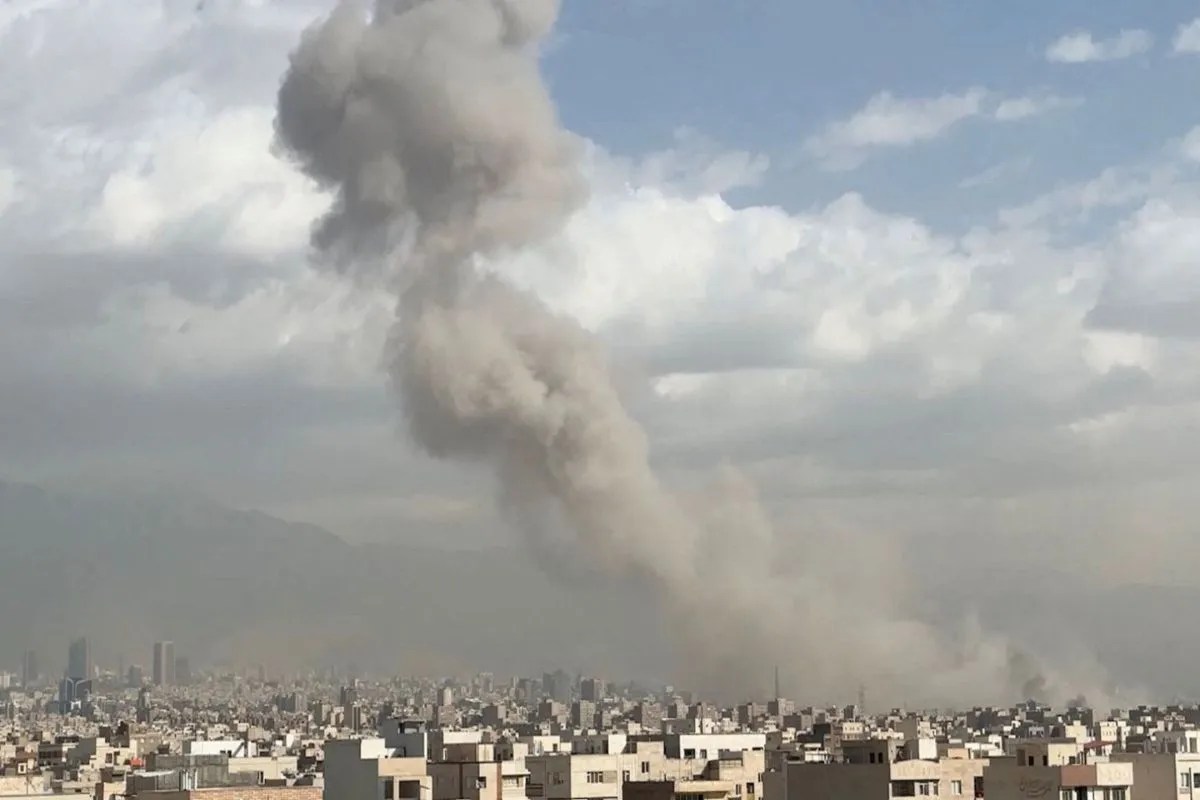
The recent drone strike targeting the residence of the President of the Kurdistan Region (KRI) represents a shift from tactical harassment to strategic decapitation signaling. While the Iranian government’s immediate attribution of the strike to a "U.S.-Israeli conspiracy" follows a predictable pattern of rhetorical redirection, the event unmasks a deeper structural vulnerability in Iraqi federalism and the regional security architecture. Understanding this event requires a departure from surface-level political reporting and an entry into the mechanics of asymmetric warfare, the logistics of "Plausible Deniability," and the destabilization of the Kurdish-Baghdad-Tehran-Washington power quartet.
The Triad of Deterrence Erosion
The strike is not an isolated tactical failure; it is a symptom of the erosion of three specific pillars of regional stability.
- Air Defense Asymmetry: The KRI lacks a sovereign, high-altitude integrated air defense system (IADS). Dependence on the U.S. "umbrella" in Erbil creates a target-rich environment for non-state actors or proxy forces who use Low-Slow-Small (LSS) unmanned aerial systems (UAS). These systems bypass traditional radar by exploiting terrain masking and low RCS (Radar Cross Section) signatures.
- The Sovereignty Paradox: The Iraqi central government remains the legal guarantor of Kurdish airspace, yet it lacks the political or military will to intercept drones launched by groups integrated into its own security framework (Popular Mobilization Forces). This creates a "gray zone" where the KRI is legally part of Iraq for the purpose of restriction but isolated for the purpose of protection.
- The Decapitation Signaling: Targeting a head of state’s residence—regardless of whether the intent was a "kill" or a "miss"—serves as a psychological kinetic strike. It communicates that no geographic or political perimeter within the KRI is impenetrable.
Technical Mechanics of the "Plausible Deniability" Framework
Iranian officials frequently cite U.S. and Israeli involvement as a reflexive defense mechanism. This serves a dual purpose: it rallies internal nationalist sentiment and provides a narrative shield for the actual operators. However, the technical profile of these strikes often points to a specific logistical chain.
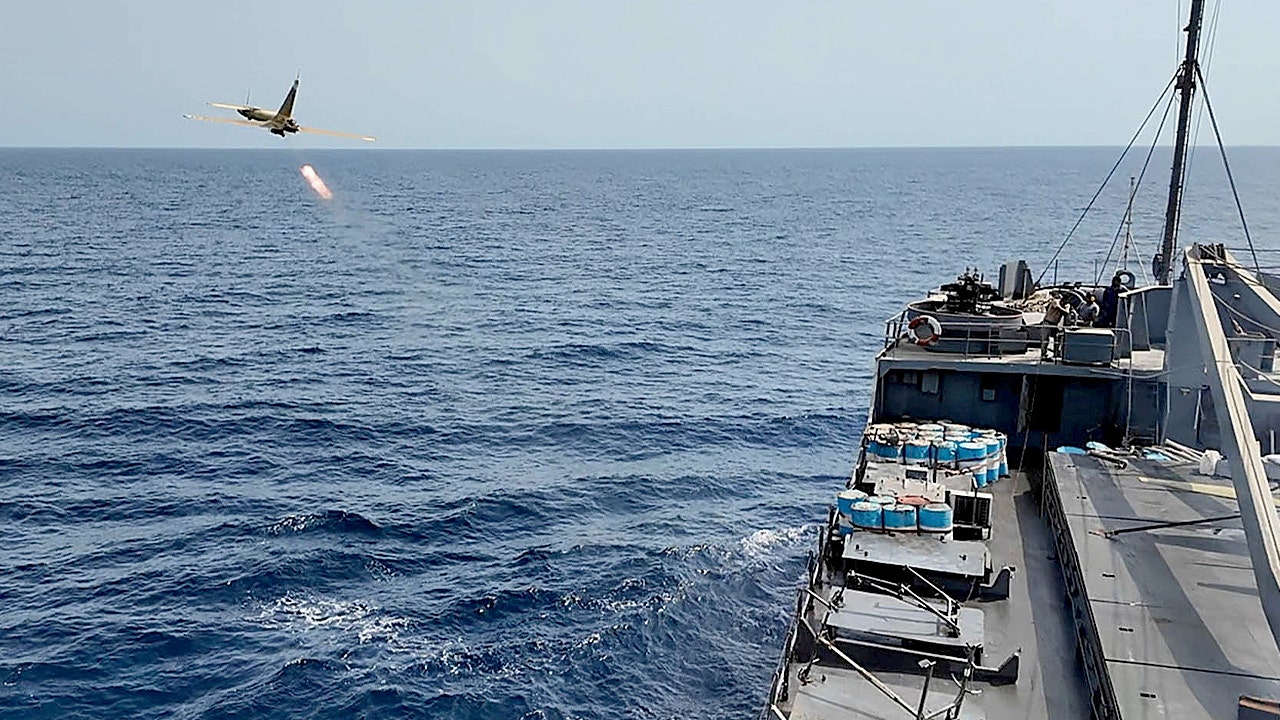
The hardware used in these incursions typically belongs to the Delta-Wing or Twin-Tail Boom families of loitering munitions. These are characterized by:
- COTS Integration: The use of Commercial-Off-The-Shelf (COTS) GPS modules and engines makes fingerprinting the source difficult.
- Launch Versatility: These drones do not require traditional runways. They can be launched from the back of a flatbed truck located within 100-200 kilometers of the target.
- Path Diversification: The flight paths are rarely direct. They often use waypoints that cross international borders or contested internal boundaries to obfuscate the point of origin.
When Tehran blames "external conspiracies," they are utilizing a Standard Misdirection Protocol. By framing the incident as a reaction to foreign presence, they justify the kinetic pressure applied by their proxies without assuming the legal or diplomatic liability of a direct state-on-state attack.
The Economic and Energy Cost Function
The Kurdistan Region is not just a political entity; it is an energy corridor. The security of Erbil is inextricably linked to the viability of the Iraq-Turkey Pipeline (ITP) and international investment in the Khor Mor gas field.
Each drone strike increases the Security Premium for foreign energy firms. This cost function is calculated through:
- Insurability: Higher kinetic risk leads to increased insurance premiums for personnel and infrastructure.
- Capital Flight: Long-term investment requires a 10-to-15-year stability horizon. Frequent UAS incursions shorten this horizon, favoring short-term extraction over long-term development.
- Infrastructure Fragility: While a drone strike on a palace is symbolic, the "threat of repetition" forces the KRI to divert significant portions of its budget toward localized defense rather than civil infrastructure.
The Misalignment of Attribution
The competitor's narrative focuses on the blame game—who said what. A rigorous analysis focuses on the utility of the blame. Iran’s rhetoric is a tool of Information Operations (IO). By framing the U.S. and Israel as the architects of regional chaos, they create a justification for "Preemptive Defense." This is a documented military doctrine where a state claims the right to attack an "imminent threat" that it has defined entirely on its own terms.
The U.S. response, conversely, is often hampered by the De-escalation Trap. Washington seeks to avoid a broader regional war, which limits its retaliatory options to "proportional responses." This proportionality is viewed by regional proxies as a lack of resolve, encouraging further asymmetric experimentation.
Structural Fault Lines in the Kurdish Response
The KRI’s ability to counter these threats is limited by internal political fragmentation. The duopoly between the KDP (Erbil) and the PUK (Sulaymaniyah) creates a security vacuum.
- Intelligence Silos: Information sharing between the different Peshmerga commands is inconsistent, allowing for gaps in the early warning network.
- Geographic Vulnerability: Sulaymaniyah’s proximity to the Iranian border and Erbil’s proximity to PMF-controlled territories in Nineveh and Kirkuk create two different fronts that the KRI cannot simultaneously harden without federal Iraqi cooperation.
Tactical Realities of the UAS Threat
The shift toward drone warfare in the Middle East has rendered traditional borders obsolete. The "Cost-per-Kill" ratio heavily favors the attacker. A loitering munition costing $20,000 can be used to threaten a residence or a refinery, forcing the defender to utilize interceptors (such as the C-RAM or Patriot systems) where each engagement costs hundreds of thousands, if not millions, of dollars.
This Economic Attrition is the primary objective of the current strike campaign. The goal is not necessarily to kill the President of the KRI, but to make the cost of governing and defending the KRI unsustainable.
The strategic move for the KRI and its international partners is a pivot toward Active Denial and Distributed Defense.
First, the KRI must finalize the unification of its Peshmerga forces into a single command structure to eliminate intelligence gaps. Second, Erbil should pursue an independent "Electronic Shield" initiative—focusing on electronic warfare (EW) and signal jamming to disrupt the C2 (Command and Control) links of incoming UAS, rather than relying solely on kinetic interception. Finally, the international community must move beyond verbal condemnation and establish a "No-Drone Zone" enforced by persistent ISR (Intelligence, Surveillance, and Reconnaissance) over the launch corridors. Without these shifts, the KRI remains a laboratory for asymmetric testing by regional powers seeking to redefine sovereignty through remote control.