The clouds over Cape Canaveral don't care about NASA’s timeline. They never have. But right now, the meteorologists at Space Launch Delta 45 are giving the Artemis team exactly what they wanted to hear. Despite a layer of gray hanging over the Space Coast, the latest forecast shows an 80% chance of favorable weather for the upcoming launch window. If you've been following the SLS (Space Launch System) saga, you know those are the kind of odds that make engineers breathe a sigh of relief.
NASA isn't just looking for a sunny day. They’re looking for a specific set of atmospheric conditions that won't turn a $4 billion rocket into a lightning rod. The SLS is a beast, but it's a sensitive one. Today’s update confirms that while those pesky cumulus clouds are floating around, they aren't the kind that trigger a scrub. We’re looking at a go.
Why Clouds Don't Always Mean a Scrub
People see a gray sky and assume the mission is cooked. That’s a mistake. Launch weather isn't about whether you need an umbrella at the pad. It's about "triggered lightning." When a rocket like the SLS tears through the atmosphere, its metallic body and ionized exhaust trail can actually create lightning where none existed before.
The 45th Weather Squadron uses complex criteria to determine if the rocket’s path is safe. They're watching the "thick cloud rule" and the "disturbed weather rule" like hawks. Right now, the clouds over Kennedy Space Center are mostly thin, high-level layers. They lack the vertical depth and the electrical charge necessary to pose a threat to the Artemis flight profile.
I’ve seen launches go up in weather that looked miserable to a tourist but was technically perfect for a flight path. Conversely, I’ve seen scrubs on beautiful blue-sky days because of high-altitude winds that would have sheared the vehicle apart. Today, the winds are behaving. The temperature is within the limits for the O-rings and seals. The humidity isn't hitting the dew point in a way that causes icing issues on the massive cryogenic tanks.
The SLS Is Built For This Stress
We have to remember that Artemis isn't a delicate lab experiment. It’s a 322-foot-tall monument to brute force. The liquid hydrogen and liquid oxygen tanks are already being chilled. This "tanking" process is usually where things fall apart. If the weather holds, the biggest hurdle becomes the hardware itself.
The SLS has a history of temperamental sensors. During previous wet dress rehearsals and launch attempts, we saw "hydrogen leaks" become the buzzword of the month. But the weather being on our side means the team can focus entirely on the plumbing. They don't have to worry about a sudden thunderstorm cell moving in from the Atlantic and forcing a rapid de-tanking, which is a violent process that stresses the metal.
Understanding the 80 Percent Probability
When the Space Force says there’s an 80% chance of "Go," they’re basically saying the only thing that could stop them is a freak development. It's the highest confidence level you’ll see in Florida during this season. The primary concern remains the "cumulus cloud rule." If those clouds thicken or start to pile up into towers, that 80% drops fast.
But looking at the satellite loops right now, the moisture is moving offshore. The high-pressure system sitting over the Southeast is doing its job. It’s pushing the unstable air away, leaving a relatively clear corridor for the SLS to punch through.
What Happens If the Window Slips
NASA has a narrow window. Orbital mechanics don't wait for clouds to clear. If they don't launch within the designated block, the Moon moves. The Earth rotates. Suddenly, the math doesn't work for the Orion capsule to reach its target trajectory.
If we see a scrub today for something minor, the backup windows are usually 24 to 48 hours later. However, the weather forecast for those backup days looks slightly worse. A low-pressure system is creeping in from the Gulf. This makes today’s "favorable" outlook even more critical. It’s basically today or wait a week. Nobody wants to wait a week. The costs of keeping a rocket on the pad are astronomical—literally.
The Stakes for Artemis and Beyond
This isn't just about one rocket. This is the foundation for the Lunar Gateway and eventually Mars. Every time a launch gets delayed, the entire roadmap for human spaceflight shifts. We’re talking about billions of dollars in taxpayer money and the careers of thousands of scientists.
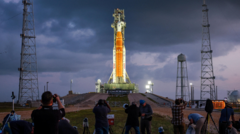
The fact that the weather is cooperating is a gift. NASA has enough technical debt to worry about without fighting Mother Nature too. The SLS is sitting on Pad 39B right now, venting white plumes of liquid oxygen, looking every bit like the successor to the Saturn V. It's ready. The ground teams are ready. The sky is finally playing ball.
Check the Radar Yourself
Don't just take the official word for it. If you want to track the Artemis weather like a pro, watch the "anvil cloud" formations. Those are the flat-topped clouds that indicate high-altitude instability. If you see those forming near the Cape, start worrying. If the sky stays a flat, boring gray, we’re likely in the clear.
The next few hours are the most intense. Keep an eye on the "T-minus" clock. If they get past the T-9 minute hold without a weather violation, the odds of a successful liftoff jump to nearly 100%. At that point, the flight computers take over, and the weather becomes a secondary thought to the sheer power of four RS-25 engines and two solid rocket boosters.
Get your eyes on the livestream. Watch for the "clear to air" call from the weather officer. That's the final hurdle before we see the most powerful rocket in the world leave the Earth behind. If you're near Titusville or Cocoa Beach, look up. You’re about to see history, clouds or no clouds.