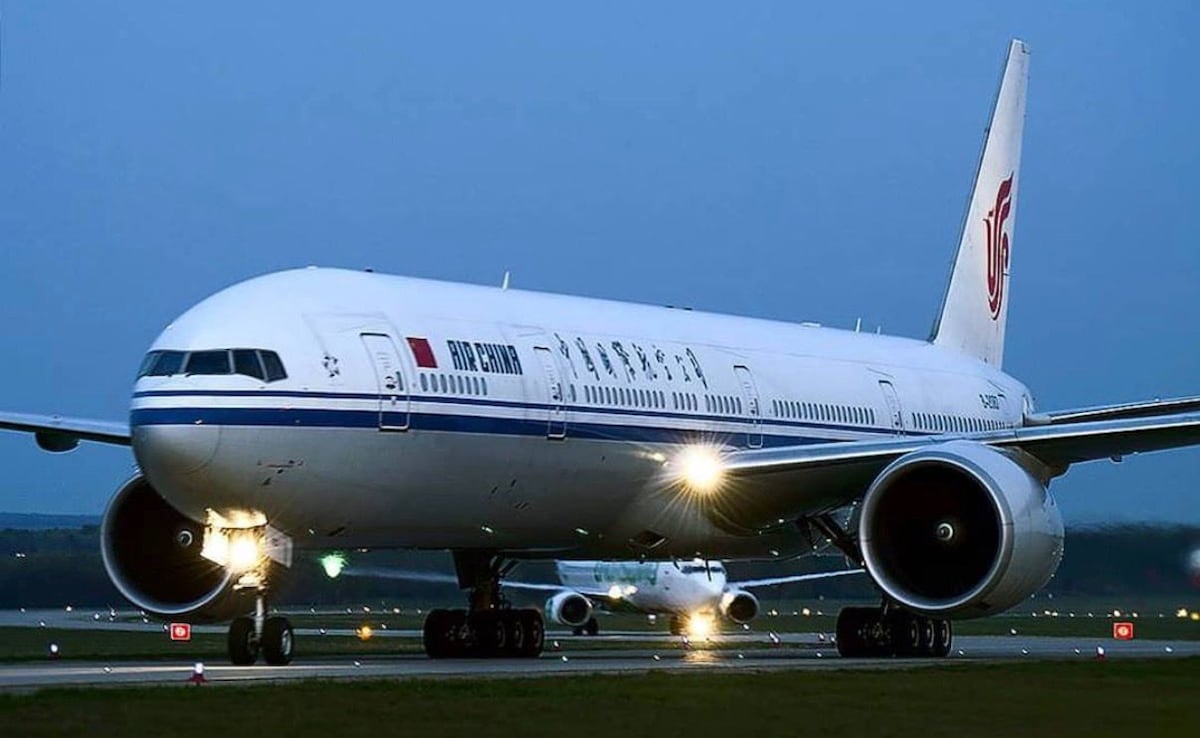
The headlines are predictable. They scream about "normalization." They whisper about a "diplomatic thaw." They suggest that Air China resuming direct flights to Pyongyang after a six-year hiatus is a signal of a revitalized economic bridge between Beijing and the DPRK.
They are wrong.
Watching the industry react to this news is like watching a room full of people cheer for a light switch being flicked in an abandoned house. Just because the bulb flickers doesn't mean anyone is home, and it certainly doesn't mean the mortgage is paid. This isn't a business expansion. It’s a performance.
If you’re looking at the flight schedule as a barometer for trade or tourism, you’re reading the wrong map.
The Myth of the "Commercial" Route
Let’s be clear: No sane airline executive looks at the Beijing-Pyongyang corridor and sees a profit center. In the world of aviation economics, a route lives or dies by its load factor and yield. For a route to be viable, you need a steady stream of high-value business travelers or a mass-market volume of tourists.
Pyongyang offers neither.
The "tourists" heading into North Korea are a niche, highly controlled trickle. The business travelers? They don’t exist in the traditional sense. You don't fly to Pyongyang to close a Series A round or scout a new manufacturing hub. You fly there because you are part of a state-sanctioned delegation or a specialized labor exchange.
Air China isn't resuming these flights because they’ve identified an untapped market of weekend travelers. They are resuming them because the Civil Aviation Administration of China (CAAC) was told to make it happen. This is "diplomatic aviation"—a term I’ve used for years to describe routes that serve flags, not balance sheets.
Breaking the Numbers Down
Consider the equipment. We aren't talking about regional turboprops. We’re talking about narrow-body jets that require significant fuel, crew staging, and maintenance overhead in an environment where ground support is, at best, archaic.
- Fixed Costs: Landing fees in Pyongyang are arbitrary and subject to the whims of the Air Koryo-managed airport authority.
- Opportunity Cost: Every hour an Air China jet spends on the tarmac at Sunan International is an hour it isn't flying profitable loops to Seoul, Tokyo, or Bangkok.
- Insurance Premiums: Flying into a country under heavy international sanctions isn't exactly a "low-risk" endeavor for underwriters.
When you factor in the logistical nightmare of operating in a literal black hole of international banking, the "economic" argument for this route evaporates.
The Sanctions Elephant in the Lounge
The consensus narrative ignores the massive, jagged shards of UN Security Council Resolution 2397 and its predecessors. While commercial aviation itself isn't explicitly banned, the ecosystem required to sustain it is a minefield.
I’ve seen carriers pull out of much more stable markets simply because the compliance cost of vetting every passenger and every piece of cargo became too high. For Air China, a state-owned enterprise, "compliance" is a flexible concept, but international scrutiny is not.
By resuming these flights, China isn't signaling a return to business as usual. It is testing the elasticity of the international sanctions regime. It’s a provocation disguised as a flight path.
The Illusion of Connectivity
People ask: "Doesn't this mean North Korea is finally opening up?"
The honest, brutal answer is no. Connectivity does not equal openness. In fact, a single, state-controlled flight path from Beijing is the perfect way to maintain closed borders while appearing to do the opposite. It allows the DPRK to filter every single person entering or leaving through a single, easily monitored funnel.
If North Korea wanted to "open up," they would be streamlining the rail crossings at Dandong or allowing the myriad of smaller, private charter operations that used to hover around the border to resume. Instead, they’ve opted for the most high-profile, most controllable, and most symbolic option available.
Why the "Thaw" is a Mirage
The mistake most analysts make is assuming that China wants a prosperous, open North Korea. They don't. Beijing wants a stable, quiet, and dependent North Korea.
A "thaw" implies a movement toward a warmer, more fluid relationship. What we are seeing is the maintenance of a cryogenic state. These flights are the life support system, not the sign of a recovery.
- Labor Exports: The real cargo on these planes isn't duty-free bags; it's humans. China needs North Korean labor for specific industries, and North Korea needs the hard currency those workers send back.
- Political Signaling: This is a message to Washington and Seoul. It says, "We control the gate. We decide when the door opens and when it slams shut."
- Elite Mobility: The North Korean elite need a way to reach the outside world that doesn't involve the aging, terrifying fleet of Air Koryo. Air China provides a "prestige" bridge for the people who actually run the show in Pyongyang.
The Logistics of a Ghost Route
Imagine a scenario where you are a loadmaster for this flight. You aren't checking for excess weight from souvenir shopping. You are managing a manifest that has been pre-cleared by two different intelligence agencies.
There is no "spontaneous travel" here. You cannot hop on Skyscanner and find a deal for a Tuesday departure to Pyongyang. The friction is the point. The difficulty is the product.
For the average traveler, this news is irrelevant. For the business person, it's a red flag. For the investor, it's a non-event.
Stop Asking if the Border is Open
The question "Is North Korea opening up?" is flawed from the jump. It assumes that "opening" is a binary state.
North Korea is an expert at the "controlled leak." They allow just enough pressure out to prevent an explosion, and just enough resources in to keep the engine idling. Air China’s return is the latest valve adjustment.
If you want to know when North Korea is actually changing, don't look at the arrivals board at Sunan International. Look at the price of grain in the informal markets (Jangmadang). Look at the shadow banking rates in the border towns. Look at the volume of unsanctioned ship-to-ship transfers in the Yellow Sea.
Everything else is just theatre.
The Air China Tax
There is a cost to this performance that goes beyond the fuel burn. By serving as the DPRK's primary link to the outside world, Air China tethered its brand to a pariah state.
In a world where ESG (Environmental, Social, and Governance) scores are increasingly dictating institutional investment, how does a global carrier justify a direct line to a regime that is actively circumventing global security norms?
The answer is simple: they don't have to. Because Air China isn't a company in the way Westerners understand the term. It is a department of the state.
When you fly a ghost route, you aren't looking for passengers. You're looking for a footprint. And China just stepped back onto the tarmac in Pyongyang, not because they wanted to travel, but because they wanted to show everyone they still own the ground.
Stop calling it a "resumption of service."
Call it what it is: a tactical deployment of a 160-ton billboard.
Get off the plane. There's nothing to see here.