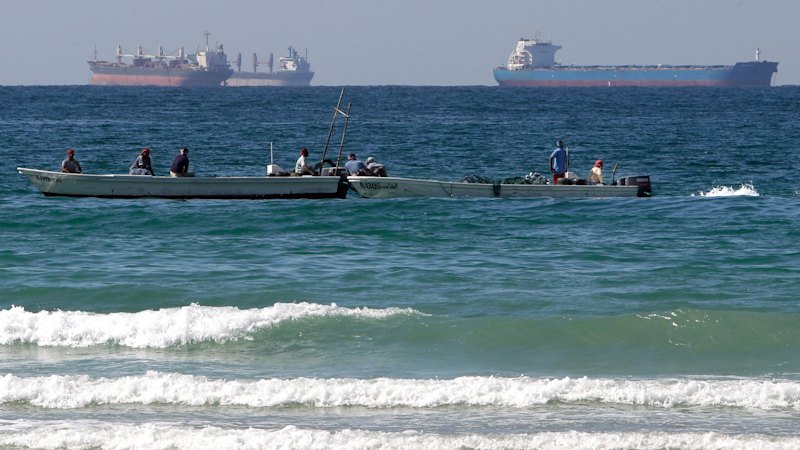
The world has a massive, 21-mile-wide choke point problem that refuses to go away. If you look at a map of the Persian Gulf, you’ll see a tiny sliver of water separating Oman and Iran. That’s the Strait of Hormuz. It’s the most important oil artery on the planet. Around 20% of the world’s total liquid petroleum consumption passes through this narrow gap every single day. We’ve known for forty years that relying on this single straw to drink the world’s energy is a recipe for a global heart attack. Yet, here we are in 2026, and the "alternatives" are still mostly pipe dreams or expensive half-measures.
Every time tensions spike in the Middle East, the same question bubbles up. Why haven't we built a way around it? The answer isn't just about engineering. It’s about geography, nasty internal politics, and the sheer, overwhelming volume of oil we’re talking about. You can’t just move a literal ocean of crude through a few backup pipes and expect the global economy to keep humming.
The math of a global bottleneck
Let's get real about the numbers. We aren't just talking about a few tankers. We’re talking about roughly 20 to 21 million barrels of oil per day (bpd). To put that in perspective, that’s more than the entire daily consumption of the United States. When the Strait gets threatened—whether by naval drills, limpet mines, or geopolitical saber-rattling—the markets don't just flinch. They scream.
The physical reality of the Strait is claustrophobic. The actual shipping lanes are only two miles wide in each direction, separated by a two-mile buffer zone. If a couple of VLCCs (Very Large Crude Carriers) get scuttled in the wrong spot, or if insurance companies decide the risk of a missile strike is too high, the flow stops. For countries like Japan, South Korea, and China, who pull the vast majority of their energy through this gap, there is no Plan B that works overnight.
Why the current pipelines are failing the stress test
For years, the industry pointed to pipelines as the Great Escape. The logic was simple. If you can’t go through the water, go over the land. Saudi Arabia and the United Arab Emirates (UAE) spent billions on this.
Saudi Arabia has the East-West Pipeline (Petroline). It stretches about 745 miles from the Eastern Province to the Red Sea port of Yanbu. On paper, it’s a beast. It has a nameplate capacity of about 5 million bpd. But here’s the kicker. It’s rarely used at full capacity, and even if it were, it only handles a fraction of what goes through Hormuz. If the Strait closes, the Petroline is like trying to empty a swimming pool with a garden hose.
Then you have the UAE’s Habshan-Fujairah pipeline. This one actually makes sense because it ends at Fujairah, which sits right on the Indian Ocean, safely outside the Gulf. It can carry about 1.5 million bpd. It’s a start. But when you add up all the functioning bypass pipelines in the region, you get a total capacity of maybe 6.5 to 7 million bpd. That leaves 14 million barrels with nowhere to go.
The geopolitical mess of new routes
You might wonder why they don't just build more. It’s not that simple. To build a truly effective bypass, you need to cross borders. And in this part of the world, neighbors don't always get along.
Take Iraq. They have massive reserves but are almost entirely dependent on the Gulf. They have an old pipeline that goes through Turkey to the port of Ceyhan. But that route is constantly tied up in legal battles between Baghdad and the Kurdistan Regional Government (KRG). Plus, the infrastructure is aging and frequently targeted by militants.
Then there’s the proposed "Dry Canal" project. This is a massive multibillion-dollar plan to link the Persian Gulf to the Mediterranean via rail and roads through Iraq and Turkey. It sounds great in a boardroom in Dubai or Ankara. In reality? You’re trying to build high-value infrastructure through some of the most unstable terrain on earth. Investors aren't exactly lining up to dump hundreds of billions into a pipe that could be blown up by a rebel group on a Tuesday afternoon.
The myth of the American energy cushion
You’ll often hear that because the U.S. is now a major oil producer, the Strait of Hormuz doesn't matter as much. That is a dangerous misunderstanding of how global markets work. Oil is a fungible commodity. It’s traded on a global price.
If Hormuz shuts down, it doesn't matter if you're drilling in West Texas or North Dakota. The global supply drops by 20%. Prices will skyrocket everywhere. The U.S. might not need the physical barrels as much as it did in the 1970s, but the American economy is still tethered to the global price of gas. If China's economy craters because they can't get Gulf oil, the ripple effect hits Wall Street in hours. We aren't insulated. We’re just slightly less vulnerable to the physical shortage, while remaining totally exposed to the price shock.
Iran's ultimate leverage
We have to talk about the elephant in the room. Iran knows Hormuz is its best weapon. They don't even need to physically block the Strait to cause chaos. They just need to make it uninsurable.
When a tanker enters the Gulf, it needs war-risk insurance. If Iran starts seizing ships or flying drones near the lanes, those insurance premiums go through the roof. Eventually, shipowners just refuse to send their vessels in. Iran has also been clever. They recently opened the Jask terminal, which is located outside the Strait. This allows them to export their own oil even if the Strait is a war zone. It’s a brilliant, cynical move. They can choke everyone else's supply while keeping their own (limited) exports flowing.
Logistics vs. Reality
There’s also the issue of what these "alternatives" actually look like on the ground. Moving oil by truck or rail is a joke at this scale. You’d need a literal convoy of thousands of trucks moving 24/7 to replace a single tanker. It’s environmentally disastrous and economically impossible.
The only real alternative is diversifying the source of the oil itself. We’ve seen some of this with increased production in Guyana, Brazil, and the African Atlantic coast. But even with those gains, the sheer concentration of cheap-to-extract crude in the Gulf means the world’s addiction isn't going anywhere. We’re stuck with the geography we have.
The strategic shift you should watch
If you want to see where the real "alternative" is happening, stop looking at pipelines and start looking at the Red Sea and the Cape of Good Hope. Since the shipping crisis in the Red Sea began, we’ve seen more tankers taking the long way around Africa.
It’s slow. It’s incredibly expensive. It adds weeks to the journey. But it's becoming the new standard for "safe" transit. This shift doesn't bypass Hormuz, but it shows that the world is becoming desperate enough to accept massive inefficiency just to avoid the tactical headaches of Middle Eastern choke points.
The hard truth is that there is no magic bypass. The Strait of Hormuz is a geographic reality that we’ve built our entire modern civilization around. Until the world moves fundamentally away from liquid hydrocarbons, we are all hostages to those 21 miles of water.
If you're looking to hedge against the next Hormuz crisis, stop waiting for a new pipeline announcement. Watch the storage levels in Fujairah and the progress of the Iraq-Turkey pipeline negotiations. Those are the only two pressure valves that actually matter in a crisis. Don't buy the hype about "new corridors" until someone actually lays the steel in the ground and secures the borders. Anything else is just talk.